Two-Wheeler Fall and a Scraped Leg With Diabetes: Why Road Rash Needs a Doctor Within 48 Hours
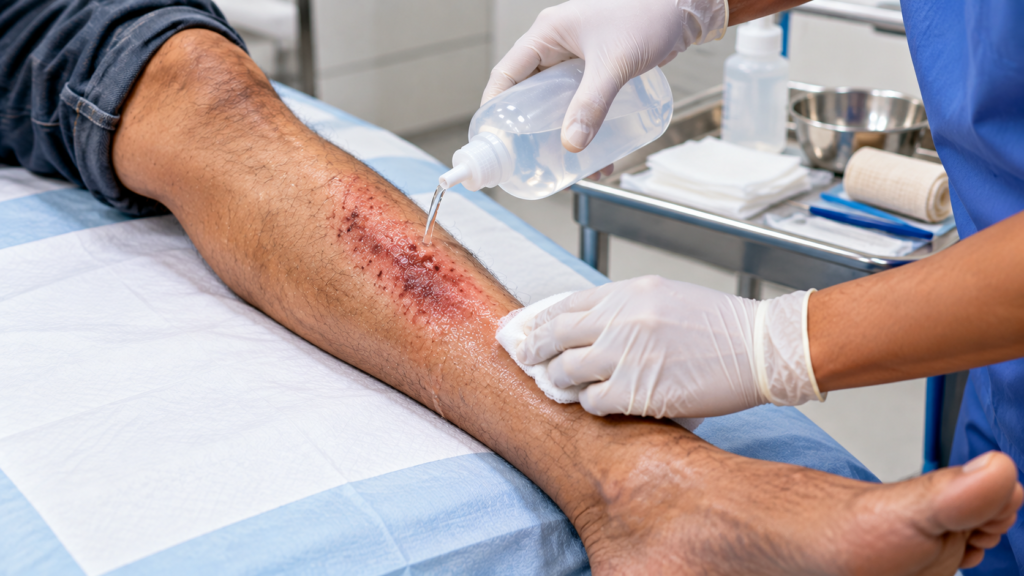
A scooter or motorcycle fall can scrape the skin on your leg. At first, the injury may look minor. However, diabetes can make wound healing more difficult.
If you notice a leg injury not healing, take it seriously. High blood sugar, poor circulation and nerve damage can increase the risk of infection. Moreover, road rash often traps dirt, sand and tiny stones inside the skin.
A small scrape can become a serious wound without proper care. Therefore, clean the injury promptly and cover it with a suitable dressing.
If you have diabetes, arrange a medical check within 48 hours of a road-rash injury. Seek help sooner if the wound is deep, dirty or painful. Serious warning signs require immediate care.
This guide explains first aid, wound cleaning, tetanus protection and healing checks. It also helps you recognise when a leg wound needs urgent treatment.
Why Does Road Rash Heal Slowly in Diabetes?
Diabetes can affect wound healing in several ways. However, not every person with diabetes experiences delayed healing.
The main concerns include high blood sugar, reduced circulation and nerve damage.
High Blood Sugar Affects Healing
Your body needs healthy immune cells to fight infection. However, high blood sugar can weaken their response.
As a result, bacteria may grow more easily inside a wound. The body may also take longer to repair damaged tissue.
Therefore, good blood sugar management supports recovery.
Poor Circulation Slows Skin Repair
Blood carries oxygen and nutrients to injured skin. These nutrients help the body rebuild damaged tissue.
However, diabetes can increase the risk of peripheral artery disease. This condition reduces blood flow to the legs and feet.
Consequently, a wound may heal slowly or develop unhealthy tissue.
Nerve Damage Can Hide Pain
Diabetic neuropathy can reduce sensation in the legs and feet.
For example, a person may not notice a deeper injury after falling from a scooter.
Therefore, inspect your legs carefully after an accident. Do not rely on pain alone to judge the injury.
If healing remains slow, read more about why wounds do not heal.
What Should You Do Immediately After a Scooter Fall?
Quick first aid can reduce contamination and protect the wound. However, always check for serious injuries first.
Step 1: Move to a Safe Place
Move away from traffic if you can do so safely.
Next, check for heavy bleeding, head injury or a possible fracture. Call emergency services if you notice serious injuries.
If the wound bleeds, apply firm pressure with clean gauze.
Step 2: Wash the Wound
Rinse the scrape thoroughly with clean running water or sterile saline.
This helps remove loose dirt and bacteria.
Next, clean the surrounding skin with mild soap. However, avoid harsh scrubbing.
Do not pour alcohol or strong antiseptics directly into the wound. These products may irritate damaged tissue.
Step 3: Check for Embedded Dirt
Road rash often contains sand, gravel or small stones.
Gentle rinsing may remove loose particles. However, deeper material may remain trapped.
Do not dig into the wound with sharp objects. Instead, let a healthcare professional remove embedded grit.
Step 4: Cover the Scrape
Place a sterile, non-stick dressing over the clean wound.
The dressing helps protect the skin from dirt and friction.
Avoid placing loose cotton directly on the injured area.
For more guidance, explore diabetic wound home care.
When Should You See a Doctor After Road Rash?
People with diabetes should arrange a prompt medical assessment after road rash.
For a minor-looking scrape, aim for a check within 48 hours. However, do not wait if the injury appears serious.
A clinician can assess wound depth, circulation and infection risk. They can also check for embedded dirt and review your tetanus history.
Warning Signs of a Leg Cut Infection
Seek urgent medical care if you notice:
- Increasing redness around the wound
- Swelling or warmth
- Yellow or green discharge
- An unpleasant smell
- Fever or chills
- Severe or increasing pain
- Black or grey skin changes
- Red streaks spreading from the injury
These signs may indicate infection or tissue damage.
Moreover, neuropathy can hide pain. Therefore, a serious wound may not always hurt.
When Is Emergency Care Necessary?
Seek emergency care for heavy bleeding, exposed deep tissue or rapidly spreading infection.
Also, get immediate help if your foot becomes cold, pale or suddenly numb.
These symptoms may indicate a serious circulation or injury problem.
When Does Road Rash Need Cleaning Under Anaesthesia?
Some scrapes contain dirt that simple washing cannot remove.
In these cases, a clinician may recommend debridement. This procedure removes trapped material and unhealthy tissue.
Why Might a Doctor Recommend Debridement?
Debridement may help when:
- Gravel remains inside the wound
- Dead tissue covers the injured area
- Dirt extends into deeper skin layers
- Infection develops
- The clinician needs to examine the wound more closely
The clinician may use local anaesthesia to reduce discomfort.
However, extensive injuries may need another form of anaesthesia or hospital treatment.
Not every scrape needs debridement. The clinician decides after examining the injury.
How Should You Dress a Diabetic Leg Wound?
A suitable leg wound dressing protects the injured skin. It also helps maintain an appropriate healing environment.
However, different wounds need different dressings.
Choose a Non-Stick Dressing
A non-adherent dressing protects the wound without sticking firmly to healing tissue.
For example, clinicians may use silicone contact layers or foam dressings for suitable wounds.
The choice depends on wound depth, moisture and drainage.
Change Dressings Carefully
Wash your hands before changing a dressing.
Next, remove the old dressing gently. Follow your clinician’s cleaning instructions.
Check for new redness, swelling or discharge.
Finally, apply a fresh dressing as directed.
Avoid Harmful Home Remedies
Do not apply toothpaste, ash or turmeric powder to an open wound.
These substances may irritate the skin or introduce contamination.
Instead, follow professional wound care advice.
Some patients may benefit from specialised wound dressings.
Leg Injury Treatment in Kadodara: When Should You Get Help?
If you need leg injury treatment in kadodara, arrange a medical assessment after a scooter or motorcycle accident.
Even a small scrape deserves attention when diabetes affects circulation or sensation.
During the visit, a clinician may examine the wound and check for trapped dirt.
What Happens During a Wound Check?
The clinician may:
- Measure the wound
- Check its depth
- Look for embedded gravel
- Assess blood circulation
- Test nerve sensation
- Review blood sugar control
- Check tetanus vaccination history
- Recommend a suitable dressing
They may also arrange follow-up visits.
When Is a Wound Culture Necessary?
A wound culture helps identify bacteria when an infection requires further investigation.
However, doctors do not need to culture every clean scrape.
If the wound shows signs of infection, the clinician may recommend a wound culture and sensitivity test.
The results may help guide antibiotic treatment.
How Can You Track Wound Healing Week by Week?
A superficial scrape should gradually improve. However, diabetes may slow recovery when circulation or blood sugar control is poor.
Therefore, check the wound regularly.
Diabetic Leg Wound Healing Timeline
| Checkpoint | Expected Appearance | Warning Sign | What to Do |
|---|---|---|---|
| Day 2 | Less bleeding and mild tenderness | Increasing redness, swelling or pus | Seek prompt medical review |
| Day 7 | Less drainage and early new skin | More discharge or spreading redness | Arrange wound reassessment |
| Day 14 | Many superficial wounds show major improvement | Little change or dark skin | Check for infection and poor circulation |
| Day 28 | Many minor wounds have closed; deeper wounds may need more time | Wound remains open with little reduction | Request a full wound reassessment |
This timeline provides general guidance. It does not guarantee healing by a particular day.
What If the Wound Is Still Open After Four Weeks?
Doctors often measure wound size to track progress.
In diabetic foot-ulcer research, less than about 50% reduction in wound area after four weeks of appropriate care can signal poor healing.
However, this benchmark does not apply equally to every traumatic leg scrape.
Therefore, seek medical review earlier if the wound stops improving.
Why Are Wound Measurements Helpful?
Regular measurements show whether the wound is getting smaller.
For example, a clinician may record its length, width and depth.
They may also take clinical photographs with your consent.
These records help compare healing between appointments.
Clinic review note: Confirm the actual wound measurement and photography protocol with Dr. Ashutosh Shah’s team before publication.
How Can You Support Faster Wound Healing?
Good wound care involves more than dressings. Blood sugar management, nutrition and follow-up also matter.
Manage Blood Sugar
Follow your prescribed diabetes treatment plan.
Additionally, check glucose levels as your healthcare team recommends.
Injury and infection can raise blood sugar. Therefore, some patients need closer monitoring during recovery.
Protect the Injured Leg
Avoid tight clothing that rubs against the scrape.
Also, limit activities that repeatedly stretch or irritate the wound.
If walking causes friction, ask your clinician about temporary activity changes.
Eat Nutritious Meals
Your body needs protein and energy to repair damaged skin.
Therefore, include suitable protein sources and balanced meals in your diabetes diet.
Drink enough fluids unless your clinician has advised restrictions.
Attend Follow-Up Appointments
A wound may appear better while deeper problems remain.
Therefore, attend scheduled wound checks.
Seek earlier review if pain, redness or discharge increases.
Frequently Asked Questions
Yes, prompt medical advice is sensible after a significant or contaminated scrape when you have diabetes. Arrange assessment as soon as possible, ideally within 24-48 hours or sooner for a deep wound, embedded grit, increasing redness, swelling or discharge. Severe bleeding, suspected fracture or rapidly worsening symptoms need emergency care.
Possibly. The decision depends on whether the wound is clean or contaminated and when you last received a tetanus-containing vaccine. Dirty wounds may require a booster sooner than clean, minor wounds. If your vaccination history is unknown or incomplete, a clinician should assess whether vaccination or additional protection is needed.
Usually, a clean scrape should be protected with an appropriate dressing rather than deliberately left exposed to dirt and friction. A non-stick dressing can help protect the wound while it heals. The dressing type and change frequency should be guided by the wound’s depth, drainage and the clinician’s instructions.
Do not rely on antibiotic cream as a substitute for cleaning, proper dressing or medical assessment. Topical antibiotics are not routinely needed for every scrape and can cause skin reactions. If the wound is contaminated, deep or showing signs of infection, ask a clinician what treatment is appropriate.
A small, superficial scrape may improve over days and heal over the following weeks, but larger or deeper injuries can take longer. Diabetes, poor circulation, infection and high glucose can delay healing. The important sign is steady improvement; a wound that worsens or fails to progress needs reassessment.
Black tissue can indicate dead tissue or a serious blood-flow problem, although the cause cannot be identified from colour alone. In a person with diabetes, a wound turning black needs urgent medical assessment. Do not cut, scrape or apply home remedies to the dark area while waiting for medical advice.
Coverage depends on the specific health or accident policy, exclusions, documentation and the type of treatment required. Keep medical records, prescriptions, bills and accident documentation, and contact your insurer or policy administrator to confirm benefits. Do not delay urgent wound treatment while waiting for an insurance decision.
For leg injury treatment in kadodara, contact the clinic to confirm appointment availability and explain that the injury followed a two-wheeler fall and the patient has diabetes. A clinician can assess contamination, circulation, infection risk and dressing needs. Seek emergency care immediately for severe or rapidly worsening symptoms.
Conclusion
A road-rash scrape can look minor but still contain embedded grit or develop complications, particularly in someone with diabetes. Rinse the wound thoroughly, cover it with a suitable non-stick dressing, check tetanus status promptly and arrange medical assessment rather than waiting for infection. Track healing over time and seek urgent help for spreading redness, pus, black tissue, fever or rapid deterioration.