
Skin Graft for Diabetic Wound in Ankleshwar: Procedure and Recovery
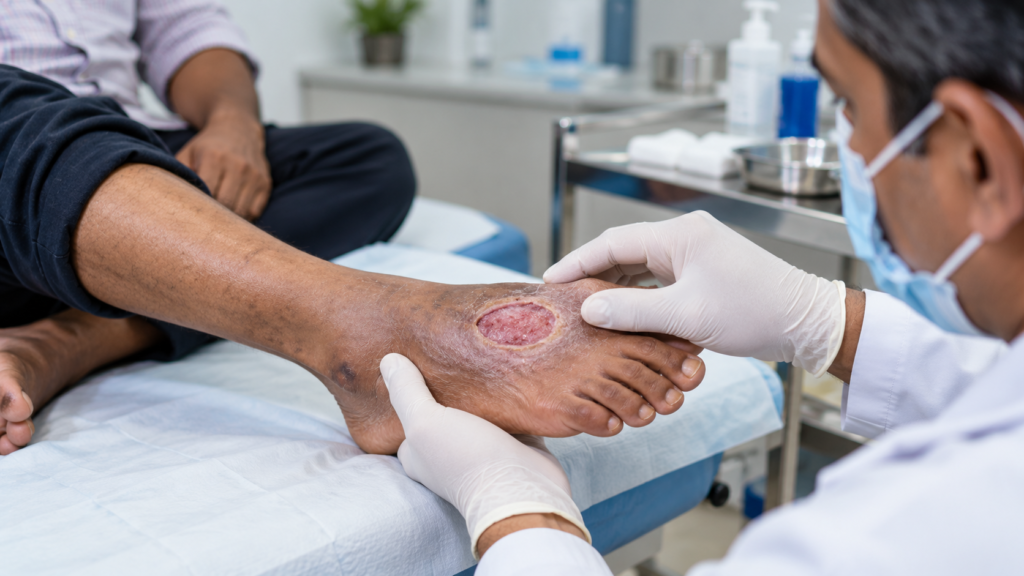
A skin graft for diabetic wound in Ankleshwar may help close a foot ulcer that has not healed with routine wound care. However, skin grafting is only suitable when the wound is properly prepared.
Before a graft can be placed, the wound usually needs healthy tissue, adequate blood circulation, controlled infection and protection from pressure.
A skin graft covers the wound with a thin layer of healthy skin taken from another part of the patient’s body. The transplanted skin then needs to establish a blood supply from the tissue underneath.
For patients with diabetes, successful healing depends on much more than the operation itself.
Blood sugar management, pressure relief, wound care and regular follow-up are all important.
This guide explains when a diabetic wound is ready for grafting, how the procedure works and what patients should expect during recovery.
What Is a Skin Graft for a Diabetic Foot Wound?
A skin graft is a surgical procedure in which healthy skin is transferred from one part of the body to cover a wound elsewhere.
The skin is usually taken from an area such as the thigh.
In diabetic foot reconstruction, a surgeon may use a split-thickness skin graft. This contains the epidermis and part of the dermis.
The graft is placed over a suitable wound bed and secured with dressings or other fixation methods.
Over time, the graft receives nourishment and develops a blood supply from the underlying tissue.
However, a skin graft does not bring its own blood supply.
Therefore, it cannot reliably survive on a poorly vascularised wound surface.
Why Might a Diabetic Wound Need Skin Grafting?
Some diabetic ulcers remain open for weeks or months.
This can happen because of:
- Repeated pressure on the foot
- Poor circulation
- Peripheral neuropathy
- Infection
- Dead or unhealthy tissue
- High blood glucose
- Foot deformity
- Delayed wound healing
Even after these problems are addressed, a large wound may take considerable time to close naturally.
In selected cases, skin grafting can provide wound coverage.
However, not every diabetic ulcer needs surgery.
When Is a Diabetic Wound Ready for a Skin Graft?
Wound preparation is one of the most important factors in skin graft success.
A graft should not be placed simply because an ulcer has remained open for a long time.
The surgeon first checks whether the wound can support the transplanted skin.
1. The Wound Has Healthy Granulation Tissue
Granulation tissue is the new tissue that forms during healing.
It often appears pink or red and has a moist surface.
A healthy, well-vascularised wound bed can support graft attachment.
However, the surgeon must assess its quality rather than relying on colour alone.
2. Infection Is Controlled
An infected wound may prevent a graft from surviving.
Therefore, infection must be assessed and treated before grafting.
Treatment may include debridement, drainage, appropriate antibiotics or other procedures.
The surgeon may postpone grafting until the infection is adequately controlled.
3. Blood Circulation Is Adequate
The transplanted skin needs oxygen and nutrients.
If blood flow is severely reduced, the graft may fail.
The medical team may assess foot pulses and use vascular investigations when necessary.
Patients with significant arterial disease may need vascular treatment before wound reconstruction.
4. Dead Tissue Has Been Removed
Dead tissue can interfere with healing.
A procedure called debridement removes unhealthy or non-viable tissue when clinically appropriate.
After debridement, the surgeon reassesses the wound.
Some patients need more than one wound-cleaning procedure before reconstruction.
5. Pressure Can Be Controlled
A graft placed on a weight-bearing part of the foot may be damaged by walking.
Therefore, pressure relief is essential.
This is called offloading.
It may involve specialised footwear, a removable walker, a cast or other protective measures.
The surgeon should confirm that the patient can follow the offloading plan during recovery.
Skin Graft Readiness Checklist
| Assessment | What the surgeon looks for | Why it matters |
|---|---|---|
| Wound bed | Healthy, suitable tissue | Supports graft attachment |
| Infection | Adequately controlled | Reduces graft failure risk |
| Blood circulation | Sufficient perfusion | Provides oxygen and nutrients |
| Dead tissue | Removed where needed | Improves wound preparation |
| Blood glucose | Managed appropriately | Supports healing and infection control |
| Pressure | Effective offloading plan | Protects the new graft |
| Wound depth | No unsuitable exposed structures | Determines whether grafting is appropriate |
| Patient health | Nutrition and other conditions assessed | Helps identify healing risks |
A wound that fails these checks may need further treatment before surgery.
When Is a Skin Graft Not Suitable?
Skin grafting is not the best option for every diabetic wound.
For example, a simple graft may not survive over exposed bone or tendon without an adequate vascularised tissue layer.
Deep wounds may require a flap or another reconstructive method.
Similarly, severe infection or inadequate blood circulation may make immediate grafting unsafe.
Skin Graft vs Flap Surgery
| Skin graft | Flap surgery |
|---|---|
| Transfers a layer of skin | Transfers tissue with its blood supply |
| Requires a suitable vascularised wound bed | May cover deeper, more complex defects |
| Often used for surface coverage | May be needed over exposed structures |
| Can be vulnerable to pressure and friction | May provide more substantial tissue coverage |
| Suitable for selected wounds | Suitable for selected complex wounds |
For more complex cases, read about free flap surgery for diabetic wound reconstruction.
How Is Skin Graft Surgery Performed?
The exact procedure depends on the wound size, location and the patient’s health.
Step 1: Preoperative Assessment
The surgeon examines the wound and reviews medical history.
Blood glucose control, circulation, infection and medication use are assessed.
Additional tests may be recommended.
Step 2: Wound Preparation
The wound is cleaned and unhealthy tissue is removed if necessary.
The surgeon checks that the wound bed is suitable for graft placement.
In some cases, negative pressure wound therapy may be used before surgery to help prepare the wound.
Step 3: Skin Harvesting
A thin layer of healthy skin is taken from a donor area, often the thigh.
The donor site becomes a separate wound that also requires care.
Step 4: Graft Placement
The harvested skin is placed over the prepared diabetic wound.
The surgeon may secure it with sutures, staples or suitable dressings.
A protective dressing helps reduce movement between the graft and wound bed.
Step 5: Postoperative Protection
The foot is protected from pressure and unnecessary movement.
The care team monitors both the graft and donor site.
Dressings are changed according to the surgeon’s instructions.
How Long Does Recovery Take After a Skin Graft?
Recovery varies according to wound size, location, circulation, infection history and general health.
There is no single recovery timeline for every diabetic patient.
First 5 to 7 Days
The early period is important for graft attachment.
The patient may need strict pressure avoidance and limited movement.
The dressing is usually left undisturbed until the planned review unless there is a clinical reason to change it sooner.
The surgeon checks whether the graft is attaching and remaining healthy.
Weeks 2 to 4
If healing progresses well, the graft becomes more stable.
However, the skin may remain delicate.
The donor site also continues healing.
Patients should follow instructions about dressing care, bathing and activity.
Following Weeks and Months
The graft continues to mature.
Its colour and texture may change over time.
Some patients require prolonged offloading or specialist footwear.
Returning to normal walking should happen only when the treating team confirms that the graft can tolerate pressure.
Important: A graft that looks healed on the surface may still be vulnerable to friction and repeated loading.
Recovery Advice for Ankleshwar Patients
Patients receiving treatment away from their usual home need a practical follow-up plan.
The goal is to protect the graft while making dressing reviews and medical care manageable.
Plan Transport Carefully
Avoid unnecessary walking immediately after surgery.
Arrange transport that allows the operated foot to remain protected.
If the surgeon prescribes non-weight-bearing recovery, do not place weight on the foot during travel.
Confirm Follow-Up Appointments
Before discharge, ask when the first graft inspection will occur.
Also, confirm where subsequent dressings will be performed.
The clinic’s diabetic foot ulcer treatment service in Ankleshwar provides information about local assessment and care access.
However, the location of the graft operation and postoperative reviews should be confirmed individually.
Keep Diabetes Treatment Consistent
Follow your diabetes clinician’s instructions for medicines, meals and glucose monitoring.
Poorly controlled blood glucose can increase the risk of infection and delayed healing.
Use Prescribed Offloading Devices
Special footwear or other offloading devices help protect the graft.
Do not switch back to ordinary footwear simply because the wound looks smaller.
Know When to Seek Help
Contact your medical team promptly if you notice increasing redness, swelling, discharge, unpleasant odour or worsening pain.
Seek urgent medical assessment for fever with a worsening foot wound, rapidly spreading redness, blackening tissue or other signs of severe infection.
Do not wait for the next routine appointment if the foot is deteriorating.
Why Is Offloading Important After Skin Grafting?
Pressure can interfere with graft attachment and cause the wound to reopen.
This is particularly important for ulcers on the sole of the foot.
A person with diabetic neuropathy may not feel damaging pressure.
Therefore, walking without pain does not mean the graft is safe.
External Offloading
External offloading uses devices such as casts, walkers or specialised footwear.
The aim is to reduce pressure on the healing area.
Surgical Offloading
Some patients have foot deformities or pressure points that repeatedly cause ulcers.
In selected cases, surgery may be considered to reduce these mechanical forces.
Examples include tendon procedures or correction of bony prominences.
Learn more about diabetic foot surgery and ulcer healing and preventive surgeries.
What Can Cause a Skin Graft to Fail?
A skin graft may not survive completely.
Possible reasons include:
- Inadequate blood circulation
- Infection
- Fluid or blood collecting beneath the graft
- Movement between the graft and wound bed
- Repeated pressure or friction
- Unhealthy underlying tissue
- Significant swelling
- Other medical conditions affecting healing
A failed graft does not always mean that further reconstruction is impossible.
However, the surgeon must identify and address the reason for failure before deciding on another procedure.
How Can Patients Protect the Foot After Healing?
Healing the wound is only one part of diabetic foot care.
The next goal is to reduce the risk of another ulcer.
Patients should inspect their feet daily or ask a caregiver for help.
Look for redness, blisters, cracks, swelling and new pressure marks.
Avoid walking barefoot.
Wear footwear recommended for your foot shape and pressure pattern.
Continue diabetes management and attend follow-up appointments.
If a new wound appears, seek assessment early rather than waiting for it to become larger.
The clinic’s patient guide to diabetic foot care explains its assessment process, including circulation, sensation, pressure and wound examination.
Frequently Asked Questions
Can a diabetic foot ulcer heal with a skin graft?
Yes, some diabetic foot ulcers can be closed using skin grafts. However, the wound must have adequate blood supply, suitable tissue and controlled infection. Pressure protection is also essential.
How do I know if my wound is ready for grafting?
A surgeon assesses the wound bed, infection, circulation, depth and pressure. A healthy appearance alone is not enough to confirm readiness.
Is skin grafting painful?
Anaesthesia is used during surgery. Afterwards, discomfort may occur at the graft and donor sites. Patients with neuropathy may experience less sensation, but they still need careful wound protection.
How many days does a diabetic skin graft take to heal?
Initial graft attachment is usually assessed during the first week. However, full healing and safe return to walking can take longer. The timeline varies considerably.
Can I walk after a skin graft on my foot?
Only according to your surgeon’s instructions. Some grafts require strict non-weight-bearing protection. Walking too early may damage the graft.
What happens if the graft does not take?
The surgeon examines why it failed. Further wound care, infection treatment, circulation assessment or another reconstructive procedure may be necessary.
Is skin grafting better than regular dressings?
Not for every wound. Some ulcers heal with appropriate dressings and offloading. Skin grafting may be considered when the wound is suitable and surgical closure offers a reasonable benefit.
Can skin grafting prevent amputation?
Skin grafting may help close selected wounds as part of a limb-preservation plan. However, it cannot guarantee that amputation will be avoided, especially in severe infection or advanced circulation problems.
Where can I seek assessment for a diabetic wound in Ankleshwar?
You can review the clinic’s Ankleshwar diabetic foot treatment information. Confirm the consultation location, required investigations and where surgery would be performed.
Will the grafted skin look normal?
Grafted skin may differ from surrounding skin in colour, thickness and texture. Its appearance can change as healing progresses.
Conclusion
A skin graft for diabetic wound in Ankleshwar may help selected patients whose foot ulcers require surgical coverage.
However, the wound must be ready before grafting.
Healthy tissue, adequate circulation, infection control and pressure relief are essential considerations.
The procedure also requires careful postoperative protection.
Patients should expect follow-up visits, dressing care and restrictions on walking when necessary.
Most importantly, a skin graft treats the wound surface. Long-term success also depends on managing diabetes, neuropathy, circulation and abnormal foot pressure.
For assessment, visit the diabetic foot ulcer treatment page for Ankleshwar or review the clinic’s diabetic foot surgery services.