
What Are the Signs You Need Ingrown Nail Removal?
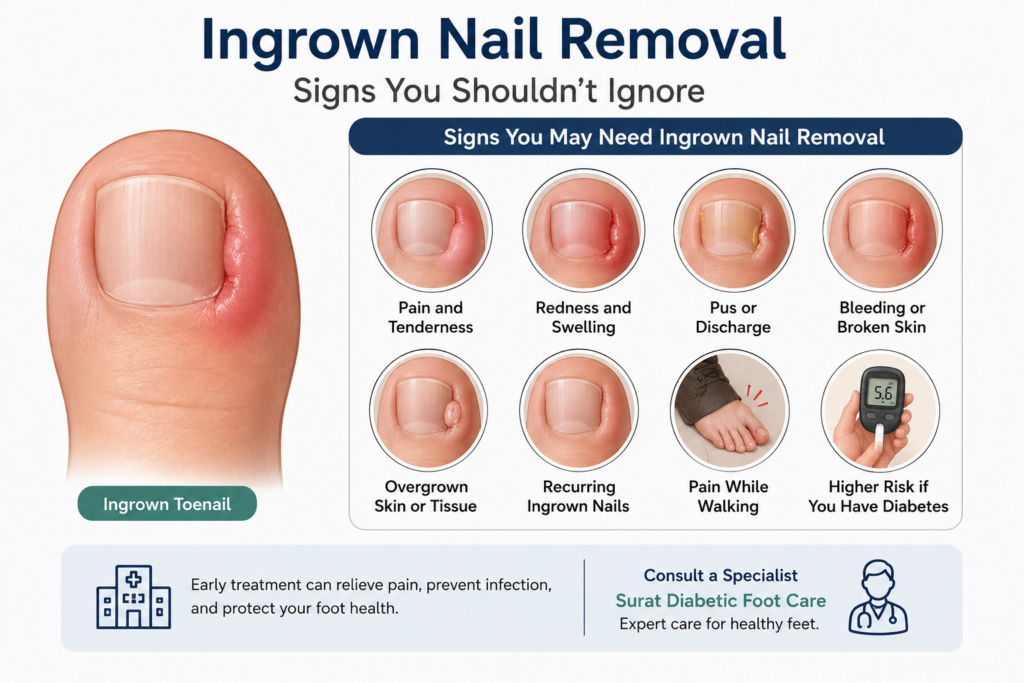
An ingrown toenail develops when the edge or corner of the nail grows into the surrounding skin. It most commonly affects the big toe and can cause pain, redness, swelling, and tenderness. In mild cases, proper nail care may be enough. However, when symptoms continue or become severe, ingrown nail removal may be recommended.
At Surat Diabetic Foot Care, ingrown toenail problems can be evaluated with special attention to foot health, particularly for people with diabetes. Dr. Ashutosh Shah, a cosmetic and hair transplant surgeon with over 22 years of experience, is associated with the clinic’s surgical and foot care services.
What Are the Main Signs You May Need Ingrown Nail Removal?
Not every ingrown toenail requires a procedure. However, certain symptoms suggest that professional treatment may be necessary.
1. Persistent Toenail Pain
Pain is one of the earliest signs of an ingrown toenail. You may experience tenderness when touching the affected area or wearing shoes.
If the pain continues despite basic foot care, the nail may be pressing deeply into the surrounding skin. In such cases, professional assessment can determine whether removing the affected nail edge is appropriate.
2. Redness Around the Nail
An ingrown nail can irritate the skin and cause redness around the nail. Initially, this may be mild. However, increasing redness can indicate worsening inflammation.
If the redness spreads beyond the immediate nail area, it is important to seek medical evaluation rather than repeatedly cutting the nail yourself.
3. Swelling and Tenderness
Swelling around the toenail is another common sign. The affected skin may become sensitive, making normal activities such as walking or wearing closed shoes uncomfortable.
Persistent swelling may indicate that the nail continues to irritate the surrounding tissue. Professional treatment can address the underlying cause instead of simply treating the symptoms.
4. Pus or Other Discharge
Pus, cloudy fluid, or an unpleasant smell around an ingrown toenail may indicate an infection. Infection should not be ignored because it can potentially spread into the surrounding tissues.
If you notice discharge, increasing pain, warmth, or worsening redness, consult a doctor promptly.
5. Bleeding or Broken Skin
When the nail repeatedly digs into the skin, it can create a small wound. The area may bleed, particularly when pressure is applied or when wearing tight footwear.
An open wound around the toe also creates an opportunity for bacteria to enter. Therefore, professional evaluation is important when the skin has broken.
6. Excess Tissue Around the Nail
Some people develop raised or fleshy tissue around the affected nail. This can happen when the skin is repeatedly irritated by the nail.
This is often a sign of a more established ingrown toenail and may require treatment rather than simple home care.
7. Repeated Ingrown Toenails
If your ingrown toenail keeps returning, simply trimming the nail may not solve the problem permanently.
Recurring cases can be associated with nail shape, improper nail trimming, tight footwear, trauma, or other factors. A specialist can determine why the problem keeps occurring and recommend a suitable treatment approach.
Who Is at Higher Risk of Complications?
People with diabetes need to be especially careful about ingrown toenails. Diabetes can be associated with reduced sensation and impaired circulation, which may make foot wounds more difficult to notice or heal.
Therefore, people with diabetes should avoid trying to dig into the nail or cut deeply around an ingrown edge at home. Even a small wound can become a more serious foot problem if it is not managed appropriately.
Regular foot examinations can help identify nail and skin problems at an earlier stage.
How Is Ingrown Nail Removal Performed?
The exact treatment depends on the severity and whether the problem is recurring.
In suitable cases, the doctor may remove only the portion of the nail that is growing into the skin. The toe is generally cleaned and numbed before the procedure, helping make the treatment more comfortable.
For recurrent ingrown toenails, additional treatment may sometimes be considered to reduce the likelihood of the problematic nail edge growing back.
After treatment, you may receive instructions regarding dressing changes, keeping the area clean, footwear, and activity.
Is Ingrown Nail Removal Painful?
Because the affected area can be very sensitive, many patients are concerned about pain. Local anaesthesia is generally used during a nail removal procedure, which helps minimise discomfort while the affected nail portion is treated.
Some tenderness can occur after the procedure as the toe heals. Following the recommended aftercare can help support recovery.
Can You Prevent an Ingrown Toenail?
Although not every ingrown toenail can be prevented, several habits can reduce the risk.
- Cut toenails straight across rather than cutting deeply into the corners.
- Avoid cutting the nails excessively short.
- Wear comfortable footwear with enough room for your toes.
- Keep your feet clean and dry.
- Avoid picking or digging around the nail.
- Check your feet regularly if you have diabetes.
- Seek professional care if an ingrown nail keeps coming back.
When Should You See a Doctor?
Consider professional evaluation if your ingrown toenail causes persistent pain, swelling, redness, discharge, bleeding, or difficulty walking. Recurring problems also deserve medical attention.
For people with diabetes, it is better to seek advice early instead of waiting for symptoms to become severe.
At Surat Diabetic Foot Care, the condition can be assessed based on the individual’s nail and overall foot health.
Dr. Ashutosh Shah, with over 22 years of experience, provides a patient-focused approach to surgical and foot-related care.
Final Takeaway
An ingrown toenail may initially seem like a minor problem, but persistent pain, swelling, redness, pus, bleeding, excess tissue, or recurring symptoms can indicate that ingrown nail removal is needed. Early professional evaluation can help manage the problem and reduce the risk of complications.
If you have diabetes or another condition that affects foot healing, do not attempt aggressive nail removal at home. Professional assessment is the safer approach for protecting your foot health.