
Why Do People With Diabetes Develop Dry, Cracked Feet?
Patient Education Review: Dr. Ashutosh Shah, M.Ch., DNB (Plastic Surgery)
Focus: Diabetic Foot Prevention, Skin Care & Wound Management
Experience: 22+ Years
Clinic: Elegance Diabetic Foot & Ulcers Clinic, Surat
Last Updated: August 2026
Dry feet may sound like a minor skin problem. In diabetes, they deserve more attention.
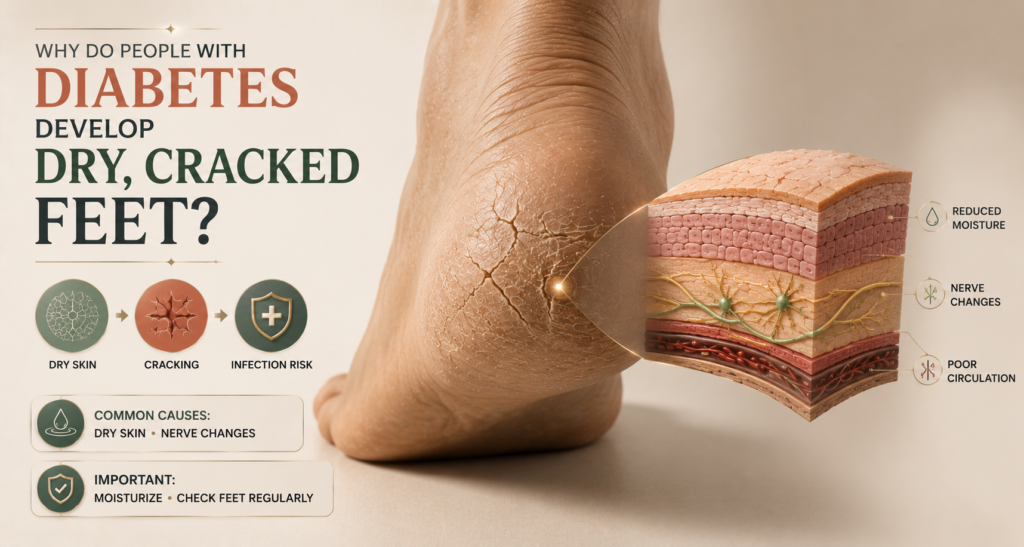
When dry skin becomes thick and begins to split, cracks can form around the heel or other pressure areas. A deeper fissure can become an entry point for bacteria, particularly when neuropathy makes it difficult to feel pain or recognise early injury.
The good news is that many cases of dry cracked feet in diabetes can be managed with regular skin care, suitable footwear and early treatment of pressure or callus.
At Elegance Diabetic Foot & Ulcers Clinic in Surat, dry skin and cracks are assessed as part of preventive diabetic-foot care rather than being treated as a cosmetic problem alone.
Key Takeaways
- Diabetes can make foot skin more vulnerable to dryness.
- Neuropathy may reduce sweating and protective sensation.
- Dry skin can develop into painful or painless fissures.
- A crack can become a pathway for infection.
- Moisturiser can help keep dry skin flexible.
- Avoid applying moisturiser between the toes unless specifically advised.
- Do not cut or shave hard skin yourself.
- Avoid very hot water if sensation is reduced.
- Proper footwear can reduce friction and repeated pressure.
- Bleeding, redness, swelling, discharge or a non-healing crack requires medical assessment.
Why Does Diabetes Cause Dry Feet?
Diabetes can affect the nerves supplying the feet.
Autonomic nerve dysfunction may reduce normal sweating, leaving the skin dry.
Other factors can contribute as well, including:
- ageing,
- dry weather,
- harsh soaps,
- frequent hot-water exposure,
- friction,
- callus,
- and inadequate skin care.
EDFC’s dry skin service identifies dryness, scaling, itching and fissures among common features requiring diabetic-foot attention.
Why Are Cracked Heels More Concerning in Diabetes?
A superficial crack can become deeper when the heel repeatedly expands under body weight.
If the fissure opens through the protective skin barrier, bacteria can gain access.
Diabetes may add two important problems.
Neuropathy can hide pain.
Poor circulation can make healing more difficult.
This means a person may continue walking on a worsening crack without realising how much tissue damage has occurred.
What Do Diabetic Foot Cracks Look Like?
Dry skin may initially appear:
- rough,
- flaky,
- scaly,
- or tight.
As it progresses, visible lines and fissures may form.
A more concerning crack may become:
- deep,
- painful,
- bleeding,
- red,
- swollen,
- warm,
- or surrounded by thick callus.
Discharge or an unpleasant smell requires prompt assessment.
How Should You Moisturise Diabetic Feet?
After washing, dry the feet gently and thoroughly.
Apply an appropriate moisturising cream to dry areas of the foot.
The aim is to keep the skin flexible enough to resist splitting.
EDFC includes skin care and moisturising guidance within its daily diabetic foot care programme.
The best product depends on the skin condition and whether there is an open wound.
Should You Put Moisturiser Between the Toes?
Usually, routine moisturiser should not be applied heavily between the toes unless a clinician specifically recommends it.
Toe web spaces naturally retain moisture.
Keeping them excessively damp can contribute to maceration and fungal problems.
After washing, gently dry between the toes.
Moisturise dry skin elsewhere on the feet while keeping the web spaces appropriately dry.
Is Urea Cream Good for Diabetic Dry Feet?
Urea-containing moisturisers are commonly used for dry, thickened skin because they can help retain moisture and soften keratin.
However, product strength matters.
A very strong keratolytic preparation should not automatically be used on fragile, cracked or open diabetic skin without professional advice.
If a fissure is bleeding or infected, it should be assessed rather than simply covered with stronger cream.
Should You Soak Dry Diabetic Feet?
Prolonged soaking is generally not a good solution.
It can soften and macerate the skin and may increase vulnerability to injury.
Very hot water is particularly risky when neuropathy reduces temperature sensation.
Wash the feet with comfortably warm water and gentle products, then dry them carefully.
Can You Use a Foot File on Cracked Heels?
People with diabetes should be cautious about aggressive filing, blades and other home callus-removal methods.
Reduced sensation makes it easier to damage healthy skin without realising it.
Do not:
- cut callus with a blade,
- shave thick skin,
- use sharp instruments,
- peel cracked skin,
- or use strong corn-removing chemicals without medical advice.
EDFC provides medical pedicure and diabetic foot care for patients who need professional management of dry skin, callus and nails.
Why Does Callus Make Cracking Worse?
Callus develops in areas exposed to repeated pressure and friction.
Thick, less-flexible skin can split when repeatedly loaded.
Therefore, treating only dryness may not solve a recurrent heel fissure if abnormal pressure remains.
The clinician may also need to assess:
- footwear,
- walking pattern,
- foot deformity,
- callus,
- and pressure distribution.
Can Footwear Help Prevent Cracked Feet?
Yes.
Poorly fitted shoes can increase rubbing and pressure.
Appropriate footwear should provide enough room and avoid repeated friction against vulnerable areas.
For someone with neuropathy or abnormal foot pressure, EDFC’s insole and footwear selection can help determine whether additional pressure management is needed.
Should You Walk Barefoot?
Walking barefoot increases exposure to cuts, heat, sharp objects and friction.
With neuropathy, you may not immediately feel an injury.
Protective, properly fitted footwear is generally safer for a person with a high-risk diabetic foot.
Inspect the inside of shoes before wearing them for stones, folds or other objects that could injure the skin.
How Often Should You Check Your Feet?
Check them daily.
Look at:
- heels,
- soles,
- toes,
- sides of the feet,
- and between the toes.
Use a mirror if the soles are difficult to see.
Look for new:
- cracks,
- blisters,
- redness,
- swelling,
- bleeding,
- callus,
- colour change,
- or wounds.
Daily inspection matters because neuropathy can allow an injury to progress without pain.
When Does a Crack Become a Wound?
A crack becomes more concerning when the skin barrier has opened deeply enough to bleed, drain fluid or expose deeper tissue.
At that point, it should not simply be treated as “dry skin.”
The wound may need assessment for:
- infection,
- depth,
- pressure,
- neuropathy,
- and circulation.
A small diabetic foot wound can become clinically important even when it does not hurt.
What Are the Warning Signs of Infection?
Seek medical assessment if you notice:
- increasing redness,
- warmth,
- swelling,
- pus,
- discharge,
- unpleasant smell,
- bleeding that persists,
- worsening skin breakdown,
- fever,
- or a crack that is not healing.
Black, blue or grey tissue, rapidly spreading redness or systemic illness requires urgent attention.
Can Dry Cracked Feet Be Prevented?
Risk can often be reduced with consistent care.
A useful routine includes:
Inspect → Wash → Dry → Moisturise → Protect
Check the feet every day.
Wash gently.
Dry carefully, especially between the toes.
Moisturise dry skin appropriately.
Wear well-fitting protective footwear.
Small habits matter because preventing a fissure is easier than treating an infected diabetic wound.
Dry and Cracked Foot Care at EDFC
At Elegance Diabetic Foot & Ulcers Clinic in Surat, preventive care includes skin assessment, pressure evaluation, footwear guidance and wound management.
Patients can learn more about Dr. Ashutosh Shah, whose work includes diabetic-foot surgery, reconstruction and preventive care.
You can also read about EDFC and its approach to comprehensive diabetic-foot management.
Don’t Wait for a Crack to Become an Ulcer
Dryness is easier to manage while the skin is still intact.
Once a fissure opens, the priorities change. The foot may need wound care, infection assessment and pressure protection.
If you have diabetes, the safest approach is to treat dryness early and inspect your feet even when they do not hurt.
For persistent cracks, bleeding, infection or recurrent dry-skin problems, contact EDFC for diabetic-foot assessment in Surat.
Frequently Asked Questions
Neuropathy can affect normal sweating, while environmental and skin factors may also contribute.
They can be. Deep cracks may become wounds and allow infection to enter.
Usually yes, but avoid excessive moisture between the toes unless advised otherwise.
It is safer not to use blades or sharp tools on a diabetic foot.
Seek assessment for bleeding, redness, swelling, discharge, infection or a crack that is not healing.