
Red, Hot, Swollen Foot in Diabetes: Could It Be Charcot?
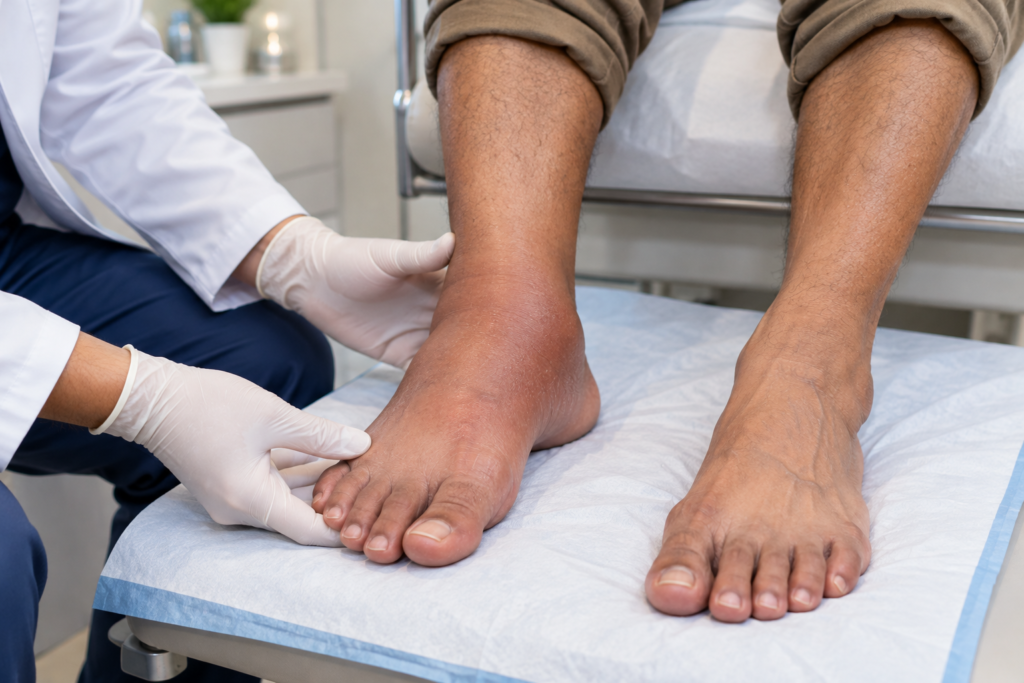
Red, Hot, Swollen Foot in Diabetes: Why It Needs Urgent Attention
A red, hot, swollen foot in diabetes can be a warning sign of acute Charcot neuroarthropathy, a serious condition that damages the bones and joints of the foot. It can occur even when there is no ulcer or open wound and may cause surprisingly little pain. Infection, a fracture and other conditions can look similar, so seek urgent medical assessment and avoid putting weight on the affected foot until a clinician advises you.
What Is Charcot Foot?
Charcot foot, also called Charcot neuroarthropathy, is a condition in which bones, joints and surrounding tissues become damaged in a foot affected by nerve damage, commonly associated with diabetes.
When protective sensation is reduced, a person may not feel a small injury or repeated stress normally. They may continue walking on the foot, allowing inflammation and bone or joint damage to worsen.
Early Charcot foot may cause:
- Redness in one foot
- Noticeable warmth compared with the other foot
- Swelling around the foot or ankle
- Little pain despite visible changes
- A difference in temperature between the two feet
- Changes in foot shape as the condition progresses
The skin may remain intact. The absence of an ulcer does not rule out a serious diabetic foot problem.
Charcot Foot Symptoms: What Should You Look For?
The combination of redness, warmth and swelling in a person with diabetes deserves prompt evaluation, especially when there is known neuropathy or reduced sensation.
| Sign | Why it matters |
|---|---|
| One foot is warmer than the other | May indicate active inflammation, including Charcot foot |
| Redness and swelling without a wound | Charcot foot can develop beneath intact skin |
| Little or no pain | Neuropathy may reduce the ability to feel injury |
| A recent minor injury or increase in walking | Repeated stress may contribute to bone and joint damage |
| A change in foot shape or arch | Can indicate structural damage and requires urgent assessment |
| Fever, spreading redness or discharge | May indicate infection and needs urgent medical care |
These signs cannot confirm Charcot foot on their own. A clinician must consider other possible causes and arrange appropriate examinations and imaging.
Can a Diabetic Foot Swell Without a Wound?
Yes. Diabetic foot swelling without a wound can occur with Charcot neuroarthropathy, injury, inflammation, circulation problems or other medical conditions.
An open ulcer is not required for Charcot foot to develop. In some cases, the first visible signs are swelling, redness and warmth while the skin remains intact.
Do not assume that a swollen foot is harmless simply because there is no cut, blister or ulcer. If one foot becomes newly red, hot or swollen, seek urgent medical assessment. Avoid massage, hot-water soaking and unnecessary walking while waiting for advice.
Charcot Foot or Infection: How Are They Different?
Charcot foot and diabetic foot infection can have overlapping symptoms. A wound, pus or fever may suggest infection, but infection does not always produce every classic sign, particularly in people with diabetes or reduced sensation.
| Feature | Possible Charcot foot | Possible infection |
|---|---|---|
| Skin | May be intact | May have a wound, crack or ulcer, but not always |
| Warmth and swelling | Common | Common |
| Pain | May be mild or absent | May be mild or absent in some people |
| Fever | Not usually a defining feature | May occur, especially with more severe infection |
| Foot shape | May change as bones and joints become damaged | Depends on the infection and its severity |
This comparison is not a home diagnostic test. Charcot foot, infection and other conditions can coexist. Medical assessment is needed to determine the cause.
What Should You Do Immediately?
If you notice a red, hot, swollen foot and have diabetes, take these steps:
- Stop unnecessary walking. Do not try to walk it off.
- Keep weight off the affected foot as much as safely possible while arranging urgent medical care.
- Contact a clinician urgently and explain that you have diabetes and a newly red, hot or swollen foot.
- Avoid massage and hot-water soaking. Do not use heating pads or apply ice directly to the skin.
- Do not self-treat with leftover antibiotics or assume the problem is only inflammation.
- Do not start compression bandages or stockings unless a clinician advises they are appropriate.
- Check for emergency symptoms, including fever, rapidly spreading redness, severe deterioration, black or blue skin, confusion or feeling very unwell.
If there is rapidly worsening swelling, severe infection symptoms, blackened tissue or signs of serious illness, go to an emergency department immediately. If you cannot safely avoid weight-bearing, ask someone to help you arrange transport rather than walking to the clinic.
How Is Charcot Foot Diagnosed?
A clinician will examine both feet and ask about diabetes, sensation changes, recent injuries, walking patterns and when the swelling began.
Assessment may include:
- Inspection of the skin, swelling and foot shape
- Comparison of warmth between the feet
- Checking pulses and circulation
- Assessment of protective sensation
- X-rays to look for bone or joint changes
- MRI or other imaging when early Charcot changes are suspected despite normal X-rays
- Tests for infection or other conditions when indicated
Early imaging can sometimes be normal, so a normal initial X-ray does not always exclude early Charcot foot. The clinician may recommend further imaging and follow-up if suspicion remains.
How Is Charcot Foot Treated?
When acute Charcot foot is suspected, prompt immobilisation and offloading are important to reduce pressure on the affected bones and joints. The treating specialist may recommend a knee-high immobilisation device or cast, depending on the person’s condition and local clinical practice.
Treatment may involve:
- Urgent specialist assessment
- Immobilisation and offloading
- Regular checks of the skin and swelling
- Follow-up examinations and imaging
- Review of footwear and mobility aids
- A longer-term protective footwear plan after the active phase settles
Treatment must be individualised. Do not attempt to create a tight home cast or improvise a device that could cause pressure injuries. People with diabetes and reduced sensation may not notice damage caused by poorly fitting footwear or dressings.
Can Charcot Foot Be Prevented?
Not every case can be prevented, but recognising nerve damage and protecting the feet can reduce avoidable injuries and delays in treatment.
Helpful measures include:
- Attending regular diabetic foot assessments
- Checking both feet daily for redness, swelling, blisters and skin changes
- Wearing properly fitted footwear
- Avoiding barefoot walking, particularly with reduced sensation
- Seeking advice after foot injuries, even if they seem minor
- Reporting a new temperature difference or swelling promptly
- Following the clinician’s advice about activity and offloading
A person with diabetic neuropathy should not rely on pain alone to identify injury. Visual checks and professional assessment are important because protective sensation may be reduced.
When Should You Go to Hospital?
Seek urgent medical assessment for any newly red, hot and swollen foot in a person with diabetes, even if there is no wound and the foot does not hurt.
Go to an emergency department immediately if the foot is rapidly worsening, redness is spreading quickly, the skin becomes black or blue, or there are signs such as fever with severe illness, confusion or faintness. Sudden swelling with calf pain or breathlessness also needs urgent evaluation because a blood clot may be another possibility.
Do not wait for an ulcer to appear before seeking care.
Frequently Asked Questions
Yes. Charcot foot can develop beneath intact skin and may initially cause warmth, redness and swelling without an open wound. People with diabetes-related neuropathy may feel little pain. A newly red, hot or swollen foot needs urgent clinical assessment rather than waiting for an ulcer or visible deformity to develop.
No. Nerve damage can reduce protective sensation, so the foot may be significantly inflamed or structurally damaged without severe pain. Pain levels alone cannot show how serious the condition is. New warmth, redness or swelling should be assessed urgently, even if the person can still walk or feels only mild discomfort.
It is not reliable to distinguish them at home. Both may cause warmth, redness and swelling, and people with neuropathy may have limited pain. A clinician may examine the skin, assess circulation and sensation, and arrange imaging or infection tests. Charcot foot and infection can also occur together.
No. Avoid unnecessary weight-bearing and seek urgent medical advice. Continuing to walk on a foot affected by acute Charcot changes can worsen bone and joint damage. If possible, have someone help you arrange transport and follow the clinician’s instructions about immobilisation and offloading.
Not always. Early Charcot changes may not be visible on initial X-rays. If the clinical findings remain concerning, a clinician may recommend MRI or other imaging and follow-up. Do not delay assessment because an initial X-ray is reported as normal when the foot remains newly hot, red or swollen.
No. Possible causes include infection, injury, fracture, gout, circulation-related problems and a blood clot, among others. Because these conditions can require different treatments, a new red, hot and swollen foot in someone with diabetes needs urgent assessment rather than self-diagnosis.
Key Takeaway
A red, hot, swollen foot in diabetes can be an early sign of Charcot foot, even when the skin is intact and pain is minimal. Stop unnecessary walking, seek urgent medical assessment and follow advice about offloading. Early recognition and treatment can help limit damage and protect long-term foot function.