
Pus From a Foot Wound in Diabetes in Vyara: What Should You Do?
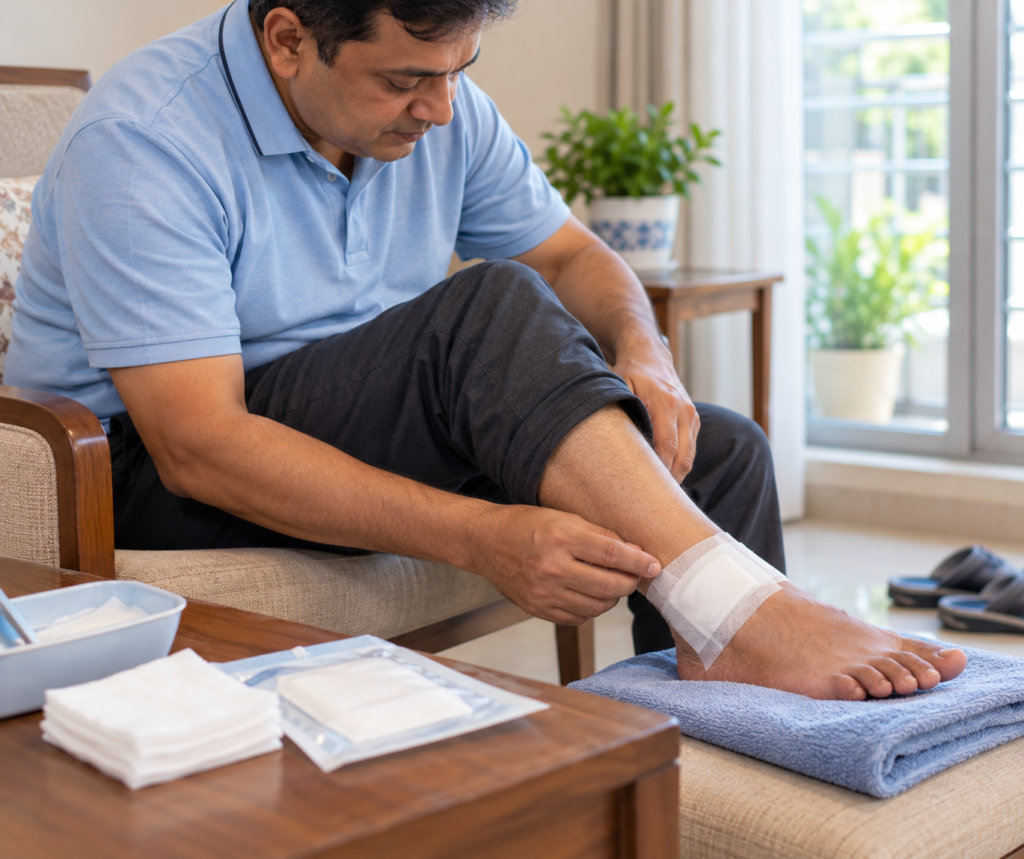
Pus from a foot wound in a person with diabetes can be a sign of infection and needs prompt medical assessment. Do not squeeze the wound, cut away tissue or apply home remedies. Gently protect the area with a clean, sterile dressing and arrange medical care as soon as possible, even if the wound is not painful.
Why Can a Diabetic Foot Wound Produce Pus?
Pus may develop when bacteria infect damaged skin or deeper tissue. Diabetes can increase the risk of foot complications because nerve damage may reduce pain sensation and poor circulation can slow healing. As a result, a serious wound may not always cause significant pain.
Pus is not the only sign of infection. Redness, warmth, swelling, unpleasant odour, increasing drainage or a wound that is getting larger can also be concerning. A healthcare professional needs to assess the wound to determine the severity and appropriate treatment.
Warning Signs of an Infected Diabetic Foot Wound
Watch for these changes:
- Pus or cloudy drainage: Fluid that is thick, yellow, greenish or otherwise unusual.
- Redness or warmth: Skin around the wound may become red or warmer than the surrounding area.
- Swelling: The foot or toes may appear swollen.
- Unpleasant smell: A new or persistent odour can be a warning sign.
- Worsening wound: The wound may deepen, enlarge or fail to heal.
- Colour changes: Dark, purple or black areas require urgent assessment.
- General symptoms: Fever, chills, confusion or feeling very unwell can indicate a more serious infection.
Seek emergency medical care if you have fever with a worsening wound, rapidly spreading redness, blackened skin, severe swelling, confusion or feel very unwell. Do not wait for pain to develop.
Safe First Steps If Pus Comes From a Foot Wound
Until a clinician assesses the wound:
- Arrange prompt medical assessment. Do not delay because the wound seems small or painless.
- Wash your hands before touching the dressing or surrounding skin.
- Protect the wound with a clean, sterile, non-stick dressing if available.
- Avoid pressure on the affected area as much as possible.
- Do not squeeze or probe the wound. Do not attempt to drain pus or remove dead tissue yourself.
- Avoid unprescribed creams, powders, antiseptics or home remedies inside the wound.
- Do not soak the foot or use hot water to clean it.
- Follow your diabetes treatment plan and seek medical advice about blood glucose management during the infection.
These steps are temporary precautions, not a substitute for examination and treatment.
Pus From a Foot Wound in Diabetes in Vyara: Where Can You Seek Care?
People with diabetes who notice pus, spreading redness, swelling or a non-healing foot wound should seek prompt medical assessment. The clinician may examine the wound, check circulation and sensation, and decide whether wound cleaning, a sample for testing, antibiotics, or another treatment is appropriate. Some wounds require urgent hospital-based care.
Read about Nonsurgical Management of Diabetic Foot Problems to learn about approaches that may be used when clinically suitable. Patients can also check the Diabetic Foot Ulcer Treatment in Vyara OPD page for local clinic information.
The appropriate treatment depends on the depth and severity of the wound, blood supply and presence of infection. Antibiotics should be prescribed by a qualified clinician; they should not be started from leftover medication or someone else’s prescription.
How Can People With Diabetes Help Prevent Foot Wounds?
- Check both feet every day, including the soles and spaces between the toes.
- Wear properly fitting footwear and avoid walking barefoot.
- Wash feet gently and dry carefully, especially between the toes.
- Avoid cutting corns or calluses yourself.
- Seek medical advice early for blisters, cracks, cuts or colour changes.
- Attend recommended diabetic foot checks, especially if you have numbness or circulation problems.
- Follow your healthcare professional’s advice on blood glucose control and foot care.
Frequently Asked Questions
Pus is a concerning sign that may indicate infection and should be assessed promptly. Other findings, such as redness, warmth, swelling or worsening drainage, can also suggest infection. A clinician must examine the wound to determine the diagnosis and treatment required.
No. Squeezing, cutting or probing the wound can damage tissue and worsen the problem. Protect it with a clean dressing and arrange prompt medical assessment. Do not attempt to drain it at home or apply unprescribed substances inside the wound.
Yes. Diabetes-related nerve damage can reduce the ability to feel pain, so an infected wound may be less painful than expected. Check your feet daily and seek care for pus, redness, swelling, odour, skin colour changes or a wound that is not healing.
Patients can visit the Vyara diabetic foot OPD information page. However, a wound with pus needs prompt clinical assessment, and emergency warning signs require urgent hospital care rather than waiting for a routine appointment.