
Diabetic Foot Emergency Signs You Must Not Ignore
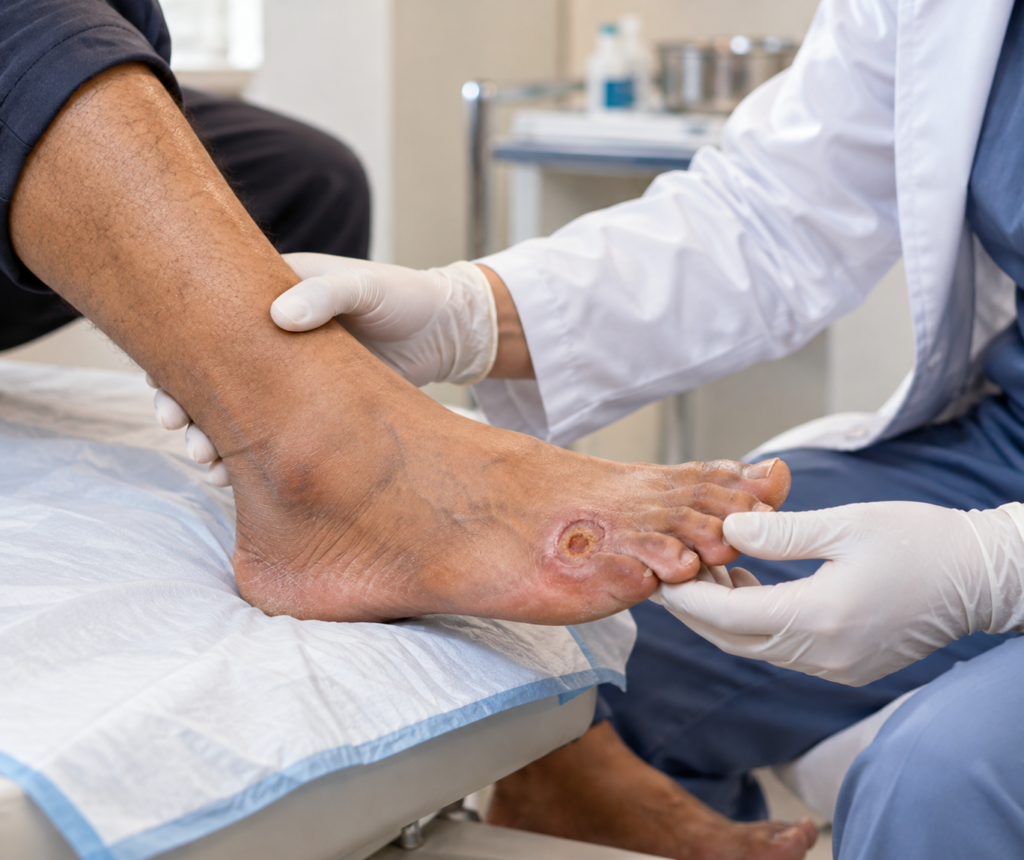
A diabetic foot wound can become serious before it causes much pain, particularly when nerve damage reduces sensation. Diabetic foot emergency signs include spreading redness, pus, rapidly increasing swelling, black or dead-looking tissue, a deep wound, fever or sudden deterioration. Seek emergency medical care for severe or rapidly worsening symptoms instead of waiting for the wound to heal at home.
Which diabetic foot emergency signs need immediate hospital care?
A person with diabetes should seek immediate emergency assessment if any of the following develops:
- Black, blue or dead-looking tissue: This may indicate tissue damage or severely reduced blood supply.
- Rapidly spreading redness or swelling: Redness extending around the wound or moving up the foot or leg may indicate a spreading infection.
- Pus or foul-smelling drainage with worsening wound changes: These can indicate infection, especially when accompanied by swelling, redness or tissue damage.
- A deep or rapidly worsening wound: A wound exposing deeper tissue, tendon or bone requires urgent specialist assessment.
- Fever, chills or feeling severely unwell: These may indicate that an infection is affecting the whole body.
- Sudden severe pain, new numbness or a cold, pale foot: These changes may indicate a serious circulation or nerve-related problem.
Confusion, faintness, difficulty breathing or other signs of severe illness alongside a foot wound require emergency medical attention. Do not delay care while trying home remedies.
The IWGDF/IDSA guidance identifies severe infection, gangrene, deep abscess and severe lower-limb ischaemia as conditions that may require urgent specialist or surgical assessment.
What are the early diabetic foot infection symptoms?
Not every infected diabetic foot wound causes fever or severe pain. Watch for changes around the wound, including:
- Redness around the skin
- Local swelling
- Increased warmth
- Pus or cloudy discharge
- New tenderness or pain
- A wound that is getting larger or deeper
- Increasing drainage or a change in the wound’s appearance
- Unexplained worsening of blood glucose control
A wound may be infected even when only a few symptoms are present. People with diabetic neuropathy may not feel the pain that would normally warn them about an injury.
If you notice possible infection, arrange prompt medical assessment. If symptoms are rapidly progressing, the foot looks black or severely discoloured, or you feel unwell, go to an emergency department.
Can a diabetic foot ulcer be dangerous without pain?
Yes. Diabetes can damage peripheral nerves, reducing the ability to feel pressure, heat, cuts and wounds. A small blister or crack may therefore worsen without producing much discomfort.
Reduced blood circulation can also delay healing. When infection and poor blood supply occur together, the risk of tissue damage increases.
Check both feet daily, including the soles, heels, spaces between the toes and areas that rub against footwear. Use a mirror or ask someone to help if you cannot see the soles clearly.
Do not assume a wound is harmless because it does not hurt. A new ulcer, unexplained skin breakdown or persistent wound in someone with diabetes needs professional assessment.
When should you go to hospital for a foot ulcer?
Use the following guide to decide how urgently to seek care. It does not replace an examination by a clinician.
| Finding | Recommended action |
|---|---|
| Black tissue, a cold or pale foot, or suspected severe loss of circulation | Emergency assessment immediately |
| Rapidly spreading redness, severe swelling or a deep wound | Emergency assessment immediately |
| Fever, chills, confusion or feeling severely unwell with a foot wound | Emergency assessment immediately |
| New pus, redness, warmth or swelling around an ulcer | Urgent same-day medical assessment |
| A new blister, cut or open wound without obvious infection | Contact a diabetic-foot clinician promptly; do not wait for it to worsen |
| A wound that is not healing or keeps reopening | Arrange prompt specialist assessment |
If you cannot access a diabetic-foot clinic quickly and the wound is worsening, attend the nearest hospital emergency department. Do not wait for a routine appointment when emergency warning signs are present.
What should you do while arranging medical care?
Take these steps without delaying transport or professional assessment:
- Remove pressure from the affected foot. Avoid unnecessary walking and do not continue working or exercising on an injured foot.
- Cover the wound gently. If practical, use a clean, sterile, non-stick dressing without pressing tightly.
- Do not cut or scrape tissue. Avoid removing calluses, trimming dead tissue or squeezing pus yourself.
- Avoid home remedies. Do not apply caustic substances, harsh antiseptics, powders or unprescribed creams to the wound.
- Do not soak the foot. Prolonged soaking can damage the skin and is not a substitute for wound care.
- Bring your medication details. Tell the treating team about diabetes medicines, allergies and any antibiotics already taken.
- Follow emergency instructions. If the person is severely unwell, confused or faint, seek emergency help immediately.
Do not start leftover antibiotics or stop prescribed medicines without medical advice. Foot infections may require wound assessment, circulation testing, laboratory investigations, imaging or specialist treatment.
How do doctors assess a potentially infected diabetic foot?
A clinician will examine the wound and assess the severity of any infection. Depending on the findings, the assessment may include:
- Measuring the wound and checking its depth
- Examining surrounding redness, swelling and drainage
- Assessing foot pulses and circulation
- Checking protective sensation
- Evaluating blood glucose and general health
- Taking a suitable wound sample when indicated
- Ordering imaging if a deep infection or bone involvement is suspected
Treatment depends on the findings. It may involve wound cleaning and professional debridement, appropriate dressings, pressure relief, antibiotics for diagnosed infection, or urgent surgery when necessary. People with impaired blood supply may also need vascular assessment.
Antibiotics alone are not always sufficient for a deep infection, abscess, dead tissue or severe circulation problem. The treatment plan must address the underlying cause and the condition of the foot.
How can you reduce the risk of a diabetic foot emergency?
Daily foot care and regular professional checks can help identify problems before they become severe.
- Examine both feet every day.
- Check inside shoes for rough seams, stones or other objects.
- Wear properly fitting footwear.
- Avoid walking barefoot, including indoors.
- Keep the skin clean and moisturised, but avoid applying moisturiser between the toes.
- Do not use sharp tools to remove corns or calluses.
- Attend regular diabetic-foot assessments based on your risk level.
- Seek professional advice early if you notice a blister, crack, colour change or wound.
People with previous foot ulcers, reduced sensation, poor circulation or foot deformity may need more frequent assessment. Follow the individual care plan recommended by your clinician.
Frequently Asked Questions
Black tissue, rapidly spreading redness, severe swelling, a deep wound, pus with worsening symptoms, fever, chills or a cold and pale foot can indicate a serious problem. Seek emergency care for severe or rapidly progressing symptoms. Do not wait for pain, because diabetic nerve damage can reduce sensation.
Yes. A diabetic foot infection may cause local redness, warmth, swelling or drainage without fever. Some people have reduced sensation or a less obvious response to infection. A new or worsening wound should be assessed promptly, even if there is no fever or significant pain.
Go to an emergency department immediately if the wound is rapidly worsening, the foot becomes black or cold, redness spreads quickly, or you develop fever, confusion or severe illness. New pus or local signs of infection also need urgent medical assessment, preferably the same day.
Not always, but black or dead-looking tissue can indicate tissue death or severe circulation problems and must be assessed urgently. Do not attempt to remove the tissue yourself or wait to see whether it improves. Seek immediate medical attention.
Do not rely on pain to judge its seriousness. Diabetes-related nerve damage can reduce protective sensation, allowing an ulcer or infection to progress unnoticed. Protect the foot from pressure, cover the wound gently and arrange prompt professional assessment.
Home care alone is not appropriate for a suspected infected diabetic foot ulcer. A clinician must assess the wound and determine whether antibiotics, professional wound care, circulation investigations or other treatment is required. Avoid squeezing the wound, cutting tissue or using unprescribed remedies.
Medical evidence
The International Working Group on the Diabetic Foot (IWGDF) and Infectious Diseases Society of America (IDSA) published evidence-based guidance on diabetic foot infection assessment and treatment in 2023. The guidance recommends classifying infection severity and identifies severe infection, extensive gangrene, suspected deep abscess and severe lower-limb ischaemia as reasons for urgent specialist assessment.
References:
If you notice a new wound, spreading redness, unusual swelling or other concerning changes, seek medical assessment promptly rather than relying on home treatment. Learn more about diabetic foot ulcer treatment and the importance of appropriate wound care. For ongoing assessment and follow-up, you can also explore the clinic’s OPD centres across Gujarat to find a listed location that may be convenient for you. If the foot is rapidly worsening or you have signs of a severe infection, seek emergency care without waiting for a routine appointment.