
Foot Turning Black with Diabetes in Bharuch: Emergency Signs and When to Seek Help in Surat
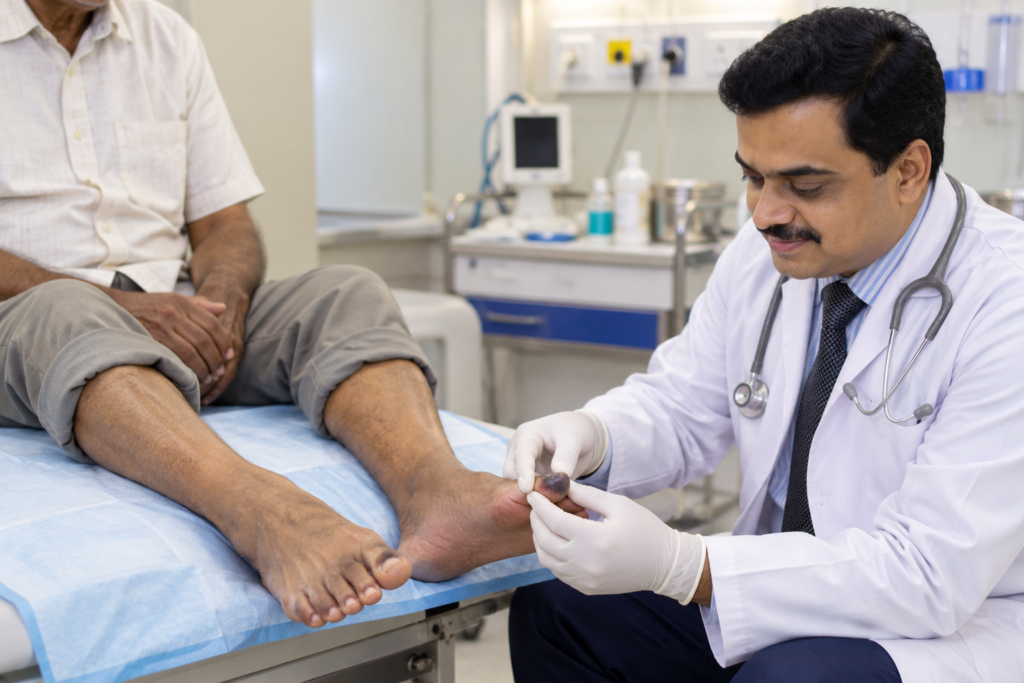
If your foot or toe is turning black and you have diabetes, seek emergency medical care immediately. Black or darkened tissue may indicate gangrene, severe infection, or reduced blood flow that threatens the foot. Do not wait for pain, try home remedies, or delay assessment for a routine appointment. If you are in Bharuch, go to the nearest emergency department and arrange urgent specialist care in Surat when advised.
Why Can a Foot Turn Black in Diabetes?
A black or darkened area on the foot is a serious warning sign, particularly in someone with diabetes. It can occur when tissues receive too little blood, when an infection damages tissue, or when an existing wound becomes severely complicated.
Two diabetes-related problems can contribute:
- Poor circulation: Diabetes can damage blood vessels and reduce blood supply to the feet. Without enough oxygen-rich blood, tissue may become damaged and heal poorly.
- Nerve damage: Diabetic neuropathy can reduce the ability to feel pain, heat, or an injury. A small cut, blister, or pressure wound may go unnoticed and become infected.
In severe cases, tissue death is called gangrene. A black foot does not confirm gangrene by appearance alone, but it must be assessed urgently by a medical professional. The NHS explains the warning signs and urgency of gangrene.
Warning Signs That Need Emergency Assessment
Do not wait for all the symptoms below to appear. Seek emergency assessment if you notice any of these changes in a person with diabetes:
- A toe, part of the foot, or skin becoming black, dark purple, or unusually dark
- A foot that suddenly becomes cold, pale, blue, or discoloured
- A wound with a foul smell, pus, or increasing discharge
- Rapidly increasing swelling, redness, or tissue changes around a wound
- Severe or suddenly worsening foot pain
- Fever, chills, confusion, or feeling very unwell alongside a foot wound
Important: Diabetic nerve damage may reduce pain, so a blackened toe or foot can be dangerous even if it does not hurt. Do not wait for pain or fever before seeking help. NIDDK’s diabetic foot guidance recommends immediate medical contact for signs of a serious foot infection, including a blackened, foul-smelling foot infection.
What Should You Do If Your Foot Turns Black in Bharuch?
If you notice blackening, treat it as an emergency rather than waiting to see whether the colour improves.
- Go to the nearest emergency department immediately. Do not delay emergency assessment to travel to another city or wait for a specialist clinic appointment.
- Keep pressure off the affected foot. Avoid unnecessary walking or standing. Ask someone to help you move safely.
- Do not cut, scrape, massage, or soak the affected area. Avoid applying home remedies, chemicals, or unprescribed creams.
- Do not attempt to remove black tissue yourself. The cause and extent of tissue damage must be assessed clinically.
- Bring your medication details and diabetes records if readily available. Do not delay leaving to collect paperwork.
- Follow the emergency team’s instructions. Treatment may require urgent specialist assessment, wound management, antibiotics, circulation-related procedures, or surgery depending on the findings.
If you feel severely unwell, have rapidly worsening symptoms, or cannot travel safely, call local emergency services.
When Should You Come to Surat for Specialist Diabetic Foot Care?
For someone travelling from Bharuch, the important distinction is between emergency stabilisation and specialist follow-up.
If your foot is turning black, seek emergency assessment immediately in Bharuch or at the nearest accessible emergency hospital. Do not spend time arranging a routine Surat OPD visit first. The emergency team can assess the urgency, begin necessary treatment, and determine whether an immediate transfer to a hospital with appropriate surgical or vascular services is needed.
If the treating team advises specialist diabetic foot care in Surat, arrange it urgently-on the same day when directed and medically safe. Do not assume that an outpatient appointment is an adequate substitute for emergency treatment.
For location information, you can consult the Bharuch diabetic foot ulcer treatment OPD page. Use this for OPD details, not as a reason to postpone emergency care.
What May Doctors Check in Hospital?
The assessment depends on the appearance of the foot, the person’s general condition, and the suspected cause. The medical team may check:
1. Blood Supply to the Foot
Doctors may examine foot pulses, skin temperature, and circulation. Additional tests, such as Doppler ultrasound or other vascular investigations, may be needed to assess blood flow and determine whether urgent intervention is appropriate.
2. Infection and Tissue Damage
The team may examine the wound and surrounding skin, assess the extent of damaged tissue, and order blood tests or imaging when indicated. If a deep infection or gangrene is suspected, urgent surgical assessment may be necessary.
3. Blood Glucose and Overall Health
Blood glucose and other relevant health measures may be assessed as part of treatment. Diabetes management is important, but controlling glucose alone cannot replace urgent treatment for dead tissue, severe infection, or critically reduced blood supply.
4. A Treatment and Transfer Plan
Depending on the findings, care may involve wound treatment, antibiotics for infection, procedures to improve blood flow, removal of dead tissue, or other surgery. Not every blackened area has the same cause, so treatment must be based on a clinical examination.
Can a Blackened Diabetic Foot Be Saved?
The outcome depends on the cause, how much tissue is affected, the blood supply, the severity of infection, and how quickly effective treatment begins. Early emergency assessment may help doctors identify treatable problems and protect healthy tissue.
However, severely damaged or dead tissue may not recover, and some cases require surgery or amputation to prevent a life-threatening infection from spreading. No online article can predict the outcome for an individual foot.
Do not apply substances to change the colour or appearance of the area. Seek care first, even if the affected part is small.
How Can People with Diabetes Reduce the Risk of Serious Foot Problems?
Daily foot care cannot eliminate every complication, but it can help identify problems before they progress.
- Check both feet every day for cuts, blisters, swelling, skin discolouration, or changes in temperature.
- Look between the toes and at the soles and heels.
- Wear properly fitting footwear and avoid walking barefoot.
- Never use hot water bottles or heating devices directly on feet with reduced sensation.
- Do not cut corns or calluses yourself.
- Attend recommended diabetes and foot-screening appointments.
- Report a new wound, colour change, swelling, or other unusual foot change promptly.
People who have neuropathy, poor circulation, or a previous foot ulcer may need more frequent professional foot checks. Read the Diabetic Foot Conditions guide for more information about warning signs and foot protection.
Frequently Asked Questions
Yes. A black toe may indicate gangrene, severe tissue damage, or poor circulation. It requires immediate emergency medical assessment, even if there is no pain. Do not wait for the colour to spread or for other symptoms to develop.
Seek emergency assessment at the nearest accessible emergency department first. Do not delay treatment to travel to a routine Surat OPD. The treating team can decide whether an immediate transfer to a specialist hospital in Surat is necessary and safe.
Yes. Diabetes-related nerve damage can reduce the ability to feel pain, so serious foot damage may be painless. A blackened area still requires immediate medical assessment, regardless of whether it hurts.
Do not try to treat a blackened toe with home remedies, chemicals, or unprescribed creams. Do not cut or scrape the tissue. Seek emergency care so the cause, blood supply, and possible infection can be assessed and treated appropriately.
No. Treatment depends on the cause and severity of the damage, the blood supply, and whether infection is present. Some people need procedures or wound treatment, while severe cases may require amputation to protect their health. Only an in-person medical assessment can guide treatment.
Medical Disclaimer
This article is for educational purposes and is not a substitute for emergency assessment or individual medical advice. A blackened foot or toe in a person with diabetes may represent a limb-threatening emergency. Seek immediate emergency medical care rather than waiting for a routine OPD appointment.