
Tingling Feet with Diabetes in Vyara: Early Nerve Signs
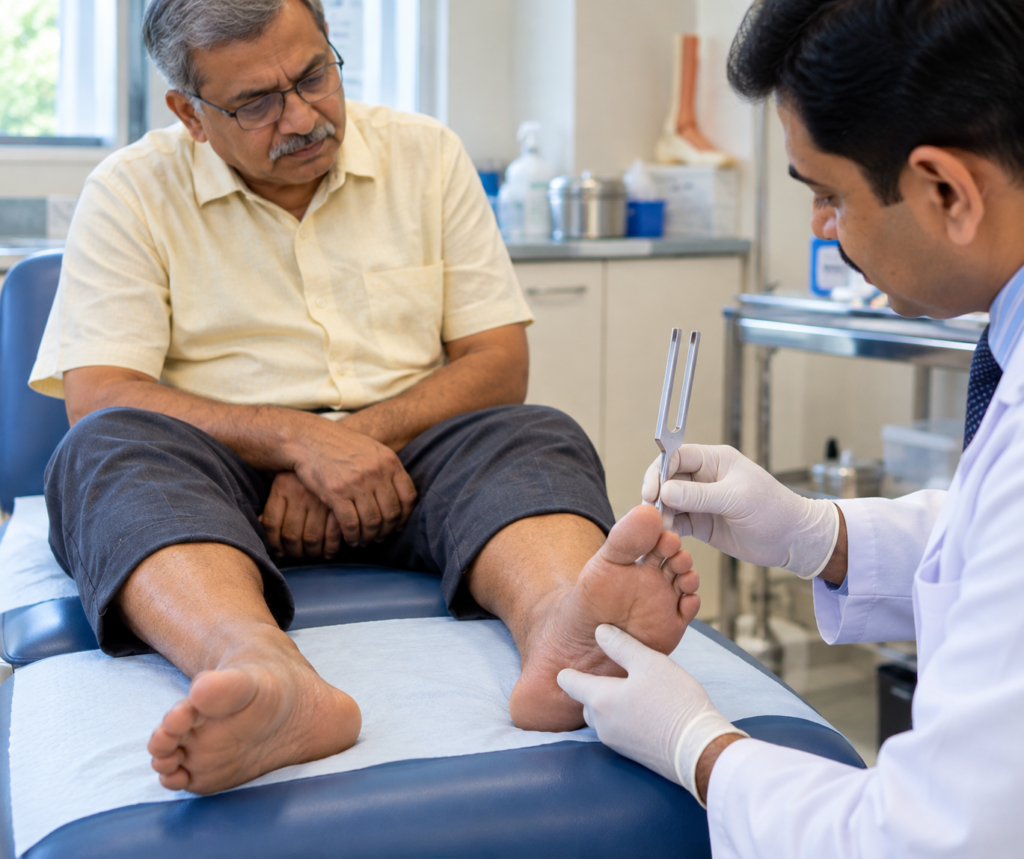
Tingling, prickling or a pins-and-needles sensation in the feet can be an early sign of diabetes-related nerve damage. If you experience tingling feet with diabetes in Vyara, do not ignore the symptom, even if it comes and goes or feels worse at night. A healthcare professional can assess foot sensation, circulation and other possible causes, then recommend appropriate treatment and foot-care steps.
Why Does Diabetes Cause Tingling in the Feet?
Over time, high blood glucose can damage nerves and the small blood vessels that supply them. This condition is known as diabetic neuropathy. It often affects the feet and legs, although symptoms and severity vary from person to person.
Tingling may feel like tiny pins pricking the skin, buzzing, burning or an unusual crawling sensation. Some people notice it in both feet, while others experience symptoms more noticeably on one side.
Possible symptoms of diabetes-related nerve damage include:
- Tingling or pins and needles in the toes or soles.
- Burning sensations, especially at night.
- Numbness or reduced ability to feel touch.
- Pain or unusual sensitivity to bedsheets or footwear.
- Difficulty noticing minor cuts, blisters or pressure injuries.
- Changes in balance or walking when sensation is affected.
Tingling does not automatically mean you have diabetic neuropathy. Vitamin deficiencies, nerve compression and other medical conditions can also cause similar symptoms, so proper assessment is important.
Is Tingling an Early Warning Sign of Nerve Damage?
It can be. Some people experience tingling, burning or unusual sensitivity before noticing reduced sensation. Others develop numbness without much tingling, and some may have nerve damage without obvious symptoms.
This matters because reduced sensation can make it harder to notice an injury. A tight shoe, small blister or minor cut may go unnoticed and gradually become a wound. Diabetes can also affect circulation and make some foot wounds harder to heal.
Seek medical advice if tingling is new, persistent, recurring or worsening. Do not wait for numbness or an open wound to develop before arranging an assessment.
What Should You Do If Your Feet Keep Tingling?
1. Arrange a foot and nerve assessment
A clinician can review your symptoms, diabetes history and medicines, examine your feet, and check sensation and circulation. Depending on the findings, further tests may be needed to investigate other causes of tingling.
2. Check both feet every day
Look at the tops, soles, heels, toenails and spaces between your toes. Check for blisters, cuts, redness, swelling, cracks or unusual colour changes. Use a mirror or ask a family member to help if you cannot see the soles clearly.
3. Wear comfortable, well-fitting footwear
Choose footwear that protects your toes and does not rub or create pressure points. Check the inside of your shoes for stones, rough edges or other objects before putting them on. Avoid walking barefoot, including indoors.
4. Protect your feet from burns and injuries
If sensation is reduced, you may not accurately feel heat or cold. Avoid placing your feet near heaters or hot-water bottles, and do not test bathwater with your feet. Use warm, not hot, water when washing.
5. Follow your diabetes treatment plan
Take prescribed medicines as directed and follow your recommended blood glucose monitoring plan. Managing diabetes and other risk factors can help reduce the risk of further complications, although it may not reverse existing nerve damage.
6. Do not self-treat foot wounds
Avoid cutting calluses, using corn-removal chemicals or applying unprescribed products to damaged skin. If you notice a wound, blister or signs of infection, seek medical advice promptly.
How Is Diabetic Neuropathy Checked?
A clinical assessment may include questions about when the tingling started, whether it affects one or both feet, whether symptoms worsen at night, and whether you have noticed pain, numbness or balance problems.
The clinician may also:
- Examine the skin, nails and shape of both feet.
- Check foot pulses and circulation.
- Use a monofilament to assess protective sensation.
- Use a tuning fork to assess vibration sensation.
- Check reflexes, balance or walking when indicated.
- Recommend blood tests or other investigations if another cause is suspected.
The tests depend on your symptoms and examination. A single symptom or test should not be used on its own to determine the cause.
When Should You Seek Urgent Medical Care?
Tingling that persists or worsens needs medical assessment, but certain changes require more urgent attention.
Seek prompt medical care if you notice:
- A new blister, cut, ulcer or wound.
- Redness, warmth, swelling or discharge around a wound.
- A foot that changes colour or becomes unusually cold.
- Rapidly worsening symptoms or new weakness.
If your foot or toe turns black, becomes suddenly cold or pale, or you have a serious wound with fever, chills or rapidly spreading redness, seek emergency care immediately. Do not wait for a routine appointment.
Where Can Patients in Vyara Seek Diabetic Foot Care?
If you have diabetes and recurring tingling, numbness or burning in your feet, arrange an assessment rather than waiting for a wound to appear. Early evaluation can help identify possible nerve problems and establish a foot-care plan suited to your needs.
For local consultation details, visit the diabetic foot ulcer treatment page for Vyara. Contact the clinic to confirm OPD availability and whether your symptoms can be assessed during the next session.
For more information about common diabetic foot problems, warning signs and preventive care, read the clinic’s guide to diabetic foot conditions.
Frequently Asked Questions
Yes. Tingling or pins and needles can be a symptom of peripheral neuropathy, a type of nerve damage associated with diabetes. However, other conditions can also cause tingling, so a healthcare professional should assess persistent or recurring symptoms.
Some people with peripheral neuropathy notice burning, tingling or pain more at night. The reason can vary, and nighttime symptoms alone cannot confirm the cause. Tell your clinician when the sensations occur and whether they affect your sleep.
Yes, recurring tingling deserves attention even when there is no pain. It may indicate nerve irritation or damage, and reduced sensation can make injuries harder to notice. Check your feet daily and arrange a clinical assessment.
A clinician may examine the feet and test protective sensation with a monofilament, vibration sensation with a tuning fork, reflexes and circulation. Blood tests or other investigations may be recommended if another cause, such as a vitamin deficiency, is suspected.
Visit the clinic’s Vyara OPD page for local consultation information. Contact the clinic before travelling to confirm the next OPD session and whether an assessment is available for your symptoms.