
Blood Sugar Control for Diabetic Wound Healing in Vyara
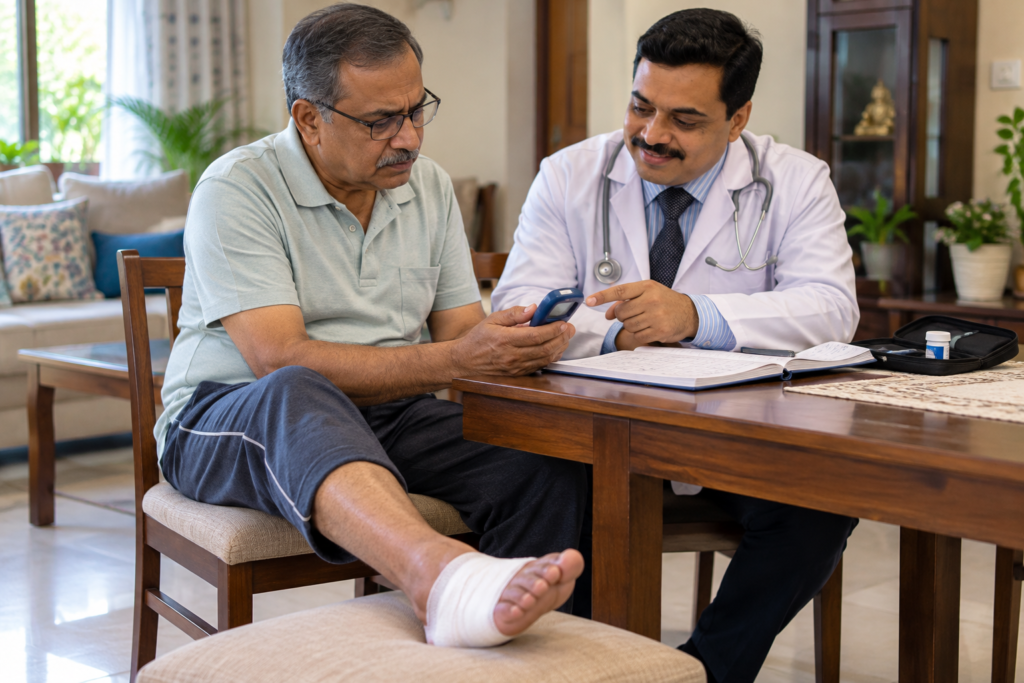
Keeping blood sugar within your individual target range is an important part of caring for a diabetic foot wound. If you need sugar control for wound healing in Vyara, your care plan should include glucose monitoring, prescribed diabetes treatment, appropriate wound care and regular medical review. High blood sugar can interfere with the body’s ability to fight infection and heal damaged tissue, while poor circulation may also delay recovery.
Why Does Blood Sugar Matter When a Foot Wound Is Healing?
When blood glucose stays high, it can affect the body’s normal healing processes and increase the risk of infection. Diabetes may also damage nerves and blood vessels, making it harder to notice injuries and deliver enough blood to the affected foot.
Several factors can slow wound healing:
- Blood glucose that remains above the individual’s target range.
- Reduced blood circulation to the feet.
- Nerve damage that allows injuries to go unnoticed.
- Infection or repeated pressure on the wound.
- Smoking, poor nutrition or other health problems that affect recovery.
Blood sugar management is important, but it is not the only part of treatment. A diabetic foot wound also needs appropriate assessment, protection from pressure and treatment of any infection or circulation problem.
What Blood Sugar Level Should You Aim for While a Wound Heals?
There is no single glucose target that is right for every person with diabetes and a foot wound. Your doctor should set a target based on your age, diabetes medicines, other health conditions, risk of low blood sugar and the severity of the wound.
For many non-pregnant adults with diabetes, commonly used general targets are:
| When blood sugar is checked | Typical general target |
|---|---|
| Before a meal | 80–130 mg/dL |
| About 1–2 hours after the start of a meal | Below 180 mg/dL |
These are general diabetes-management targets, not wound-specific treatment instructions. Your clinician may recommend different targets depending on your circumstances. Do not change your medicines or aim for lower readings without discussing your plan with your healthcare team.
If readings repeatedly exceed your prescribed target, record them and contact your diabetes care team for advice. If you have very high readings with vomiting, confusion, difficulty breathing or severe weakness, seek urgent medical care.
How Can You Manage Blood Sugar During Wound Healing?
1. Take your diabetes medicines as prescribed
Continue your prescribed insulin or other diabetes medicines according to your treatment plan. Do not stop insulin, double a dose or change medicine timings on your own because a wound has developed. If you are eating less than usual or your readings are changing significantly, contact your clinician for advice.
2. Monitor your glucose as advised
Your healthcare team can tell you how often to check blood sugar. Depending on your treatment, this may include checks before meals, after meals or at other times. Record your readings, medicines and any symptoms so your clinician can identify patterns.
3. Follow a balanced eating plan
Eat regular, balanced meals according to your diabetes plan. Include appropriate portions of vegetables, protein-rich foods and high-fibre carbohydrates. Avoid making drastic dietary changes or skipping meals to lower glucose quickly, especially if you take medicines that can cause low blood sugar.
4. Prevent low blood sugar
Trying to lower glucose too aggressively can cause hypoglycaemia. Know the symptoms of low blood sugar, such as sweating, shaking, hunger, dizziness or confusion, and follow the low-glucose plan provided by your clinician. A reading below 70 mg/dL is generally considered low and needs prompt action according to your care plan.
5. Attend follow-up appointments
Your clinician may review glucose readings, medicines, wound size, signs of infection and circulation. Keeping appointments allows the team to adjust the care plan when necessary.
What Foot Wound Care Is Needed Alongside Sugar Control?
Good glucose management cannot replace direct wound care. A diabetic foot wound should be assessed by a qualified healthcare professional, especially if it is new, deep, discharging or slow to heal.
Depending on the wound, treatment may include:
- Appropriate wound cleaning and dressing.
- Reducing pressure on the affected area.
- Assessment of circulation and protective sensation.
- Evaluation and treatment of infection when present.
- Further tests or specialist treatment when indicated.
Do not squeeze a wound, cut away dead tissue, apply harsh chemicals or use unprescribed home remedies. Avoid unnecessary pressure on the affected foot and follow the wound-care instructions provided by your clinician.
When Should You Seek Medical Attention?
Arrange prompt medical assessment if a foot wound is not improving, becomes red or swollen, feels unusually warm, produces pus or develops an unpleasant smell. People with diabetes may have nerve damage and may not experience much pain even when a wound is serious.
Seek emergency care if the foot or toe turns black, becomes suddenly cold or pale, redness spreads rapidly, or you develop fever or chills with a worsening wound. Do not wait for blood sugar to improve before seeking treatment for a suspected infection.
Sugar Control for Wound Healing in Vyara: Getting the Right Support
People in Vyara who have diabetes and a foot wound should follow an individual plan that addresses both glucose management and the wound itself. The care team can assess the wound, review glucose readings and medicines, and decide whether local care or further investigations are needed.
For information about the clinic’s services and local consultations, contact the clinic before travelling to confirm availability. For additional educational information and patient resources, visit the clinic’s Patient Area once the correct page link has been confirmed.
Frequently Asked Questions
High blood sugar can interfere with normal healing and make infections harder to manage. However, circulation, pressure, wound depth, nutrition and other health conditions also affect recovery. Effective care usually combines glucose management with appropriate wound treatment and follow-up.
Targets vary by individual. Common general targets for many non-pregnant adults with diabetes are 80–130 mg/dL before meals and below 180 mg/dL about one to two hours after starting a meal. Your clinician should confirm the targets that are appropriate for you.
No. Do not increase, stop or change insulin or other diabetes medicines without medical advice. Your healthcare team can review your glucose readings, eating pattern and current treatment to decide whether adjustments are needed.
Follow a balanced eating plan that supports glucose control and provides enough energy, protein and essential nutrients. Suitable foods and portions depend on your overall health and any kidney or other medical conditions. A clinician or dietitian can help tailor your plan.
Arrange prompt assessment for a new or slow-healing wound, redness, swelling, warmth, pus or an unpleasant smell. Seek emergency care for blackened tissue, a suddenly cold or pale foot, rapidly spreading redness or fever with a worsening wound.