
Cold Feet and Diabetes in Vyara: Is Poor Circulation the Cause?
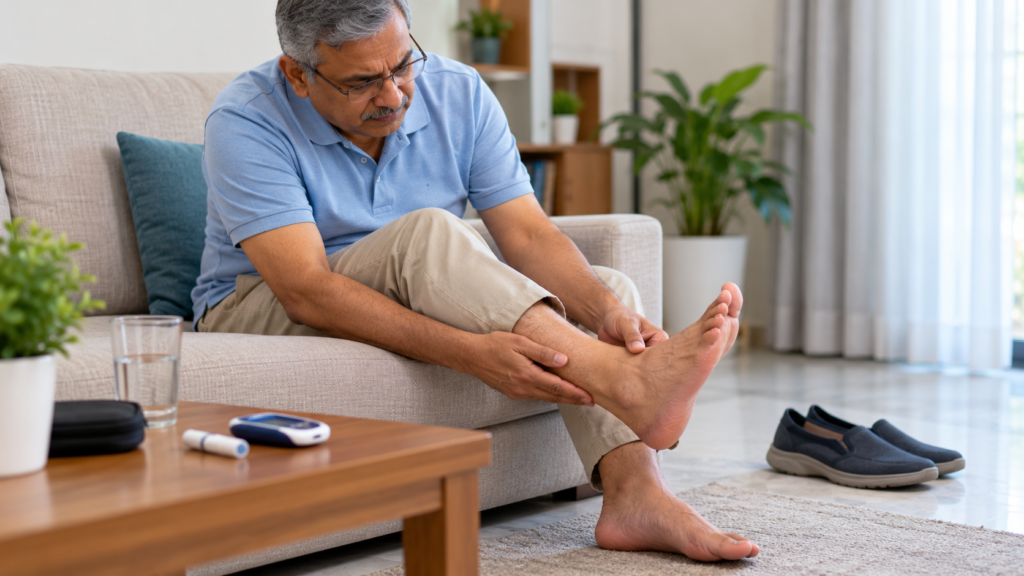
Cold feet diabetes in Vyara is an important topic for people who notice that their feet feel unusually cold, especially when they also have diabetes. Cold feet may result from weather, reduced activity or other harmless causes. However, persistent coldness can sometimes indicate poor blood circulation or nerve-related problems.
Diabetes increases the risk of peripheral artery disease (PAD), a condition that reduces blood flow to the legs and feet. In addition, diabetic nerve damage can change how a person senses temperature.
Therefore, cold feet should not automatically be dismissed as a minor problem.
This guide explains why feet become cold, how to perform simple checks at home, which warning signs matter and when to seek medical attention.
Why Do People With Diabetes Experience Cold Feet?
Several conditions can cause cold feet. However, the underlying reason is not always poor circulation.
Reduced Blood Circulation
Peripheral artery disease can narrow arteries supplying the legs and feet.
As a result, less warm blood reaches the tissues.
Some people notice that one foot feels colder than the other.
However, PAD can also develop without obvious symptoms.
Diabetic Peripheral Neuropathy
High blood glucose over time can damage peripheral nerves.
These nerves help the body detect temperature, pain and touch.
Consequently, a person may feel that the feet are cold even when the skin temperature appears normal.
Cold Weather and Reduced Activity
Cold environments can temporarily narrow small blood vessels.
Similarly, prolonged sitting may make feet feel cooler.
However, persistent symptoms deserve assessment, especially when diabetes is present.
Other Medical Causes
Anaemia, thyroid problems and certain medicines can also contribute to cold sensations.
Therefore, doctors consider the full medical history rather than assuming every case results from diabetes.
Cold Feet Diabetes in Vyara: When Is Poor Circulation a Concern?
Poor circulation becomes more concerning when coldness occurs alongside other symptoms.
One Foot Feels Colder Than the Other
A noticeable temperature difference between the feet may suggest a circulation problem.
If the change appears suddenly, seek urgent medical attention.
Foot Colour Changes
Reduced blood flow may cause the skin to look pale, bluish or unusually dark.
However, skin colour changes can have several causes.
Therefore, a healthcare professional should examine persistent or sudden changes.
Pain During Walking
Some people with PAD develop leg or calf discomfort while walking.
The pain may improve after resting.
Doctors call this pattern intermittent claudication.
However, not everyone with PAD experiences walking pain.
Wounds That Heal Slowly
Reduced blood flow can delay wound healing.
As a result, even a small blister or cut may become difficult to manage.
For local diabetic foot assessment information, visit Diabetic Foot Ulcer Treatment in Vyara.
Simple Checks for Cold Feet at Home
Home checks can help you notice changes early.
However, they cannot confirm or rule out peripheral artery disease.
1. Compare Both Feet
Sit in a comfortable, well-lit area.
Use your hands to compare the temperature of both feet.
Notice whether one foot feels significantly colder.
However, remember that nerve damage may affect your ability to judge temperature.
2. Look at Skin Colour
Check the tops, soles and sides of both feet.
Look for unusual paleness, bluish areas or other colour changes.
If a sudden colour change occurs with coldness or pain, seek emergency care.
3. Inspect for Wounds
Check between the toes and around the heels.
Look for cuts, blisters, cracks, calluses or skin breakdown.
A mirror may help you examine the soles.
4. Notice Walking Symptoms
Pay attention to calf or leg discomfort during walking.
If discomfort repeatedly improves with rest, discuss it with your doctor.
5. Check for Numbness
Notice tingling, burning, reduced sensation or unusual cold sensations.
These symptoms may suggest nerve involvement.
However, only a medical assessment can identify the cause.
What Is the Difference Between Poor Circulation and Neuropathy?
Poor circulation and neuropathy can cause overlapping symptoms.
However, they affect the feet in different ways.
| Feature | Poor circulation / PAD | Diabetic neuropathy |
|---|---|---|
| Main problem | Reduced blood flow | Nerve damage |
| Cold sensation | Foot may feel physically cold | Foot may feel cold even without reduced skin temperature |
| Common symptoms | Walking pain, colour changes, slow healing | Tingling, burning, numbness |
| Skin changes | May include pale or discoloured skin | May include dry skin or unnoticed injuries |
| Main assessment | Circulation and vascular testing | Sensation and nerve examination |
| Main concern | Tissue damage from inadequate blood supply | Injuries that go unnoticed |
Some patients have both conditions.
Therefore, doctors may check circulation and nerve function during the same appointment.
How Do Doctors Check Blood Circulation in the Feet?
A clinician starts with a medical history and physical examination.
Next, they may recommend specific tests.
Foot Pulse Examination
The doctor checks pulses in the feet.
Weak or absent pulses may raise concern about reduced circulation.
However, pulse examination alone cannot rule out PAD.
Ankle-Brachial Index
The ankle-brachial index (ABI) compares blood pressure at the ankle with blood pressure in the arm.
It can help detect PAD.
However, diabetes can sometimes cause stiff arteries that make ABI results misleading.
Toe Pressure Testing
Toe pressure measurements can provide additional information about circulation.
Doctors may use these tests when ABI results are unreliable.
Doppler Ultrasound
Doppler ultrasound helps assess blood flow through arteries.
It can identify areas where circulation may be reduced.
Further Vascular Imaging
Some patients need additional imaging to guide treatment.
The specialist chooses the test according to symptoms and examination findings.
Can Cold Feet Be an Early Warning Sign of Diabetic Foot Problems?
Sometimes, yes.
However, cold feet alone do not establish a diagnosis.
Increased Risk of Foot Injury
Neuropathy can reduce protective sensation.
Therefore, a person may not notice a small injury.
Delayed Wound Healing
Poor circulation can limit oxygen delivery to damaged tissue.
Consequently, a minor wound may take longer to heal.
Risk of Serious Infection
A wound may become infected if bacteria enter damaged skin.
Diabetes-related nerve damage may also reduce pain, making some infections harder to notice.
Tissue Damage
Severely reduced blood flow can threaten tissue survival.
Therefore, sudden coldness, severe pain or colour changes require urgent assessment.
Learn more about common problems through Diabetic Foot Conditions.
What Should You Do if Your Feet Feel Cold?
The safest approach depends on the symptoms.
Keep Your Feet Comfortably Warm
Wear properly fitting socks and suitable footwear.
However, avoid direct heating pads, hot-water bottles or very hot water.
Diabetic neuropathy can reduce heat sensation and increase burn risk.
Move Regularly
If your clinician says activity is safe, gentle movement may support general circulation.
However, do not force yourself to walk through severe pain or walk on an active foot ulcer without appropriate guidance.
Manage Blood Glucose
Follow your diabetes care plan.
Good long-term diabetes management supports overall vascular and nerve health.
Avoid Smoking
Smoking increases vascular risk and can worsen circulation.
Therefore, ask your healthcare professional about smoking cessation support.
Inspect Your Feet Daily
Check for blisters, redness, cracks and wounds.
Also, examine footwear for objects or rough areas that could injure the skin.
Arrange a Medical Review
Persistent coldness, numbness or colour changes deserve assessment.
A doctor can check whether circulation, nerves or another condition is responsible.
What Should You Avoid When You Have Cold Feet?
Certain home remedies may cause harm, especially when foot sensation is reduced.
Avoid Very Hot Water
Do not soak cold feet in extremely hot water.
Nerve damage may prevent you from recognising dangerous temperatures.
Avoid Heating Pads
Direct heat can cause burns without obvious pain.
Instead, use comfortable socks and keep the surrounding environment warm.
Avoid Tight Footwear
Tight shoes can increase pressure and damage the skin.
Therefore, choose properly fitting footwear.
Avoid Ignoring Small Wounds
A small cut may become serious when diabetes, neuropathy or poor circulation is present.
Seek timely care for new wounds or skin breakdown.
Avoid Self-Treating Suspected Circulation Problems
Massage, oils and home remedies cannot reliably correct blocked arteries.
A clinician should investigate persistent or concerning symptoms.
When Are Cold Feet a Medical Emergency?
Most cold feet do not require emergency treatment.
However, certain symptoms may indicate acute limb ischaemia, a sudden and dangerous reduction in blood flow.
Sudden Severe Coldness
If one foot suddenly becomes much colder than the other, seek emergency care.
Severe Pain
Sudden severe foot or leg pain can indicate a serious circulation problem.
However, people with neuropathy may experience less pain than expected.
Pale or Blue Skin
A suddenly pale, blue or mottled foot requires urgent assessment.
New Weakness or Loss of Movement
Sudden difficulty moving the foot or toes is a serious warning sign.
Sudden Numbness
New, severe numbness alongside coldness or colour changes may indicate reduced blood supply.
Do not wait for a routine appointment if these symptoms occur. Seek emergency medical care immediately.
How Can You Protect Your Feet From Long-Term Complications?
Daily prevention remains important even when coldness improves.
Schedule Regular Foot Examinations
A healthcare professional can check skin condition, sensation and circulation.
Choose Protective Footwear
Wear shoes that fit properly and avoid pressure points.
Manage Other Vascular Risk Factors
Blood pressure, cholesterol and smoking can affect vascular health.
Therefore, follow your clinician’s recommendations.
Treat Wounds Early
Do not wait for a wound to become painful.
Some diabetic foot injuries cause little discomfort because of neuropathy.
Follow Specialist Advice
If a doctor diagnoses PAD or neuropathy, follow the recommended treatment and monitoring plan.
For further information about foot complications, explore Diabetic Foot Conditions and Diabetic Foot Ulcer Treatment in Vyara.
Frequently Asked Questions
Cold feet may result from poor circulation, diabetic neuropathy, cold weather or another medical condition. A doctor can assess the cause, especially when symptoms persist or affect one foot more than the other.
No. Nerve damage can create a cold sensation even when the skin is not unusually cold. However, persistent coldness or colour changes should prompt medical assessment.
Yes. Neuropathy can change temperature sensation. Some patients feel coldness, burning or tingling even when the skin temperature appears normal.
You can compare foot temperature, inspect skin colour and look for wounds. However, home checks cannot confirm circulation problems. A clinician may recommend ABI, toe pressure testing or Doppler ultrasound.
A sudden difference between the feet can be concerning, especially with pain, numbness or colour changes. Seek emergency care if one foot suddenly becomes cold, pale or difficult to move.
Yes. Reduced blood flow can delay healing and increase the risk of tissue damage. However, neuropathy, repeated pressure and infection also contribute to diabetic foot ulcers.
No. Very hot water can cause burns, especially when neuropathy reduces heat sensation. Use comfortable socks and seek medical advice for persistent symptoms.
Suitable physical activity can support cardiovascular health and may form part of PAD management. However, people with active ulcers, severe symptoms or significant circulation problems need individual advice before exercising.
Arrange an assessment for persistent coldness, numbness, walking pain or slow-healing wounds. Seek emergency care for sudden severe coldness, colour changes, weakness or severe pain.
If you are searching for information about cold feet diabetes in vyara, begin with a diabetic foot assessment. Visit Diabetic Foot Ulcer Treatment in Vyara for local consultation information.
Conclusion
Cold feet diabetes in Vyara can involve several possible causes, including reduced circulation and diabetic neuropathy.
Although cold feet do not always indicate a serious problem, persistent symptoms deserve attention.
First, compare both feet and inspect the skin. Next, notice numbness, walking discomfort or colour changes. However, remember that home checks cannot replace medical testing.
Most importantly, seek emergency care if one foot suddenly becomes cold, pale, painful or weak.
For more information about diabetic foot health, visit Diabetic Foot Conditions or explore Diabetic Foot Ulcer Treatment in Vyara.