
How Can Hammertoe Correction Help Prevent Diabetic Foot Ulcers?
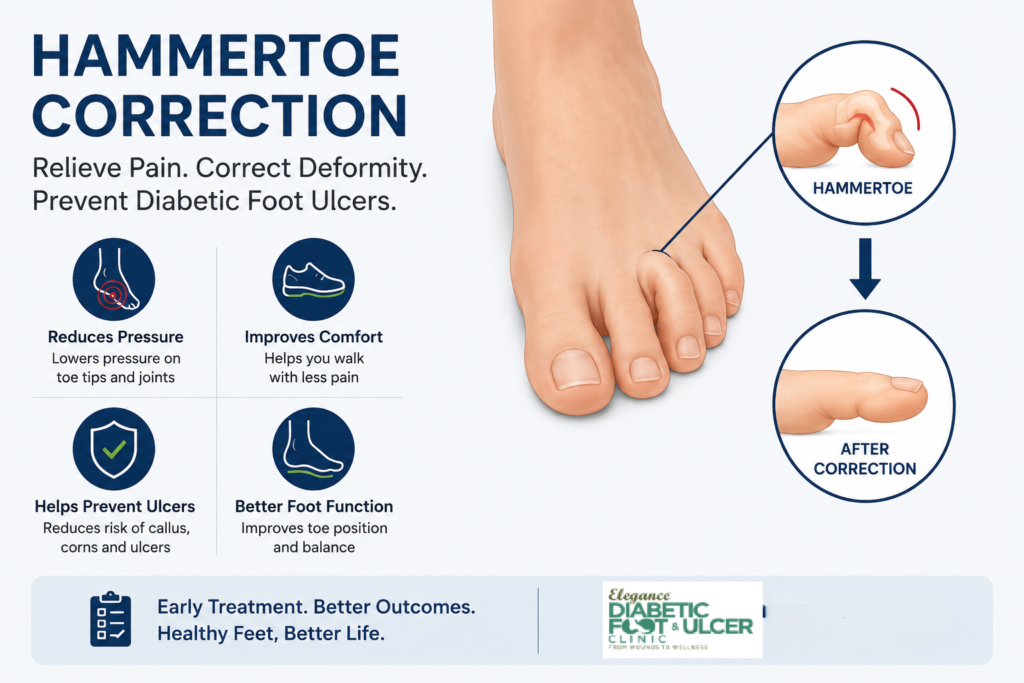
Hammertoe correction can help prevent diabetic foot ulcers by correcting a bent or deformed toe that creates abnormal pressure and friction inside the shoe. For people with diabetes, this is especially important because nerve damage can reduce the ability to feel pain or notice minor injuries.
When hammertoes are left untreated, the bent toe may repeatedly rub against footwear. This can lead to calluses, corns, blisters, skin breakdown, and eventually an ulcer. Correcting the deformity can help reduce these pressure points and make the foot easier to protect.
What Is a Hammertoe?
A hammertoe is a deformity in which one of the smaller toes becomes bent at one or more joints. The toe may appear curled or raised rather than lying normally inside the shoe.
In people with diabetes, hammertoes can become more concerning when combined with neuropathy, poor circulation, calluses, or previous foot ulcers. Reduced sensation may mean that a person does not notice pressure or an injury until the skin has already been damaged.
How Can Hammertoe Cause a Diabetic Foot Ulcer?
A deformed toe can change how pressure is distributed while walking. As a result, certain areas may experience repeated stress.
Common problems include:
- Increased pressure on the toe tip
- Friction against the top of the shoe
- Callus and corn formation
- Skin irritation and blisters
- Difficulty finding properly fitting footwear
- Increased risk of skin breakdown
Over time, repeated pressure can damage the skin. If sensation is reduced because of diabetic neuropathy, the injury may progress without being noticed.
How Does Hammertoe Correction Help?
The main goal of hammertoe correction is to address the abnormal position of the affected toe. Depending on the severity and flexibility of the deformity, surgeons may consider different surgical techniques.
By correcting the toe position, surgery may help:
Reduce pressure: A straighter toe can reduce excessive pressure on areas that were previously exposed to repeated stress.
Reduce friction: Correcting the deformity may decrease rubbing between the toe and footwear.
Improve footwear fit: A corrected toe may fit more comfortably inside an appropriately sized shoe.
Reduce recurrent calluses: When abnormal pressure is reduced, recurring calluses and corns may also become less problematic.
Protect vulnerable skin: Reducing mechanical stress can help protect the skin from repeated injury and breakdown.
When May Hammertoe Correction Be Recommended?
Not every hammertoe requires surgery. Treatment depends on the severity of the deformity, symptoms, skin condition, walking pattern, and overall foot health.
Hammertoe correction may be considered when:
- The deformity causes significant pressure or pain.
- Calluses or corns repeatedly develop.
- The toe rubs against footwear.
- The deformity contributes to recurrent skin problems.
- Conservative footwear changes are not sufficient.
- There is a high risk of ulceration.
- An existing ulcer is associated with abnormal pressure from the deformity.
A diabetic foot specialist should evaluate the foot before deciding whether surgery is appropriate.
Can Hammertoe Correction Prevent Every Diabetic Foot Ulcer?
No. Hammertoe correction can address one important source of abnormal pressure, but it cannot eliminate all causes of diabetic foot ulcers.
Diabetes can affect sensation and circulation, which can increase the risk of wounds. Therefore, patients should continue regular foot examinations, blood sugar management, appropriate footwear, and daily foot inspection after correction.
Expert Diabetic Foot Care by Dr. Ashutosh Shah
Dr. Ashutosh Shah, M.B., M.S., M.Ch., D.N.B., is a Board-Certified Plastic and Cosmetic Surgeon and Director of Elegance Clinic, Surat, with 22+ years of experience. He has extensive training in plastic and reconstructive surgery and is also associated with the Indian Podiatry Association.
For patients with diabetes and hammertoe deformities, proper assessment is important to understand pressure points, skin condition, foot structure, and ulcer risk. Depending on the individual condition, appropriate footwear, offloading measures, or corrective surgery may be recommended.
Conclusion
Hammertoe correction can help prevent diabetic foot ulcers by correcting toe deformity and reducing abnormal pressure and friction. This may lower the risk of calluses, skin breakdown, and repeated injury.
However, surgery is only one part of diabetic foot prevention. Regular foot checks, suitable footwear, pressure management, and proper diabetes care remain essential. At Elegance Diabetic Foot Care, patients with hammertoe and diabetes can receive appropriate evaluation and personalized foot care to identify pressure-related problems early, before they develop into a serious foot wound.
FAQs
Yes. Correcting a hammertoe can reduce pressure and friction on vulnerable areas of the toe. This may help lower the risk of calluses, skin breakdown, and diabetic foot ulcers.
Hammertoes can create pressure points inside shoes. People with diabetic neuropathy may not feel pain or irritation, allowing minor injuries to progress into wounds or ulcers.
Correction may be considered when a hammertoe causes persistent pressure, painful calluses, recurrent skin problems, difficulty wearing shoes, or contributes to a high risk of diabetic foot ulceration.
Mild or flexible hammertoes may sometimes be managed with properly fitted footwear, cushioning, orthotics, or other pressure-relieving measures. A specialist can recommend treatment based on the deformity.
Recurrence is possible, depending on factors such as the severity of the deformity, foot structure, muscle imbalance, and footwear. Appropriate follow-up and footwear can help support long-term results.