
Footwear for Diabetic Neuropathy: An 8-Point Fit Check
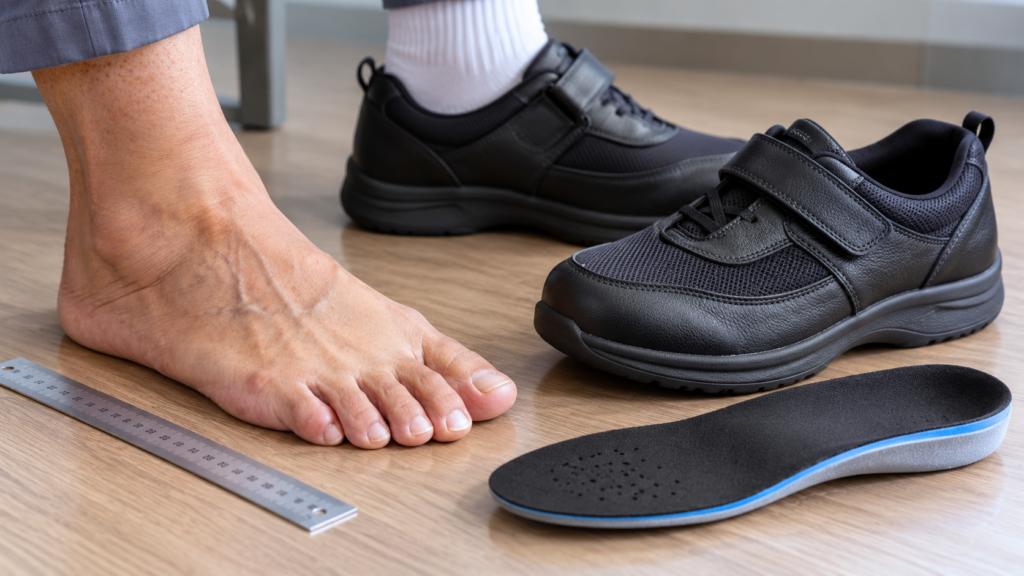
When your feet are numb because of diabetic neuropathy, choosing shoes by comfort alone can be risky.
A shoe may feel comfortable because reduced sensation makes pressure, rubbing, or a developing blister harder to notice. This is why footwear for diabetic neuropathy should be chosen by measurement, shape, pressure distribution, and regular skin checks, rather than simply by how the shoe feels.
People with loss of protective sensation are at increased risk of foot injury and ulcers. Current diabetes guidance recommends appropriate footwear and daily foot inspection, with specialised therapeutic footwear for people at higher risk of ulceration.
Why Should Numb Feet Be Measured Instead Of Judged By Feel?
A person with neuropathy may not reliably feel excessive pressure from a tight toe box, seam, hard edge, or poorly positioned insole.
That means a shoe can cause damage before you realise there is a problem.
The IWGDF recommends that properly fitting footwear should not be too tight or too loose. It recommends an internal shoe length approximately 1 to 2 cm longer than the foot, enough width for the widest part of the foot, and sufficient height for the toes. Fit should preferably be assessed while standing.
The 8-Point Diabetic Shoe Fit Checklist
Use these eight checks when choosing footwear.
| Fit check | Pass | Fail |
|---|---|---|
| 1. Length | Around 1 to 2 cm of extra internal length beyond the foot | Toes touch the front or the shoe is excessively long |
| 2. Toe box | Deep, broad and rounded enough for all toes | Toes are squeezed, curled or pressed together |
| 3. Width | Shoe accommodates the widest part of the foot | Pressure occurs over the sides or forefoot |
| 4. Height | Enough vertical room for the toes and any deformity | Upper presses down on toes or prominent areas |
| 5. Heel | Firm, secure heel counter without rubbing | Heel slips excessively or rubs |
| 6. Lining | Smooth and preferably seam-free around pressure areas | Hard seams, rough edges or folds touch the skin |
| 7. Sole | Stable and protective, with appropriate cushioning and pressure redistribution | Thin, unstable or poorly protective sole |
| 8. Insole | Fits correctly without creating pressure or crowding | Insole bunches, shifts or reduces needed shoe depth |
The goal is not to find the softest shoe possible. A well-fitting walking or athletic shoe can provide cushioning and help redistribute pressure, while people with deformities may need extra-wide, extra-depth or specialised footwear.
What Should The Toe Box Be Like?
The toe box should allow the toes to sit naturally without being compressed.
A broad or rounded toe box is generally preferable to a narrow, pointed shape. The shoe should also provide enough height for the toes.
Do not assume that a larger shoe is automatically safer. Excessive length can allow the foot to move inside the shoe and create friction. The aim is enough space without excessive movement.
Try shoes while standing because the foot can change shape and size under weight. If possible, assess the fit later in the day when swelling may be more noticeable.
Does The Sole Matter?
Yes.
The sole should provide protection from external trauma and help manage pressure during walking. A stable walking or athletic shoe may be suitable for some people with neuropathy.
A rocker sole can sometimes be useful for reducing pressure in selected areas, but it is not automatically required for every person with neuropathy. The ADA notes that rocker soles and certain orthotic features can reduce peak plantar pressures, while the evidence for preventing a first ulcer is more limited.
If you have a previous ulcer, significant deformity, abnormal pressure distribution, or other high-risk features, footwear should be assessed by a diabetic-foot or foot-care specialist.
Are Soft Shoes Always Better?
No.
A very soft shoe is not necessarily a safe shoe.
The important factors include:
- Correct length
- Correct width
- Adequate toe depth
- Stable construction
- Appropriate cushioning
- Pressure distribution
- Smooth internal surfaces
- Correct insole fit
A shoe that is soft but too narrow can still create damaging pressure.
Can Diabetics Wear Open Slippers At Home?
People with loss of protective sensation should generally avoid walking barefoot and should not rely on thin-soled standard slippers for protection.
Current ADA guidance specifically advises discussing footwear behaviour at home and avoiding barefoot walking and open-toed shoes in people at risk.
An appropriate indoor shoe should protect the foot while fitting securely and comfortably.
If you have significant neuropathy, a previous ulcer, deformity, or other high-risk features, ask your foot-care team what footwear is appropriate for your home environment.
When Is A Custom Insole Needed?
A shop-bought insole may be adequate when the foot has no significant deformity and the shoe already provides appropriate fit and pressure distribution.
A custom or specialised insole may be considered when there is:
- Significant foot deformity
- High plantar pressure
- A previous ulcer
- Recurrent callus
- Abnormal biomechanics
- Difficulty accommodating the foot in standard footwear
The ADA recommends specialised therapeutic footwear for people with diabetes who are at high risk for ulceration, including those with loss of protective sensation, deformities, ulcers, callus formation, poor circulation, or previous amputation.
The IWGDF also recommends considering therapeutic shoes, custom-made insoles, or other orthoses when a foot deformity or pre-ulcerative sign is present.
How To Break In New Footwear Safely
Do not wear a completely new pair for a full day immediately if you have reduced sensation.
A gradual schedule gives you opportunities to inspect the skin before prolonged wear.
Example 7-Day Break-In Schedule
| Day | Suggested wear time | What to check |
|---|---|---|
| Day 1 | 1 hour | Check all pressure areas |
| Day 2 | 2 hours | Inspect toes, heel and sides |
| Day 3 | 3 hours | Look for redness or rubbing |
| Day 4 | 4 hours | Check after removing shoes |
| Day 5 | 5 hours | Inspect the whole foot |
| Day 6 | 6 hours | Check for pressure or irritation |
| Day 7 | Normal wear if skin remains healthy | Continue daily inspection |
This is a practical gradual break-in approach, not a universal medical prescription. If your clinician has given you a different schedule, follow that plan.
For people with neuropathy, the important principle is to increase wear gradually and inspect the feet frequently rather than waiting until a shoe has been worn all day.
What If A New Shoe Leaves A Red Mark?
Take the shoe off and inspect the area.
If the redness disappears quickly and there is no pain, blister, broken skin, swelling, or other abnormality, reassess the fit before wearing the shoe again.
For this practical checklist, use the 20-minute rule: if a pressure-related red mark is still visible 20 minutes after removing the shoe, stop using that shoe and arrange a foot assessment.
Do not keep wearing a shoe that repeatedly produces the same mark.
If there is a blister, open wound, swelling, increasing warmth, drainage, or persistent redness, seek professional foot-care advice promptly. The ADA recommends urgent specialist assessment for unexplained swelling, redness, or increased skin temperature in people with diabetes.
How To Check Your Feet When You Have Neuropathy
Check your feet every day.
Look at:
- Tops and bottoms of the feet
- Between the toes
- Heels
- Around the nails
- Areas covered by shoe edges
- Areas where you have calluses
- Previous ulcer sites
Use a mirror if you cannot easily see the bottom of your feet. If you cannot perform the inspection yourself, ask a family member or caregiver for help.
The ADA recommends daily foot surveillance for people with loss of protective sensation.
When Should You Stop Wearing A Pair Of Shoes?
Stop using footwear if it repeatedly causes:
- Persistent redness
- Blisters
- Skin breaks
- Rubbing
- New calluses
- Pressure marks
- Pain or swelling
- Any wound
With significant neuropathy, do not wait for pain before acting. The absence of pain does not prove that the shoe is safe.
A shoe that has contributed to an ulcer should not simply be worn again after the wound heals without reassessing the footwear and pressure pattern.
When Do You Need Specialised Footwear?
Not everyone with diabetes needs custom shoes.
People with lower risk may be able to use properly fitting off-the-shelf footwear. However, specialised therapeutic footwear becomes more important when there is loss of protective sensation combined with deformity, previous ulceration, callus, poor circulation, or other high-risk features.
Examples include:
- Extra-depth shoes
- Custom-made shoes
- Custom insoles
- Pressure-relieving orthoses
- Other therapeutic footwear
The right option should be selected after assessing the foot rather than simply buying a product labelled as a diabetic shoe.
What If The Foot Becomes Red, Hot Or Swollen?
A warm, red, swollen foot in a person with diabetic neuropathy should not simply be treated as a shoe problem.
The ADA recommends assessment for possible Charcot neuroarthropathy in people with neuropathy who develop an acutely warm, swollen and red foot, even when there is no open ulcer. Urgent foot-care assessment is appropriate in this situation.
If you have an open wound, increasing redness, swelling, drainage, fever, or other signs of infection, seek medical attention promptly.
Where To Find Footwear And Insole Guidance
For more detailed information, readers can explore Footwear Services, including guidance on Shoe Fitting, Custom Orthotics, and Insole and Footwear Selection.
These resources can provide more information about selecting footwear according to foot shape, pressure, risk level, and individual requirements.
The Bottom Line
The safest footwear for diabetic neuropathy is not simply the softest or most expensive pair.
It should fit the measured foot, provide enough room for the toes, avoid pressure points, protect the skin, and work with the person’s individual foot shape and risk level.
Remember the key checks:
Measure the foot. Allow appropriate length. Use a deep and broad toe box. Check width and height. Secure the heel. Avoid rough seams. Choose an appropriate protective sole. Check the insole.
Then inspect your feet after wearing new footwear.
If you have numbness, deformity, previous ulcers, recurrent calluses, or other high-risk features, professional footwear assessment can help determine whether standard shoes are sufficient or whether therapeutic footwear or custom orthotics are appropriate.
Frequently Asked Questions
People with neuropathy should avoid barefoot walking and open-toed footwear that leaves the foot vulnerable to injury.
IWGDF guidance recommends an internal shoe length about 1 to 2 cm longer than the foot, with enough width and height for the toes.
No. Fit, stability, protection and pressure distribution matter more than softness alone.
Replace footwear when it becomes worn, loses its protective or supportive properties, develops internal defects, or no longer fits correctly. Have high-risk footwear reviewed regularly.
Not necessarily. Custom orthotics may be appropriate when standard footwear cannot accommodate your foot or when there are deformities, abnormal pressure, calluses or previous ulcers.
Remove the shoe and inspect the area. If the mark persists after 20 minutes, stop using that shoe and have the fit assessed. Any wound, blister, swelling or persistent redness should be assessed by a healthcare professional.