
First Visit Tests for a Diabetic Foot in Surat
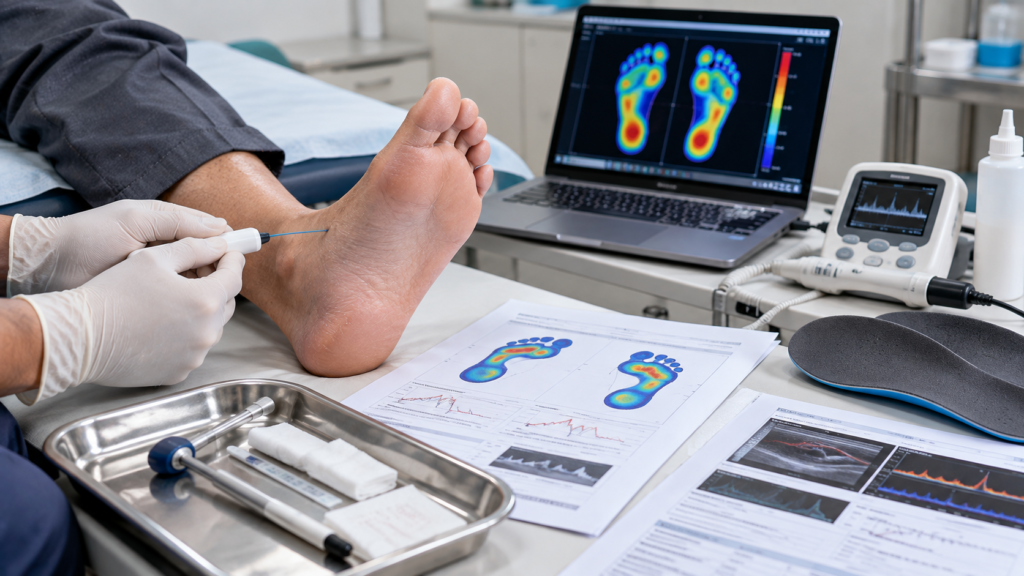
If you are visiting a diabetic foot clinic for the first time, you may wonder which tests will be done and whether you need to prepare for them.
There is no single test list that applies to every patient. A first diabetic foot assessment usually starts with a clinical examination and then adds tests according to your symptoms, circulation, sensation, foot pressure, wound and medical history.
The purpose is to identify problems such as loss of protective sensation, poor circulation, abnormal pressure, infection, bone involvement and other factors that can increase the risk of a diabetic foot ulcer.
A comprehensive diabetic foot examination should include skin inspection, assessment of foot deformities, neurological testing and vascular assessment. The American Diabetes Association recommends a 10-g monofilament test along with another neurological assessment such as vibration, temperature or pinprick testing.
What Happens During The First Visit?
The first appointment normally begins with questions about your diabetes and foot history.
The clinician may ask whether you have:
- Numbness or reduced sensation
- Burning or tingling
- Foot pain
- Previous ulcers
- Previous amputation
- Foot swelling
- Changes in skin colour or temperature
- Difficulty walking
- Leg pain while walking
- Previous vascular treatment
- Kidney disease
- Smoking history
- Previous foot infections
Your footwear may also be examined because poorly fitting shoes can create repeated pressure on areas of the foot.
The feet are then examined for wounds, calluses, cracks, deformities, swelling, redness, nail problems and other changes.
Only after this assessment can the clinician decide which investigations are actually needed.
1. Monofilament Test
The 10-g monofilament test is one of the most commonly used tests for identifying loss of protective sensation.
A thin filament is gently applied to selected areas of the foot. You are asked whether you can feel the contact.
The test is normally quick and should not be painful.
If you cannot feel the filament at certain sites, it may indicate reduced protective sensation. This matters because a person with reduced sensation may develop a blister, pressure injury or small wound without noticing it.
The ADA recommends annual 10-g monofilament testing for people with diabetes to identify feet at risk of ulceration and amputation. It should not be used as the only neurological test.
What does an abnormal result change?
It may lead to:
- More frequent foot checks
- Better footwear
- Pressure reduction
- Daily foot inspection
- Additional neurological assessment
- Referral to a foot-care specialist when appropriate
2. Vibration Testing
Vibration testing checks another part of the nervous system.
A 128-Hz tuning fork may be used to assess vibration sensation. Reduced vibration perception can provide additional information about peripheral neuropathy.
The reason for using more than one sensory test is that diabetic neuropathy can affect different types of nerve fibres.
The ADA recommends vibration assessment alongside appropriate sensory testing as part of neurological evaluation.
What does an abnormal result mean?
It can indicate sensory impairment and may increase concern about the risk of unnoticed foot injury.
Your clinician may combine the result with monofilament testing, your symptoms and the rest of the examination before deciding your risk level.
3. Foot Pulse And Circulation Assessment
The next question is whether enough blood is reaching the foot.
The clinician may feel the pulses around the foot and ankle and look for other signs of reduced circulation.
This is important because peripheral artery disease can interfere with wound healing.
The ADA recommends assessment of pulses and other clinical signs of peripheral artery disease. When pulses are reduced or absent or symptoms suggest vascular disease, further vascular testing may be required.
4. Hand-Held Doppler Or Vascular Doppler
A Doppler examination uses ultrasound to assess blood flow.
It may be recommended when the clinical examination suggests poor circulation or when a wound needs a more detailed vascular assessment.
A Doppler is not automatically required for every person attending a first diabetic foot appointment.
The decision depends on findings such as:
- Weak or absent pulses
- Symptoms of peripheral artery disease
- An existing ulcer
- Poor wound healing
- Previous vascular disease
- Other risk factors
The clinic provides vascular Doppler assessment as part of its diabetic foot investigation services.
What happens if circulation is poor?
The clinician may recommend additional vascular assessment and referral to a vascular specialist.
For an ulcer with significant ischemia, circulation becomes an important part of deciding whether the wound can heal and whether vascular treatment is needed.
5. Pedobarogram
A pedobarogram is a pressure-mapping test.
It shows how pressure is distributed under the foot while you stand or walk.
This can help identify areas receiving excessive pressure.
It may be particularly useful when someone has:
- Recurrent calluses
- Previous ulcers
- Foot deformities
- Abnormal walking patterns
- Suspected high-pressure areas
- Repeated wounds in the same location
A pressure map can help the clinical team decide whether footwear, insoles or other offloading measures need to be changed.
It is not necessarily required at every first visit.
6. X-Ray
An X-ray is not a routine test for every diabetic foot patient.
It may be requested when there is a reason to suspect bone involvement, a foreign body, fracture, Charcot changes or another structural problem.
An ulcer that is deep or reaches close to bone may require additional assessment.
If there is fever or other evidence of significant infection together with concern for bone involvement, the situation needs urgent medical evaluation rather than waiting for a routine follow-up.
The decision to order an X-ray is therefore based on the examination and clinical findings.
7. Blood Sugar And HbA1c
Blood glucose and HbA1c can provide important information about diabetes management.
HbA1c gives an estimate of average blood-glucose exposure over the previous few months.
It does not tell the clinician whether a particular foot wound is infected or whether blood flow is adequate, but it provides useful information about overall glucose control.
Other blood tests may be added depending on the situation.
These can include:
- Complete blood count
- Kidney function
- Electrolytes
- Inflammatory markers
- Albumin or other nutritional markers
- Other tests based on the patient’s history
Not everyone needs the same blood-test panel.
8. Wound Culture Or Deep Tissue Sample
If you have an open diabetic foot wound, the clinician first needs to examine the wound and determine whether infection is present.
A wound culture is not automatically needed for every wound.
When infection is suspected, the type of sample and method of testing depend on the wound and clinical findings.
A superficial swab may not always provide the most useful information. In some situations, a properly obtained tissue specimen may be preferred.
The important point is that culture results should be interpreted alongside the clinical examination.
A positive result alone does not automatically mean that an infected diabetic foot requires antibiotics.
First-Visit Diabetic Foot Tests At A Glance
| Test | What it shows | Approximate time | On-site or referral | What an abnormal result may change |
|---|---|---|---|---|
| Monofilament | Loss of protective sensation | A few minutes | Usually clinical examination | Foot-risk classification and preventive care |
| Vibration | Large-fibre sensory function | A few minutes | Usually clinical examination | Neuropathy assessment |
| Hand-held Doppler | Blood-flow signals | Usually minutes | Depends on clinic | May lead to vascular assessment |
| Pedobarogram | Pressure distribution under the foot | Usually minutes | Specialist equipment | Footwear, insole or offloading plan |
| X-ray | Bone and structural changes | Usually minutes plus imaging workflow | Imaging facility/clinic | Further investigation or treatment |
| Blood glucose / HbA1c | Current and longer-term glucose control | Blood draw | Laboratory/clinic | Diabetes-management review |
| Wound culture/sample | Microorganisms when infection is suspected | Sampling is quick; results take longer | Laboratory processing | Antibiotic or infection-management decisions |
The exact combination depends on your examination. A person with intact sensation and no wound may need a very different assessment from someone with neuropathy, an ulcer and reduced pulses.
Are All Tests Done On The Same Day?
Not necessarily.
Some examinations can be completed during the first consultation.
Others may require:
- A separate imaging appointment
- Laboratory processing
- Specialist vascular assessment
- Additional wound assessment
- Further clinical investigation
For example, monofilament and vibration testing can be performed during the clinical examination, while laboratory tests and imaging may have different turnaround times.
Ask the clinic which tests are available on site and which are referred to another facility.
Do You Need To Fast?
It depends on which blood tests are being ordered.
A routine diabetic foot examination, monofilament test, vibration assessment, pulse check and most foot assessments do not require fasting.
If a fasting blood test has specifically been requested, the clinic or laboratory should tell you how to prepare.
Do not assume that every diabetic foot appointment requires fasting.
Is The Monofilament Test Painful?
Usually, no.
The filament is designed to apply a controlled amount of pressure to the skin.
The test may feel like a light touch or pressure.
Its purpose is to find out whether you can detect protective sensation.
If you already have a painful wound, tell the clinician before the examination so the assessment can be performed appropriately.
What If A Test Shows Poor Circulation?
Poor circulation requires further clinical assessment.
A weak or absent pulse does not by itself provide the complete picture. Your symptoms, wound status and other findings need to be considered.
Additional vascular testing may include Doppler ultrasound, ankle-brachial pressure measurements, toe pressures or other vascular studies depending on the situation.
The ADA recommends further vascular assessment when symptoms or examination findings suggest peripheral artery disease.
If you have an ulcer and significant circulation problems, this becomes particularly important because inadequate blood supply can interfere with healing.
What If You Already Have A Foot Wound?
An existing wound changes the purpose of the appointment.
The clinician needs to assess:
- Wound size and depth
- Skin around the wound
- Signs of infection
- Pressure on the area
- Circulation
- Sensation
- Possible bone involvement
- Previous ulcer history
- Blood-glucose management
- Appropriate footwear or offloading
Do not wait for a routine screening appointment if a diabetic foot wound is rapidly changing.
Same-Day Warning Signs
Certain findings should prompt urgent medical assessment rather than waiting for a routine appointment.
Seek urgent care if you have:
- Fever or chills with a foot wound
- Rapidly spreading redness
- Pus or significant drainage
- Sudden or rapidly increasing swelling
- Black or discoloured tissue
- A foul-smelling wound
- A rapidly worsening ulcer
- A suddenly hot, red and swollen foot
- An ulcer with suspected bone involvement
The ADA recommends urgent referral for people with diabetes who have an open ulcer or unexplained swelling, redness or increased skin temperature, particularly when a high-risk foot is suspected.
Absent Pulses With A Wound
An absent or markedly reduced pulse in a person with a foot wound needs prompt vascular assessment.
Probe To Bone With Fever
A deep wound that reaches or probes toward bone together with fever or other systemic signs of infection needs urgent medical evaluation.
These situations should not be managed by simply waiting for the next routine checkup.
Why The First Visit Matters
The first diabetic foot appointment is not just about finding an ulcer.
It establishes a picture of your:
Sensation + circulation + skin + foot structure + pressure + wound status + diabetes control.
This information helps determine your risk and what needs to happen next.
For example, a person with no sensory loss and no circulation problem may mainly need education and routine monitoring.
Someone with loss of protective sensation may need more frequent foot checks and carefully fitted footwear.
A person with an ulcer, poor circulation or a previous amputation may require much closer specialist surveillance.
The ADA’s current risk framework ranges from very low risk to high risk, with examination frequency increasing as risk factors accumulate.
How To Prepare For Your First Diabetic Foot Visit
Bring your recent medical information if available.
Useful items include:
- Recent HbA1c results
- Blood-test reports
- Current medication list
- Previous foot-ulcer records
- Previous vascular reports
- Previous X-rays or scans
- List of diabetes medicines
- Details of previous foot surgery
- Your usual footwear
Wear comfortable footwear that can be easily removed for examination.
If you have a wound, do not apply unfamiliar creams, powders or home remedies immediately before the appointment unless your clinician has advised them.
The Bottom Line
The first visit for a diabetic foot problem does not mean that every possible test will automatically be performed.
The clinician first examines your feet and identifies your risk.
Depending on what is found, the assessment may include monofilament testing, vibration testing, pulse examination, Doppler assessment, pedobarogram, X-ray, blood tests or wound sampling.
The goal is to identify the factors that could place the foot at risk and then choose the investigations that answer the clinical question.
If you have diabetes, regular foot assessment is important even when your feet do not hurt. Neuropathy can be present without obvious symptoms, and loss of protective sensation can increase the risk of unnoticed injury.
If you already have a wound, swelling, redness, colour change or signs of infection, do not wait for a routine screening appointment. Get the foot assessed promptly.
Frequently Asked Questions
The duration varies depending on the examination and whether additional tests are needed. A simple screening can be relatively quick, while a wound or complex circulation problem may require more assessment.
Not usually for the foot examination itself. Fasting depends on the specific blood tests ordered.
Usually not. It involves gently applying a small filament to selected areas of the foot to assess protective sensation.
A pedobarogram maps pressure under the foot while standing or walking. It can be useful for people with high-pressure areas, recurrent calluses, deformities or previous ulcers.
No. Some examinations can be completed during the consultation, while laboratory, imaging or specialist vascular investigations may require additional time or referral.
Your clinician may recommend further vascular assessment. If poor circulation is found together with an ulcer or other concerning foot changes, prompt specialist evaluation may be needed.
Related Diabetic Foot Resources
For more information, read Diabetic Foot Investigations, What a Pedobarogram Test Shows, Vascular Doppler Assessment, and the Patient Guide.
These resources can help you understand what different investigations are designed to assess, but your actual test plan should be based on your examination and clinical history.