
Pus in Diabetic Foot Wounds: Warning Signs and Care in Bharuch
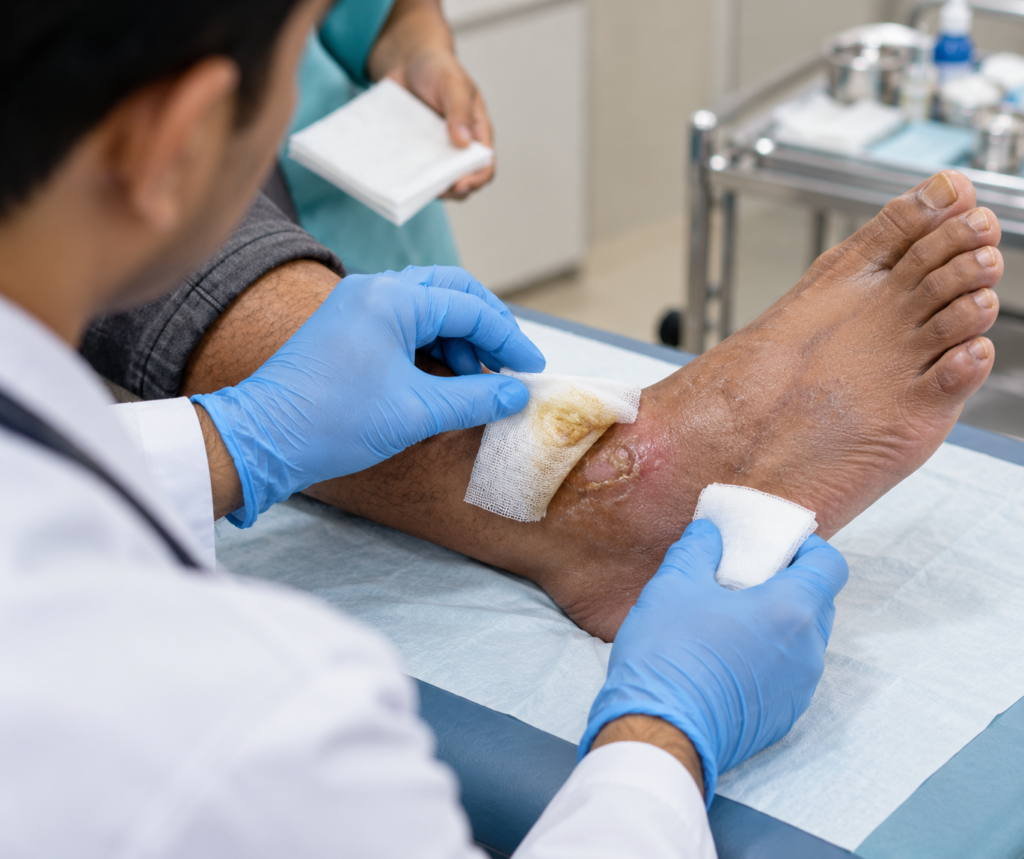
Pus coming from a foot wound in a person with diabetes may indicate an infection and needs prompt medical assessment. If you notice pus from a foot wound with diabetes in Bharuch, do not squeeze the wound or rely on home remedies. Redness, warmth, swelling, a bad smell, fever or worsening skin changes can signal a more serious problem. Early assessment helps determine whether wound care, infection treatment or hospital-based care is needed.
Why Can a Diabetic Foot Wound Produce Pus?
Pus is discharge that can occur when the body responds to an infection. In a person with diabetes, nerve damage may reduce the ability to feel pain, while poor circulation can slow healing. This means a wound may worsen even when it initially looks small or does not hurt.
Common reasons a diabetic foot wound may become infected include:
- A cut, blister or shoe-related injury that breaks the skin.
- Repeated pressure on an ulcer while walking.
- A wound that is not healing properly.
- Cracked skin or an injury around a toenail.
- Reduced blood circulation or reduced protective sensation.
- Delayed assessment of an existing foot ulcer.
Pus does not reveal how deep an infection is. A healthcare professional needs to examine the wound and assess the surrounding skin, circulation and other risk factors.
What Are the Warning Signs of an Infected Diabetic Foot Wound?
Pus is an important warning sign, especially when accompanied by other changes. Watch for:
- Redness spreading around the wound.
- Increasing warmth or swelling.
- Thick, cloudy or increasing wound discharge.
- An unpleasant smell coming from the wound.
- New or worsening pain or tenderness.
- A wound that is getting larger or deeper.
- Skin becoming dark, blue, grey or black.
- Fever, chills or feeling unusually unwell.
Do not wait for pain to develop. Diabetic nerve damage can reduce sensation, so a serious wound may cause little discomfort. Pus with spreading redness, worsening swelling or other signs of infection needs urgent assessment. If the foot becomes black, suddenly cold or pale, or you have fever with a rapidly worsening wound, seek emergency care.
What Should You Do First If Pus Comes from a Diabetic Foot Wound?
The aim of first aid is to protect the wound while arranging medical assessment. It is not a substitute for professional treatment.
1. Arrange prompt medical assessment
Contact a healthcare professional experienced in diabetic foot care as soon as possible. Do not wait several days to see whether the discharge stops. If symptoms are severe or rapidly worsening, go to the nearest emergency department.
2. Reduce pressure on the affected foot
Avoid unnecessary walking or standing on the wound. Continued pressure can worsen tissue damage, particularly when the ulcer is on the sole or another weight-bearing area. Ask a clinician about an appropriate pressure-relieving method.
3. Protect the wound
If practical, gently rinse superficial contamination with clean running water or sterile saline, without scrubbing or probing the wound. Cover it with a clean, sterile, non-stick dressing while arranging care. Avoid tight wrapping or pressure over the affected area.
4. Do not squeeze or cut the wound
Do not squeeze out pus, use needles, cut away dead-looking tissue or remove surrounding calluses yourself. These actions can cause further injury or delay appropriate treatment.
5. Avoid unprescribed products and home remedies
Do not apply turmeric, oils, powders, harsh chemicals or unprescribed creams to the wound. Do not soak the foot. Avoid taking leftover antibiotics or changing prescribed medicines without medical advice.
6. Bring relevant medical information
Take your current medicine list, recent blood-glucose reports if available, previous prescriptions and any wound-care records to the consultation. Tell the clinician when the discharge began and whether the wound’s appearance has changed.
How Is a Pus-Containing Diabetic Foot Wound Assessed?
The clinician may examine the wound’s location, depth, surrounding redness, discharge and signs of tissue damage. Assessment may also include checks of foot sensation and blood circulation.
Depending on the findings, additional investigations may be needed. A wound sample for culture and sensitivity testing may help identify bacteria and guide antibiotic selection when indicated. More complex wounds may need imaging or assessment for deeper tissue or bone involvement.
Treatment depends on the examination. It may include appropriate wound cleaning and dressing, pressure relief, treatment of a confirmed infection, circulation assessment or specialist procedures. Antibiotics are selected by a qualified clinician based on the suspected infection and individual circumstances; they should not be self-prescribed.
Read more about wound culture and sensitivity testing for diabetic foot ulcers to understand how testing can help guide treatment when indicated.
Where Can Patients in Bharuch Seek Diabetic Foot Wound Assessment?
Patients in Bharuch with a wound that is producing pus should arrange prompt medical assessment rather than waiting for the wound to become painful. The appropriate care setting depends on the wound’s severity, signs of infection and the patient’s overall condition.
For local consultation details, visit the diabetic foot ulcer treatment page for Bharuch or contact the clinic to confirm availability.
If there is rapidly spreading redness, severe swelling, blackened tissue, fever with a worsening wound or other signs of a serious infection, go to the nearest emergency department. Do not delay emergency care to travel to a particular clinic.
Can Diabetic Foot Wound Infections Be Prevented?
Daily foot care can help identify problems early, although it cannot eliminate every risk. People with diabetes should:
- Inspect both feet every day, including the soles and between the toes.
- Check for blisters, cracks, redness, swelling, discharge and colour changes.
- Wear properly fitting footwear and avoid walking barefoot.
- Keep the feet clean and dry them carefully, especially between the toes.
- Avoid cutting corns or calluses themselves.
- Follow their diabetes treatment plan and attend recommended foot checks.
- Seek medical advice promptly for any new wound or change in an existing ulcer.
A wound that produces pus should not be managed with preventive care alone. It needs prompt clinical assessment to determine whether an infection is present and what treatment is appropriate.
Frequently Asked Questions
Pus can indicate infection, particularly when it occurs with redness, warmth, swelling or a bad smell. However, discharge alone cannot establish the depth or severity of a wound. A healthcare professional should examine the foot and decide whether testing or treatment is needed.
No. Squeezing, probing or cutting a wound can cause additional injury and may worsen the problem. Protect the area with a clean dressing if practical, reduce pressure on the foot and arrange prompt medical assessment.
Yes. Diabetes-related nerve damage can reduce the ability to feel pain, heat or injury. A wound may therefore be infected even when it causes little discomfort. Do not use the absence of pain as a reason to delay assessment.
Seek urgent assessment for pus, especially when accompanied by spreading redness, increasing swelling, a foul smell or worsening tissue changes. Go to an emergency department for severe or rapidly progressing symptoms, blackened tissue, a suddenly cold or pale foot, or fever and chills with a worsening wound.
Treatment depends on the wound’s depth, infection severity, circulation and overall health. It may involve wound care, pressure relief, prescribed antibiotics when indicated, investigations or specialist procedures. Deep or severe infections may require hospital-based treatment.