
Foot Turning Black with Diabetes in Ankleshwar: Emergency Signs
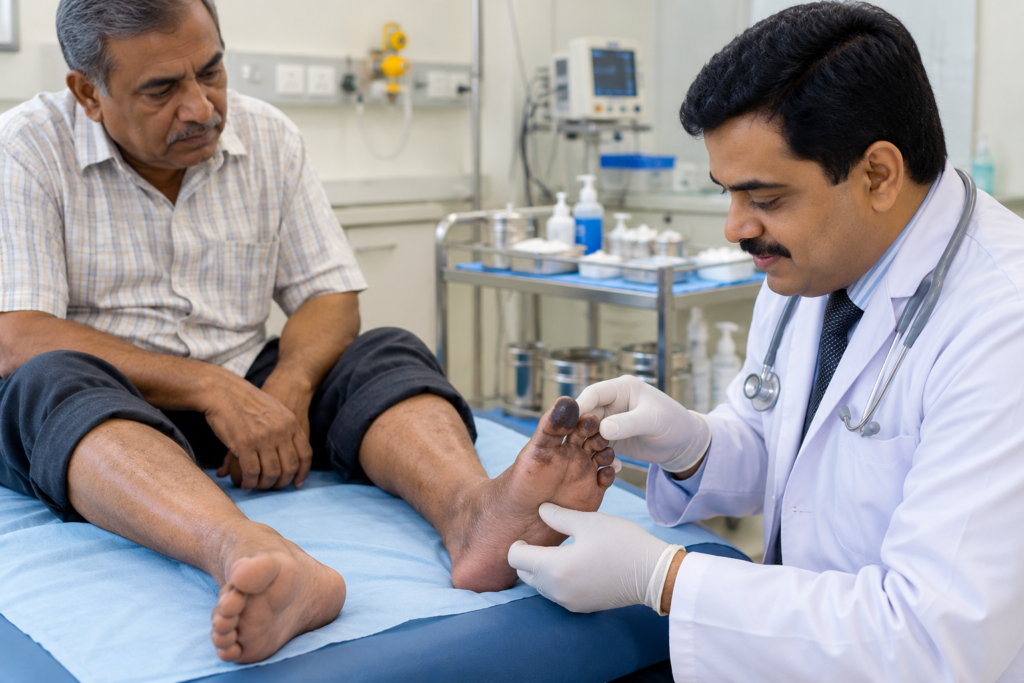
A foot or toe turning black in a person with diabetes is a serious warning sign that needs immediate medical assessment. It may indicate severely reduced blood flow, tissue damage or gangrene. If you notice a black patch, darkening toe, unusual coldness or a rapidly changing wound, do not wait for pain or the next routine appointment. Seek emergency care immediately.
Why Can a Foot Turn Black in Diabetes?
Diabetes can damage nerves and blood vessels. Reduced sensation may make it difficult to notice an injury, while poor circulation can slow healing and limit the blood supply needed to keep tissue healthy.
A black or dark area on the foot may be associated with:
- Severely reduced circulation: Blood may not reach the toes or foot adequately.
- Gangrene: Tissue may begin to die because of poor blood supply, infection or both.
- An infected foot ulcer: A wound can become complicated and damage surrounding tissue.
- An unnoticed injury: A blister, cut or pressure wound may worsen when sensation is reduced.
A colour change alone cannot confirm the cause. A clinician must assess the foot urgently to determine the problem and the treatment required.
Warning Signs You Must Not Ignore
Along with black or darkened skin, watch for:
- A toe or part of the foot becoming blue, purple, grey or unusually pale.
- A foot that suddenly feels cold compared with the other foot.
- New numbness, tingling or severe pain.
- Swelling, redness or a wound that is getting worse.
- Pus, an unpleasant smell or discharge from an ulcer.
- Fever, chills, confusion or feeling seriously unwell.
The absence of pain does not mean the foot is safe. Diabetes-related nerve damage can reduce the ability to feel injuries and infections. Do not wait for more symptoms to appear.
What Should You Do If Your Foot Turns Black?
1. Seek emergency medical assessment immediately
Go to the nearest emergency department if a toe or foot is turning black, particularly if the change is new or worsening. Call local emergency services if you cannot travel safely. Do not wait for a scheduled diabetic foot OPD appointment.
2. Avoid pressure on the affected foot
Limit walking and standing. Do not force yourself to walk to a clinic, and avoid putting pressure on a wound while arranging medical help.
3. Protect the affected area
Do not cut, scrape or remove darkened tissue. Do not squeeze a wound or try to drain it yourself. If there is an open wound, cover it loosely with a clean, sterile dressing if this can be done without causing delay or further injury.
4. Avoid home remedies
Do not apply harsh chemicals, oils, powders or unprescribed creams. Do not soak the foot or use hot-water bottles, heating pads or direct heat, as reduced sensation can make burns harder to detect.
5. Take relevant medical information
Bring your current medicines, diabetes records, previous prescriptions and wound-treatment reports if they are readily available. Do not delay emergency assessment to collect paperwork.
Should Patients from Ankleshwar Travel to Surat the Same Day?
A blackened toe or foot requires emergency assessment first. Do not delay treatment at the nearest emergency department to travel directly to Surat. A clinician can assess circulation, infection and tissue damage and determine the safest next step.
Same-day specialist care in Surat may be recommended after initial assessment if the patient is stable and transfer is considered appropriate. The treating team may arrange referral for further vascular investigations, specialist wound care, surgery or hospital-based treatment.
If a patient has fever or chills with a worsening foot wound, rapidly spreading infection, sudden coldness or pale colour, severe pain or signs of serious illness, emergency treatment takes priority over travelling to a particular clinic.
How Is a Blackened Diabetic Foot Assessed?
The emergency team may examine the skin, wound, temperature, sensation and circulation. Depending on the findings, assessment may include:
- Checking pulses and blood flow in the affected foot.
- Assessing the wound and looking for infection or dead tissue.
- Blood tests when infection or other complications are suspected.
- Imaging or vascular investigations when indicated.
- Assessment for deeper infection or damage to underlying tissue.
Treatment depends on the cause and severity. It may involve antibiotics for an infection, procedures to remove damaged tissue, treatment to improve blood supply or other specialist interventions. Some patients need hospital admission. No single treatment is appropriate for every blackened foot.
Where Can Patients in Ankleshwar Find Diabetic Foot Care?
For non-emergency concerns and local consultation information, visit the diabetic foot ulcer treatment page for Ankleshwar. Contact the clinic to confirm OPD availability and whether a consultation is appropriate for your condition.
For information about other diabetic foot problems, warning signs and preventive care, read the clinic’s guide to diabetic foot conditions.
These routine consultation resources are not a substitute for emergency assessment when the foot or toe has turned black.
How Can People with Diabetes Reduce the Risk of Serious Foot Problems?
Daily foot checks can help identify changes before they become more serious. People with diabetes should:
- Inspect both feet every day, including the soles and between the toes.
- Look for dark patches, blisters, cuts, swelling, redness or changes in temperature.
- Wear properly fitting footwear and avoid walking barefoot.
- Avoid cutting calluses or treating wounds themselves.
- Follow their diabetes treatment plan and attend recommended foot checks.
- Seek prompt medical advice for any new wound or change in foot colour.
If you notice a black or unusually dark area, do not rely on home monitoring alone. Seek emergency assessment.
Frequently Asked Questions
A blackened toe or foot may indicate severely reduced blood flow, tissue damage or gangrene. Infection may also be involved. The cause cannot be confirmed from colour alone, so immediate medical assessment is essential.
Yes. Diabetes-related nerve damage can reduce sensation, so serious foot damage may cause little or no pain. A blackened toe needs emergency assessment even if it does not hurt.
No. If a toe or foot is turning black, seek emergency assessment immediately instead of waiting for the next routine OPD session. Go to the nearest emergency department, where the team can determine whether specialist referral or transfer is needed.
After emergency assessment, a patient may need same-day specialist care in Surat if the treating team considers transfer appropriate. Further care may involve circulation investigations, complex wound management, surgery or hospital-based treatment. Emergency stabilisation and safe transfer take priority.
Treatment depends on the cause, the extent of tissue damage, circulation and whether infection is present. Some patients need treatment for infection or procedures to improve blood supply; others may require removal of dead tissue. Prompt assessment helps the team decide on appropriate care.