
How Long Does a Diabetic Foot Ulcer Take to Heal?
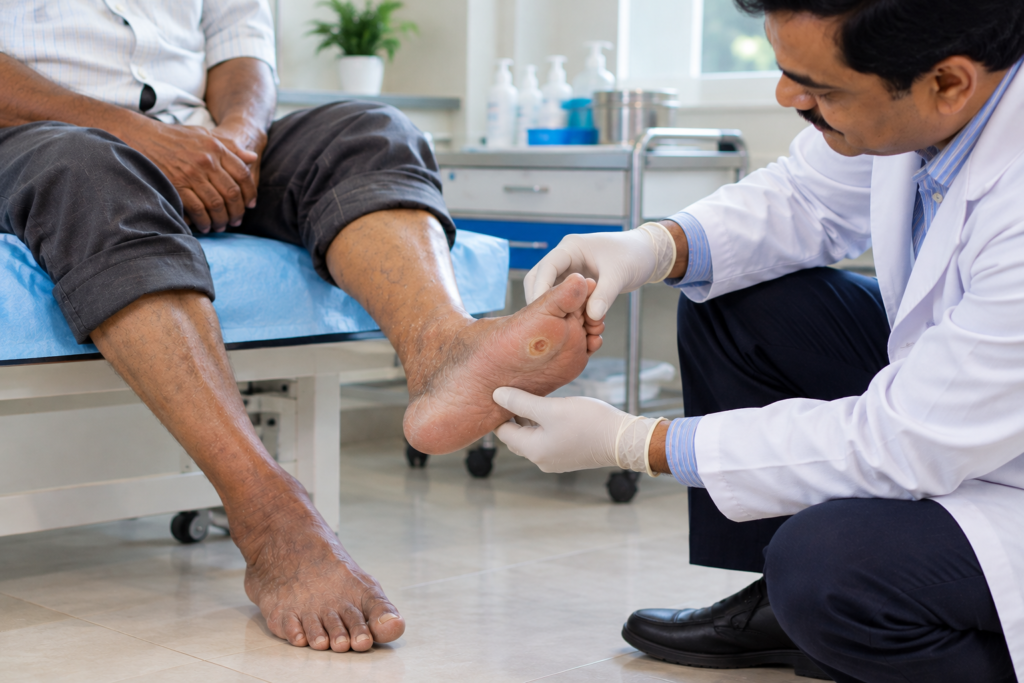
A diabetic foot ulcer may take weeks to months to heal, depending on its size, depth, blood supply, infection status and how well pressure is reduced. Small, uncomplicated ulcers may heal within several weeks with appropriate care, while deeper, infected or poorly supplied wounds can take much longer. Regular wound assessment, suitable offloading and treatment of underlying problems help support healing.
What Is the Typical Diabetic Foot Ulcer Healing Time?
There is no fixed healing time for every diabetic foot ulcer. The clinician needs to assess the wound and the factors that may slow recovery.
| Ulcer condition | What to expect |
|---|---|
| Small, superficial ulcer without complications | May heal within several weeks with appropriate care |
| Deeper ulcer | Often takes longer and needs close monitoring |
| Infected ulcer | Healing may be delayed until the infection is appropriately treated |
| Ulcer with poor blood supply | May heal slowly and require circulation assessment or treatment |
| Ulcer exposed to repeated pressure | May not heal until pressure is adequately reduced |
These are general patterns, not guaranteed timelines. Your clinician can estimate healing more accurately after examining the wound and reviewing your circulation, sensation and treatment needs.
What Are the Foot Ulcer Healing Stages?
Healing does not happen at exactly the same speed for everyone. A wound may move through overlapping stages rather than following a strict timetable.
- Early response: The body responds to the injury, and the wound is assessed and cleaned as appropriate.
- Tissue repair: New tissue begins developing in the wound. Pressure reduction and suitable wound care are important during this period.
- Wound closure: The wound gradually becomes smaller as new skin develops across the surface.
- Protection and follow-up: Even after the wound closes, the area may remain vulnerable to pressure and recurrence.
A wound that appears smaller is encouraging, but the appearance alone does not confirm that healing is complete. Follow the clinician’s instructions until the ulcer has been assessed and appropriate footwear or offloading advice has been provided.
Why Can a Diabetic Foot Ulcer Take So Long to Heal?
Several factors can delay healing:
- Reduced blood flow: The wound may not receive enough oxygen and nutrients for repair.
- Nerve damage: Reduced sensation can allow repeated pressure or injury to go unnoticed.
- Infection: Infection can damage tissue and complicate recovery.
- Continued pressure: Walking or standing on the affected area may repeatedly injure fragile tissue.
- High blood glucose: Poor glucose management can interfere with the body’s ability to recover.
- Wound depth and size: Larger or deeper ulcers generally require more time and more complex care.
- Other health conditions: Overall health, nutrition and certain medicines can affect recovery.
A slow-healing wound in diabetes should be reassessed rather than managed by simply waiting longer.
How Can You Help a Foot Ulcer Heal?
Follow the wound-care plan provided by your healthcare professional. Depending on the wound, this may include:
- Regular clinical wound assessment and appropriate dressing changes
- Offloading to reduce pressure on the affected area
- Circulation assessment when poor blood flow is suspected
- Treatment of infection when present
- A personalised plan for blood glucose management
- Suitable nutrition and hydration
- Footwear advice to reduce friction and pressure
- Follow-up visits to monitor progress
Do not use home remedies, cut away tissue yourself or apply unprescribed products to the ulcer. Do not change the dressing routine or offloading device without guidance from your clinical team.
How Do You Know If the Ulcer Is Healing?
Your clinician may look for a gradual reduction in wound size and depth, healthier tissue, less drainage and improvement in the surrounding skin.
However, changes should be assessed in context. A wound may look less wet without actually progressing towards closure, and people with nerve damage may have little pain even when a problem is worsening.
Seek prompt medical advice if the ulcer becomes larger or deeper, develops new redness or swelling, produces more discharge or develops an unpleasant smell. Spreading redness, fever, blackened tissue, a cold or discoloured foot, or sudden deterioration needs urgent assessment.
Frequently Asked Questions
A diabetic foot ulcer may take weeks to months to heal. The timeline depends on wound size and depth, circulation, infection, blood glucose management and whether pressure is reduced. Your clinician can assess these factors and monitor progress rather than relying on a general estimate.
Healing commonly involves the body’s early response to injury, new tissue formation, gradual wound closure and protection of the healed area. These stages overlap and vary from person to person. Regular clinical review helps confirm whether the wound is progressing appropriately.
Slow healing may be related to poor circulation, infection, repeated pressure, nerve damage, high blood glucose or a deeper wound. A clinician should reassess a wound that is not improving as expected to identify the cause and adjust the treatment plan.
Slow healing may be related to poor circulation, infection, repeated pressure, nerve damage, high blood glucose or a deeper wound. A clinician should reassess a wound that is not improving as expected to identify the cause and adjust the treatment plan.
Yes. Repeated pressure and friction can damage fragile tissue and delay closure, especially when the ulcer is under a weight-bearing part of the foot. Follow your clinician’s advice about offloading, footwear and safe activity rather than deciding based on pain alone.
Key Takeaway
Diabetic foot ulcer healing time varies from weeks to months. Pressure reduction, appropriate wound care, circulation assessment and treatment of infection when present all matter. If the wound is not improving or develops new warning signs, seek medical reassessment rather than waiting for it to heal on its own.
Healing a diabetic foot ulcer may require wound care alongside assessment of circulation and other factors affecting recovery. Read about vascular surgery for diabetes and medical management of blood vessel disease to learn more about vascular problems that may affect foot health. Your clinician may also recommend blood tests as part of the assessment. For appointment enquiries, visit the clinic contact page.