
Can You Walk on a Diabetic Foot Ulcer If It Is Covered?
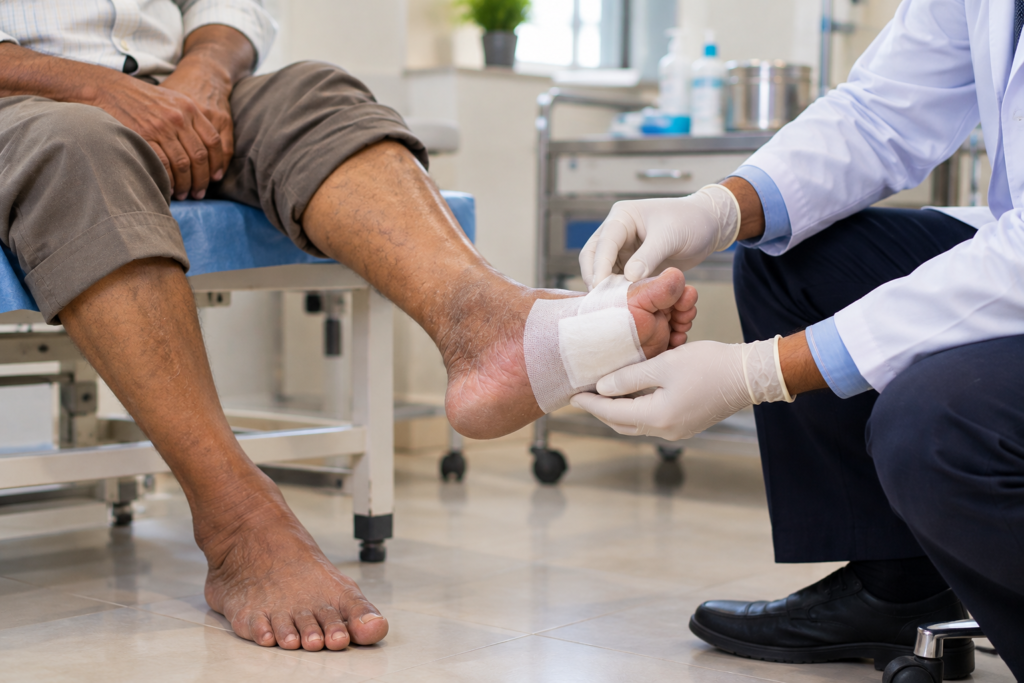
A diabetic foot ulcer should not be treated as safe to walk on just because it is covered with a dressing. Walking puts pressure on the wound and surrounding tissue, which can delay healing or make the ulcer deeper. The right amount of walking depends on the ulcer and the treatment plan. Ask your foot-care clinician how much weight you can safely put on the affected foot.
Myth vs Fact: Can You Walk on a Covered Diabetic Foot Ulcer?
| Myth | Fact |
|---|---|
| A covered ulcer is safe to walk on. | A dressing does not remove pressure from the wound. |
| If the ulcer does not hurt, walking is safe. | Nerve damage can reduce pain even when an ulcer worsens. |
| A small wound does not need pressure relief. | Repeated pressure can delay healing or damage tissue. |
| Resting for one day is enough. | The duration of offloading depends on the wound and clinical advice. |
Why Does Pressure on a Foot Ulcer Matter?
Walking repeatedly puts pressure on the sole and other weight-bearing areas. If an ulcer is in a pressure-bearing location, repeated loading can damage fragile tissue and slow healing. A dressing protects the wound surface but does not necessarily reduce the forces placed on it.
People with diabetes may have reduced sensation, so they might not notice that walking is damaging the wound. Poor circulation and infection can also affect healing. Do not use pain alone to decide whether walking is safe.
How Much Walking Is Safe?
There is no single safe number of steps for every diabetic foot ulcer. Your clinician may recommend limiting walking, using an offloading device or reducing weight on the affected foot. Follow the plan prescribed for your wound and do not return to normal activity simply because the dressing looks clean.
Until you have clear instructions:
- Avoid unnecessary walking and prolonged standing.
- Do not walk barefoot.
- Use only footwear or offloading equipment recommended by your clinician.
- Attend wound reviews as advised.
- Check the foot and surrounding skin daily.
How Should You Care for a Covered Ulcer?
Follow your clinician’s instructions for keeping the dressing clean, dry and correctly positioned. Do not apply home remedies or unprescribed creams to the wound. Contact your clinical team if the dressing becomes soaked or displaced, or if the wound develops new redness, swelling, discharge or an unpleasant smell.
Seek urgent medical assessment if redness spreads, the foot becomes increasingly hot or swollen, blackened tissue appears, or you develop fever or feel seriously unwell. Do not wait for severe pain, because nerve damage can reduce the sensation of an injury.
Appropriate wound care and pressure management are important when a diabetic foot ulcer is healing. Learn about vascular surgery for diabetes and medical management of blood vessel disease, which may be relevant when circulation affects wound healing. Your clinician may also request blood tests as part of an assessment. For appointment enquiries, visit the clinic contact page.
Frequently Asked Questions
A dressing alone does not make walking safe. Pressure can worsen the ulcer even when it is covered and does not hurt. Ask your treating clinician whether you need offloading or reduced weight-bearing, and avoid unnecessary walking until you receive individual advice.
Yes. Repeated pressure and friction can damage fragile tissue and delay healing. Appropriate offloading reduces pressure, but the method should be selected according to the ulcer’s location and clinical condition.
There is no universal rest period. Follow your clinician’s advice about weight-bearing, offloading and follow-up. Do not decide that normal walking is safe just because the dressing looks clean.
Not necessarily. Diabetes-related nerve damage can reduce protective sensation, so an ulcer may worsen without causing much pain. Follow your wound-care plan and report new swelling, redness or drainage.
Normal shoes may press on or rub the wound. Ask your foot-care clinician which footwear or offloading device is appropriate. Avoid tight shoes and do not add padding yourself without guidance.
Key Takeaway
A covered diabetic foot ulcer can still worsen with walking. A dressing protects the wound, but pressure relief may also be needed. Follow your clinician’s advice about walking, footwear and wound care.