
Burn on a Diabetic Foot: First Aid for Numb Feet That Works
Introduction
A burn on a numb diabetic foot must be cooled under running tap water for 20 minutes, covered with a clean non-stick dressing and shown to a doctor within 24 hours, because neuropathy hides how deep it is. Never apply toothpaste, ice or ghee. Most of these burns come from hot soaks, heaters or hot floors.
Why Do Diabetic Feet Burn Without Pain?
Diabetes can damage the nerves that carry sensations from the feet to the brain. This is called diabetic peripheral neuropathy. It can reduce the ability to feel heat, cold, pain and pressure.
This is why a person may develop a serious foot burn without noticing it. Hot water, a heating pad, a hot-water bottle or a heated floor can damage the skin before the person realises what is happening. Redness, swelling and blisters may appear later, and a deeper burn may cause surprisingly little pain.
Poor circulation, existing foot ulcers and infection can make the injury more complicated. Damaged skin can break down into an open wound, especially when the foot continues to rub against footwear or bears pressure during walking.
If you are searching for burn on diabetic foot what to do, remember that the absence of pain does not mean the injury is minor. Stop the heat exposure, cool the area correctly, cover it and arrange prompt medical assessment.
What Is the Correct First Aid in the First Hour?
Act immediately. Do not wait for a blister, increasing redness or pain.
- Stop the heat exposure. Move the foot away from hot water, a heater, a tawa, a hot floor or a heating pad.
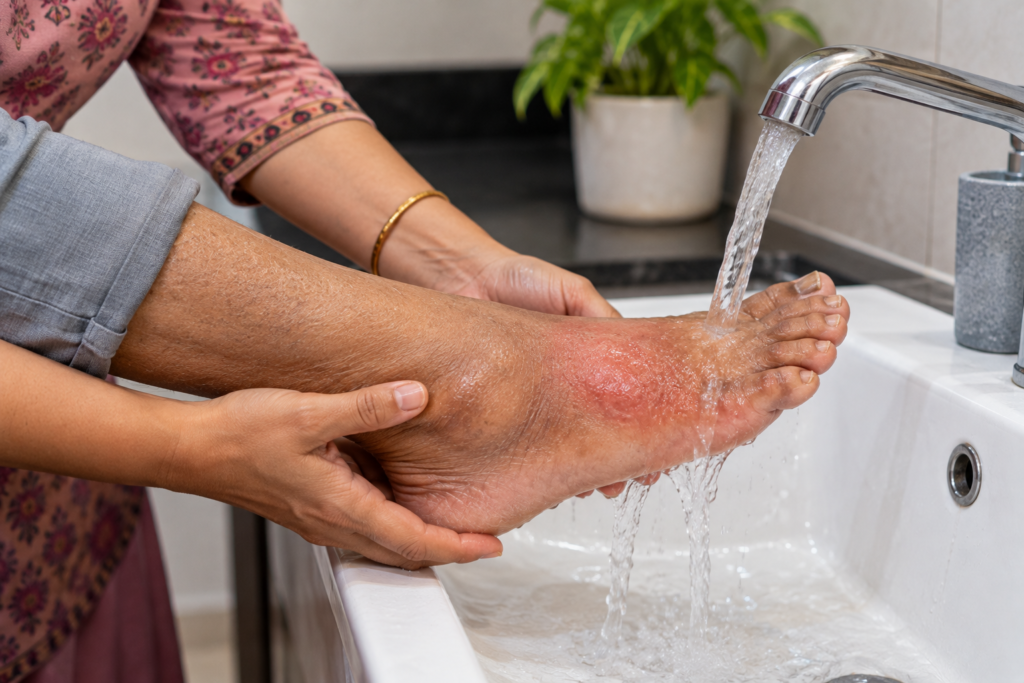
- Cool the burn for 20 minutes. Use cool, gently running tap water. Do not use ice or iced water. Keep the rest of the person warm.
- Remove nearby items carefully. Remove a loose chappal, anklet or other item if it comes away easily. Do not pull away anything stuck to the burnt skin.
- Cover the area. After cooling, protect the burn with a clean, non-stick dressing. Do not wrap it tightly or apply pressure to a blister.
- Arrange prompt medical assessment. A person with diabetes should have a foot burn assessed urgently, preferably the same day. Do not delay because the burn looks small or does not hurt.
Seek emergency care for a deep-looking burn, white or black skin, rapidly increasing swelling, signs of severe infection or a person who appears seriously unwell. Do not delay emergency treatment to finish first aid.
General burn first-aid guidance recommends 20 minutes of cool running water. Because neuropathy can hide burn severity, a diabetic foot injury needs particular caution.
First-Aid Do and Don’t Table
| Do | Don’t |
|---|---|
| Cool the burn under running tap water for 20 minutes. | Do not apply ice or iced water. |
| Remove loose footwear or jewellery near the injury. | Do not pull away anything stuck to the burn. |
| Cover with a clean, non-stick dressing. | Do not apply toothpaste, ghee, butter or oil. |
| Arrange prompt medical assessment. | Do not wait for pain to develop. |
| Protect the foot from pressure and rubbing. | Do not burst blisters or peel damaged skin. |
Do not apply turmeric, powders, herbal pastes, antiseptic chemicals or unprescribed creams. These are not substitutes for burn first aid and may contaminate the wound or interfere with assessment.
Which Home Remedies Make a Foot Burn Worse?
Some familiar home remedies can increase the risk of complications.
Toothpaste: It is not a burn treatment and may irritate damaged skin.
Ghee, butter and cooking oil: These are not recommended first-aid treatments. They can contaminate the wound and complicate cleaning.
Ice: Direct ice can injure tissue further. Use cool running tap water instead.
Popping blisters: A blister may protect the skin underneath. Opening it at home can introduce infection. Do not puncture, cut or peel the blister yourself.
Hot-water soaking: Searching for “hot water soak diabetic feet” often reflects a common home-care habit, but hot water can burn skin before neuropathy allows the person to notice the temperature. Soaking an injured foot may also soften the skin and increase the risk of further damage.
Hot-water bottles and heating pads: A blister from hot water bottle contact or a heating pad burn neuropathy injury can be deeper than expected, especially after prolonged contact or while sleeping. Avoid direct heat on numb feet.
How Is Burn Depth Judged and Treated at the Clinic?
A clinician assesses the burn’s appearance, size, location, circulation, sensation and possible infection. They may also consider glucose control, existing ulcers and whether the person can avoid putting weight on the injured area.
Colour and pain alone cannot reliably show burn depth, particularly when sensation is reduced. The appearance can change over the next few days, so reassessment may be necessary.
| Colour or appearance | Blister | Pain or sensation | Action |
|---|---|---|---|
| Pink or red skin | May be absent | Pain may be present or reduced | Cool the area and arrange prompt assessment. |
| Red or mottled skin | May be present | Pain can vary | Protect the area and seek urgent assessment. |
| Pale, white, waxy or leathery skin | May be present or absent | May be surprisingly painless | Seek emergency medical assessment. |
| Brown or blackened skin | May be absent | Sensation may be reduced | Seek emergency care; do not remove damaged skin. |
This table helps identify warning signs; it cannot diagnose burn depth at home.
What Treatment May Be Needed?
Treatment depends on burn depth, circulation, infection risk and the person’s overall foot health. A clinician may clean the wound, select a suitable dressing and assess whether pressure relief, specialist wound care or hospital treatment is needed.
A dressing should protect the wound without sticking to it or creating excess pressure. Follow the clinician’s instructions about cleaning, dressing changes and keeping the area protected.
The clinician may arrange an early dressing review, sometimes around 48 hours, and reassess the burn over the next few days if needed. Follow the individual treatment plan rather than relying on a fixed schedule. Seek care sooner if redness spreads, swelling increases, discharge appears or the dressing becomes wet or dirty.
For further wound-care information, read the clinic’s guide to specialised wound dressings. A dressing alone cannot correct poor circulation or treat a deeper infection.
Why Is a Burn Blister on a Diabetic Foot a Concern?
A blister can indicate skin damage that may progress to an open wound. Reduced sensation can make it difficult to notice rubbing, pressure or worsening injury. Poor circulation may also complicate healing.
Do not pop the blister, cut the skin or apply home remedies. Cover the area gently with a clean, non-stick dressing and arrange prompt medical assessment. Avoid unnecessary walking or pressure on the affected foot until a clinician advises what is safe.
If the blister is accompanied by spreading redness, pus, increasing swelling, fever, a bad smell or skin that appears white or black, seek urgent or emergency care as appropriate.
How Do You Stop It Happening Again?
Prevention is essential when nerve damage makes temperature difficult to judge.
- Avoid hot-water soaks. Soaking is not necessary for routine foot hygiene and can cause burns before a person notices the heat.
- Keep washing water below 37°C. The International Working Group on the Diabetic Foot (IWGDF) recommends water below 37°C for washing feet. Use a thermometer rather than relying on foot sensation.
- Avoid direct heat. Do not use heating pads, hot-water bottles or heaters to warm numb feet, especially during sleep.
- Inspect both feet daily. Check the soles, heels, toes and spaces between the toes. Use a mirror or ask a family member for help if needed.
- Wear protective footwear. Avoid walking barefoot. Check shoes and slippers for rough edges, hot surfaces and objects trapped inside.
- Attend regular foot checks. Ask your clinician to assess sensation, circulation and your risk of ulcers.
- Follow your diabetes care plan. Keep follow-up appointments and discuss any recurring foot problems.
The IWGDF 2023 guidance recommends daily foot inspection, washing with water below 37°C and avoiding heaters and hot-water bottles. These habits can help reduce preventable injuries.
How Can You Find Appropriate Care for a Diabetic Foot Burn?
When seeking treatment, ask whether the clinician can assess burn depth, circulation, sensation and infection risk—not just apply a dressing.
Useful questions include:
- Does the burn need specialist or hospital assessment?
- Which dressing is appropriate for this injury?
- How should pressure on the injured area be reduced?
- When should the dressing be reviewed?
- Which warning signs mean I should return immediately?
Bring your medication list and relevant diabetes information if available, but do not delay urgent care while gathering records. If the burn is deep or the person is seriously unwell, seek emergency care.
Burn Dressing Near Udhna Surat: What Should You Ask at the Clinic?
When looking for burn dressing near udhna surat, ask whether the clinic can assess the burn’s depth, circulation, sensation and infection risk and arrange referral if specialist care is needed.
Before leaving the clinic, clarify how to protect the foot, when to change the dressing, whether walking should be limited and when the wound must be reviewed. Ask for clear instructions on warning signs that require an earlier visit.
A dressing is only one part of treatment. A deep burn, poor circulation or infection may need additional care, so do not judge treatment quality by the dressing alone.
Frequently Asked Questions
No. Neuropathy can prevent you from feeling when water is too hot, leading to a burn without warning. Wash your feet briefly with water below 37°C and check the temperature with a thermometer. Avoid hot-water bottles and heaters. If you notice a burn, blister or unexplained red patch, seek prompt medical assessment.
Cool the burn under gently running tap water for 20 minutes. After cooling, cover it loosely with a clean, non-stick dressing and arrange prompt medical assessment. Do not apply ice, toothpaste, ghee, butter, powders or unprescribed creams. Do not burst blisters or remove damaged skin yourself.
It can be. A blister may indicate a burn or skin injury that can progress to an open wound, particularly when sensation or circulation is reduced. Do not pop it, cut the skin or put pressure on it. Cover the area gently and seek urgent assessment. Deep-looking skin, spreading redness, pus or fever needs urgent medical attention.
Healing depends on burn depth, circulation, infection risk, glucose control and pressure on the foot. A minor superficial burn may heal faster than a deep injury, but appearance alone cannot predict recovery in a numb diabetic foot. Follow the clinician’s dressing plan and attend reviews. Seek care earlier if redness, swelling, discharge or skin colour worsens.
Yes. Neuropathy can prevent a person from noticing excessive heat, allowing prolonged exposure and a deeper injury. Avoid heating pads, hot-water bottles and heaters against numb feet, especially while sleeping. If a burn occurs, cool it under running water for 20 minutes and seek prompt medical assessment.
Yes. Neuropathy can prevent a person from noticing excessive heat, allowing prolonged exposure and a deeper injury. Avoid heating pads, hot-water bottles and heaters against numb feet, especially while sleeping. If a burn occurs, cool it under running water for 20 minutes and seek prompt medical assessment.
Medical Review
Medical reviewer: Dr. Ashutosh Shah, Physician
Review focus: Diabetic foot burn first aid, neuropathy-related risk, dressing precautions and prevention.
The named reviewer should confirm the final clinical guidance and the clinic’s treatment and follow-up protocol before publication.
References
- NHS – Burns and scalds: first aid
- International Working Group on the Diabetic Foot – IWGDF Guidelines 2023
- British Burn Association – First Aid Clinical Practice Guidelines