
Standing 10 Hours at the Loom or Diamond Wheel: Leg Vein and Foot Checks for Varachha Workers
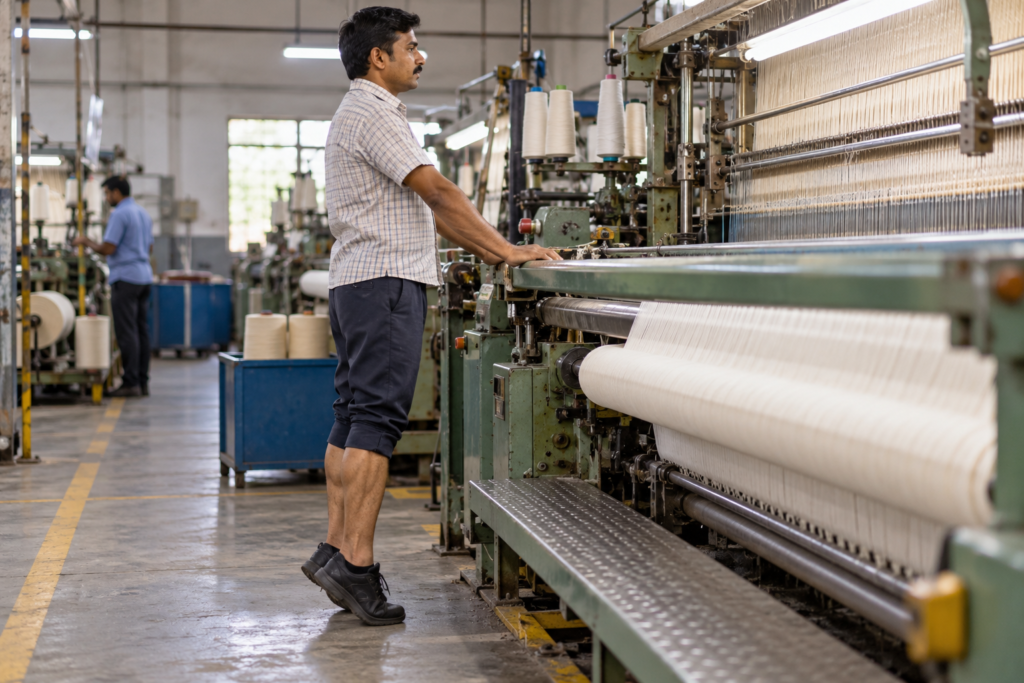
Long working shifts can leave legs swollen after standing, particularly when a job involves staying at a loom, diamond wheel or workstation for many hours. The legs may feel heavy, tired or tight by evening. Prolonged standing can contribute to venous symptoms, while workers with diabetes also need to watch for foot wounds that may not hurt. A five-minute end-of-shift check, hourly calf movement and regular screening can help identify problems early.
Why do long shifts swell the legs and feet?
The calf muscles help pump blood upward through the leg veins when you walk and move. When you remain standing in one position for hours, that muscle pump is used less actively and blood can pool in the lower limbs.
This may cause:
- Ankle or lower-leg swelling
- Tightness around the sock line
- Heavy or tired legs
- Aching after a long shift
- More visible surface veins
- Symptoms that are worse toward the end of the day
The same basic problem can occur with prolonged sitting because the calf muscles are also relatively inactive.
Workers should therefore avoid staying completely still for an entire shift whenever their work environment allows safe movement. Short movement breaks, ankle pumps and calf raises can interrupt long periods of static positioning.
If swelling repeatedly returns, becomes progressively worse or occurs mainly in one leg, it should not simply be attributed to work. A clinical assessment can help determine whether the cause is venous disease or another condition.
When is evening swelling normal and when is it vein disease?
Some mild swelling after a long shift can settle after walking, resting or elevating the legs. That does not automatically mean a person has varicose veins.
However, recurring symptoms deserve attention, especially when accompanied by:
- Enlarged or twisted veins
- Persistent heaviness
- Aching or discomfort
- Itching around the lower leg
- Skin colour changes
- Thickened or hardened skin near the ankle
- Recurrent ankle swelling
- A slow-healing wound
These symptoms can occur with chronic venous disease. The CEAP classification is used clinically to describe chronic venous disease according to clinical, etiological, anatomical and pathophysiological features.
Workers should also remember that sudden swelling, particularly when mainly affecting one leg and associated with pain, warmth or redness, is different from typical end-of-shift swelling and requires prompt medical assessment.
Can diamond polishing work cause varicose veins?
Diamond polishing does not directly cause varicose veins. However, prolonged standing can contribute to venous symptoms by reducing regular calf-muscle movement.
The same issue can occur in other standing jobs. Risk is influenced by several factors, including:
- Family history of varicose veins
- Age
- Previous venous disease
- Body weight
- Pregnancy
- Previous blood clots
- Low physical activity
- Long periods of standing or sitting
Workers who develop veins after long standing, repeated swelling or persistent heaviness should consider an assessment rather than assuming the symptoms are simply part of the job.
Similarly, leg pain after standing long hours should be evaluated when it is recurrent, worsening or associated with visible veins or skin changes.
Five-minute end-of-shift leg and foot check
A simple inspection before leaving work can help identify changes early.
Check the legs
| Check | What to look for | What to do |
|---|---|---|
| Sock line | Swelling or a deep sock mark that persists | Remove tight socks and reassess after rest |
| Ankles | Puffiness or increasing swelling | Elevate the legs while resting |
| Veins | New or increasingly prominent veins | Arrange assessment if persistent |
| Skin | Colour or texture changes | Seek clinical advice if changes continue |
| Pain | New or increasing heaviness or aching | Record the pattern and seek assessment if recurrent |
Check the feet
A foot check for diabetic workers should be especially consistent because reduced sensation can allow an injury to develop without obvious pain.
Inspect:
- The soles
- Between the toes
- Heels
- Toenails
- Pressure areas
- Blisters
- Cuts
- Cracks
- Redness
- Colour changes
- Discharge or drainage
Use a mirror to see the sole if necessary.
Do not rely only on pain as a warning sign. People with diabetic peripheral neuropathy can lose protective sensation, which means a pressure injury or small wound may not hurt normally.
What should diabetic workers check at the end of every shift?
For workers with diabetes, the end-of-shift routine should cover both the legs and feet.
- Remove footwear and socks.
- Examine both feet under good lighting.
- Check between the toes.
- Inspect the soles and heels.
- Look for blisters, cuts, cracks or redness.
- Compare the two feet for swelling or colour changes.
- Check the lower legs for swelling above the sock line.
- Look for any footwear-related pressure point.
- Record any recurring abnormality.
- Arrange professional assessment if a wound, persistent swelling or concerning change is found.
The IWGDF 2023 practical guideline identifies the 10-g monofilament as a method for detecting loss of protective sensation in people with diabetes.
The hourly 60-second calf-pump routine
A short movement break can help interrupt prolonged static standing or sitting. It should be performed safely and should not be treated as a replacement for medical assessment.
| Time | Movement | How to perform it |
|---|---|---|
| 0–20 sec | Heel raises | Hold a stable surface if needed, raise the heels and lower slowly |
| 20–40 sec | Ankle pumps | Move the toes upward and then downward repeatedly |
| 40–50 sec | Gentle walking | Walk around the workstation if it is safe to do so |
| 50–60 sec | Ankle circles | Make slow, controlled circles with each ankle |
If the worker cannot stand safely, ankle pumps can be performed while seated.
The purpose is simply to keep the calf and ankle moving during a long shift. Stop if the movement produces significant pain, dizziness or another concerning symptom.
Which stockings and footwear suit factory floors?
Compression stockings can reduce venous symptoms in appropriately selected patients, but they should not be purchased solely because the legs swell after work.
The ESVS guideline recommends compression for appropriate patients with symptomatic chronic venous disease and recommends specific compression treatment for patients with venous oedema. It also lists situations in which compression requires caution or may be contraindicated, including severe arterial disease and severe diabetic neuropathy with sensory loss or microangiopathy.
Therefore, workers with diabetes, reduced sensation or suspected circulation problems should discuss compression with a clinician before using stronger compression.
Work footwear should provide:
- Adequate toe room
- Correct length and width
- A secure but comfortable fit
- Minimal rubbing
- Appropriate cushioning
- Clean, dry socks
- No rough internal seams or damaged areas
A shoe that feels comfortable at the start of a shift can still create pressure as the feet swell later. Checking the fit and inspecting the feet after work is therefore useful.
Why yearly vein and foot screening matters
Workers who spend many hours standing or sitting should not wait for severe symptoms before considering preventive assessment.
A yearly vein and foot screening can provide a baseline and help identify changes over time. Workers with symptoms may need assessment sooner rather than waiting for their annual visit.
For venous symptoms, the first assessment can document the CEAP clinical class and determine whether further investigation is needed.
For workers with diabetes, the foot assessment can include:
- Protective sensation testing
- 10-g monofilament testing when clinically indicated
- Foot-pulse assessment
- Skin inspection
- Footwear and pressure-point assessment
- Previous ulcer or wound history
The IWGDF provides evidence-based guidance for prevention and assessment of diabetic foot disease, including sensory and vascular assessment.
Results should be reviewed by Dr. Ashutosh Shah as specified in the clinical protocol for this article.
Any occupational pattern identified from clinic records should be labelled clinic audit data until formally analysed and approved for publication. It should not be presented as established research evidence.
When should leg swelling be checked urgently?
Seek prompt medical assessment when swelling is sudden, particularly if one leg becomes significantly more swollen than the other.
Urgent symptoms include:
- Sudden one-sided leg swelling
- Significant leg pain
- Redness or unusual warmth
- Sudden unexplained worsening
- A new wound with concerning changes
Chest pain, sudden breathlessness, coughing blood or fainting with possible leg symptoms requires emergency medical attention.
This is different from mild bilateral swelling that predictably appears after a long shift and settles with rest. Even then, repeated or worsening symptoms deserve clinical evaluation.
How can workers get a varicose vein check in varachha without losing a workday?
Workers may postpone appointments because taking time away from a full shift is difficult. Ask the clinic about current OPD timings and choose an appointment that fits the working schedule.
A varicose vein check in varachha can begin with a clinical history and examination of both legs. The clinician can assess swelling, visible veins, skin changes and symptom patterns and decide whether further venous testing is appropriate.
Workers should bring:
- The approximate time swelling begins
- Whether one or both legs are affected
- Whether symptoms improve after rest
- Any visible veins
- Previous vein problems
- Diabetes history, if applicable
- Current medicines
- Previous wounds or ulcers
For workers with diabetes, the same visit can also be used to discuss foot-risk assessment.
End-of-shift checklist
Before leaving work, check:
Legs
- Swelling above the sock line?
- Heaviness or unusual tiredness?
- New or more prominent veins?
- One leg different from the other?
- Persistent aching?
Feet
- Cut?
- Blister?
- Redness?
- Colour change?
- Crack?
- Pressure mark?
- Discharge?
- Footwear rubbing?
Action
- Move the ankles and calves.
- Walk gently when safe.
- Elevate the legs while resting.
- Do not repeatedly ignore persistent swelling.
- Arrange assessment for recurring vein symptoms.
- Seek diabetic foot assessment for a new wound or concerning foot change.
For workers with diabetes who notice swelling, the guide on Foot swelling in diabetes explains when swelling needs attention. If compression is being considered for work-related leg symptoms, see Compression stockings fitting for appropriate fitting and precautions. Persistent venous problems can sometimes lead to skin changes or ulcers, so Varicose vein ulcers provides further information. Workers who need an appointment can check OPD centres and timings for available clinic services and scheduling.
Frequently Asked Questions
Long periods of standing can allow blood to pool in the lower legs and may cause ankle swelling, heaviness and tiredness. Symptoms that repeatedly occur after long shifts and improve with rest may be related to venous problems, but persistent or one-sided swelling should be medically assessed.
Diamond polishing does not directly cause varicose veins, but prolonged standing during polishing work can contribute to venous symptoms such as heaviness, aching and swelling. Individual risk factors also matter. Recurrent swelling or prominent veins should be assessed rather than automatically attributed to the job.
Compression stockings can help selected people with symptomatic venous disease, but the pressure and fit should be appropriate for the individual. People with diabetes, reduced sensation or circulation problems should discuss compression with a clinician before using stronger compression stockings.
Foot swelling is not automatically dangerous, but diabetes makes persistent foot changes more important to check. Inspect for blisters, cuts, redness, warmth, colour changes and wounds. Reduced sensation can allow an injury to progress without much pain, so a new or persistent foot problem should be assessed.
Clinic timings can change, so workers should confirm the current OPD schedule before attending. Asking about suitable appointment slots in advance can help avoid missing an entire work shift. Mention the reason for the visit so the clinic can advise on the appropriate appointment type.
Long periods of sitting can also reduce calf-muscle movement and contribute to venous pooling and leg discomfort. Changing position, performing ankle movements and taking safe short walking breaks can interrupt prolonged immobility during a long working shift.
A varicose vein check in varachha can begin with examination of the legs and review of the worker’s symptoms and occupational pattern. If clinically indicated, further venous testing can be recommended. Workers with diabetes can also discuss foot examination during the same visit.
Citable medical evidence
The ESVS 2022 Clinical Practice Guidelines describe CEAP classification for chronic venous disease and provide recommendations for compression treatment in appropriate patients with venous symptoms and oedema. The same guideline lists important contraindications and cautions, which is why compression should not be recommended indiscriminately.
The IWGDF 2023 Practical Guidelines recommend structured diabetic-foot assessment and describe the 10-g monofilament as a method for detecting loss of protective sensation.