
Caring for a Parent’s Diabetic Foot at Home: A Family Carer’s Weekly Routine
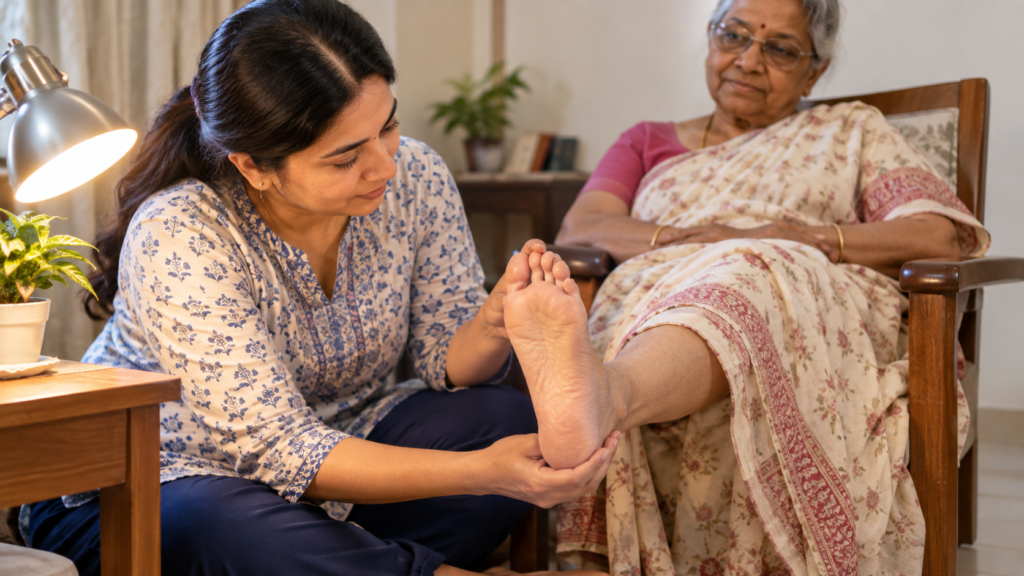
Caring for a parent with diabetes often means helping with simple foot care tasks at home. A consistent routine can help a family carer notice changes early and know when a foot problem needs professional attention.
The most important part of the routine is checking both feet every night in good light. Look at the top, sides, soles, heels, toenails and the spaces between the toes.
Do not wait for your parent to complain of pain. Diabetes can cause nerve damage that reduces sensation in the feet, so an injury may sometimes be present without causing much discomfort. Daily inspection can help identify a problem before it becomes more serious.
A family carer’s routine should include daily checking, safe washing and drying, appropriate skin care, careful nail care, weekly recording and knowing exactly which findings need to be escalated.
What Should A Carer Check Every Single Day?
Check both feet every night in good light.
Look carefully at:
- The top of each foot
- The sides of each foot
- The soles
- The heels
- Between the toes
- Around the toenails
- Areas that regularly experience pressure from footwear
Look for:
- New redness
- Warmth
- Swelling
- Cuts
- Blisters
- Sores
- Any open area
- Cracked skin
- New or worsening calluses
- Changes around the toenails
- Discharge
- New or unusual smell
- Blackening or darkening
- Any change from how the foot normally looks
If your parent cannot see the sole or heel easily, use a handheld mirror or help them check the area safely. The CDC recommends using a mirror or asking someone else for help when the bottom of the foot cannot be seen. (cdc.gov)
The purpose of the nightly check is not to diagnose the problem yourself. It is to notice that something has changed and decide whether professional advice is needed.
How Should The Feet Be Washed And Dried?
Wash the feet with lukewarm water.
Do not use very hot water. Reduced sensation can make it difficult for a person with diabetes to judge the temperature accurately, increasing the risk of a burn.
Wash the entire foot gently, including around the toes.
After washing, dry the feet thoroughly.
Pay particular attention to the spaces between the toes. Moisture that remains between the toes can contribute to skin problems.
After the feet are dry, apply moisturiser to dry skin on the tops, bottoms, sides and heels.
Do not apply moisturiser between the toes.
The aim is to prevent excessive dryness and cracking while avoiding unnecessary moisture between the toes. (cdc.gov)
Which Jobs Must A Carer Never Do At Home?
A family carer should know which foot care tasks should not be attempted at home.
Never Cut Corns
Do not cut a corn with scissors, a blade or another sharp instrument.
Never Cut Calluses
Do not cut or shave a callus yourself.
Do Not Use Chemical Corn Or Callus Removers
Avoid over the counter products designed to burn or dissolve corns and calluses unless specifically advised by a healthcare professional.
Do Not Cut Into Nail Corners
Do not dig into the corners of a toenail or try to remove a suspected ingrown portion yourself.
Do Not Use Sharp Tools On The Foot
Do not use blades, razors or other sharp instruments to remove thick skin or alter an area that looks abnormal.
Do Not Soak The Feet
Do not leave diabetic feet soaking in a basin or bathtub.
Wash them with lukewarm water and dry them thoroughly instead.
Do Not Walk Barefoot
Your parent should avoid walking barefoot, including around the home. Appropriate footwear can help protect the feet from injuries that may otherwise go unnoticed.
If a corn, callus, nail problem or skin problem needs treatment, ask the healthcare team how it should be managed rather than trying to remove it yourself.
How Are Nails And Dry Skin Handled Safely?
Nail care should depend on whether your parent can safely see, reach and feel the feet.
When routine nail trimming is appropriate, toenails are generally trimmed straight across rather than cutting deeply into the corners. Sharp edges can be gently smoothed. (diabetes.org)
However, a parent may need professional nail care if they:
- Have reduced sensation
- Cannot see the feet properly
- Cannot reach the toenails safely
- Have very thick or abnormal nails
- Have a history of foot problems
- Have an ingrown toenail or suspected infection
A family carer should not dig into nail corners or attempt to treat an abnormal nail independently.
For dry skin, apply moisturiser to the tops, bottoms, sides and heels of the feet.
Keep moisturiser away from between the toes.
If the skin is cracked, broken or open, do not simply moisturise it and continue the normal routine. The area should be assessed appropriately.
What Should Be Photographed And Recorded Each Week?
Choose one day each week for a more detailed foot review.
If there is a new or changing area, take a clear photograph in good light when appropriate.
Record:
- Date
- Which foot is affected
- Exact location of the change
- What the area looks like
- Whether the area is getting larger
- Any redness
- Any swelling
- Any warmth
- Any discharge
- Any smell
- Any change in colour
- Any change in walking
For example, if a small area of redness is noticed on the heel, record the date and location and photograph it clearly.
A weekly record can help the family and healthcare team understand whether a problem is changing.
However, photographs are only a record. They should not replace professional assessment when a concerning change is present.
Weekly Family Carer Routine
| Frequency | Task | How to do it | What to record |
|---|---|---|---|
| Every night | Check both feet | Check the tops, sides, soles, heels, nails and between the toes in good light | Redness, warmth, swelling, cuts, blisters, sores, open areas, smell, blackening or other changes |
| Twice weekly | Detailed skin and nail check | Look closely at dry skin, cracks, nails, calluses and areas that are difficult to see | New or worsening skin, nail or callus changes |
| Weekly | Photograph and record changes | Photograph any new or changing area in good light and compare with the previous record | Date, location, appearance and whether the change is improving or worsening |
| Monthly | Review the routine | Look back through the weekly records and identify repeated problems or changes | Repeated redness, pressure areas, nail problems, footwear problems or other concerns |
The nightly check remains the central part of the routine. Daily foot inspection is recommended for people with diabetes because changes can sometimes develop without obvious pain.
How Do You Check A Heel You Cannot See Easily?
The heel can be difficult for an older parent to inspect.
Do not ask your parent to bend or twist into an unsafe position simply to see the heel.
Use a handheld mirror if possible.
A family carer can also help by supporting the foot safely and checking the heel under a good light.
Look for:
- Redness
- Warmth
- Swelling
- Cracks
- Blisters
- Open areas
- Discharge
- Unusual smell
- Darkening or blackening
- Any other change from the previous check
If you find something concerning, do not repeatedly manipulate or press the area to investigate it yourself.
Same Day Escalation List
Contact the clinic or appropriate healthcare professional the same day if you notice:
- New redness
- New warmth
- New swelling
- New or unusual smell
- Blackening or darkening
- Any open area
- A parent who suddenly refuses to walk
Also seek prompt professional advice for a new wound, sore, blister that has broken, discharge, significant colour change or another clear change from the normal appearance of the foot.
A person with diabetes may have reduced sensation and may not feel a foot injury normally. A problem that looks small should therefore not automatically be managed at home.
If there is rapidly worsening redness or swelling, severe illness, significant blackening or another emergency concern, seek urgent medical care rather than waiting for a routine clinic response.
What Findings Mean Calling The Clinic Immediately?
Some changes should not be monitored for several days before seeking advice.
Call the clinic promptly when you see a new open area, sore, ulcer, new redness, warmth, swelling, discharge, unusual smell or blackening.
Also contact the clinic if your parent suddenly refuses to walk or suddenly has difficulty walking.
Do not wait for pain before seeking advice. Nerve damage associated with diabetes can reduce sensation, meaning a significant foot problem may not always hurt.
What Should A Carer Do If A Problem Is Found?
The carer’s role is to notice and escalate rather than perform a procedure at home.
If you find a new open area, redness, swelling, warmth, blackening, discharge or another concerning change, record what you see and contact the appropriate healthcare professional.
Do not cut the area.
Do not remove surrounding callus with a blade.
Do not apply a chemical corn remover.
Do not soak the foot.
Do not repeatedly press or manipulate the area.
If your parent suddenly refuses to walk, treat that as a significant change and contact the clinic promptly.
Frequently Asked Questions
A carer should check both feet every day, with the detailed routine in this guide centred on a nightly check in good light. Look at the soles, heels, sides, tops, toenails and spaces between the toes.
Only if nail care can be performed safely and there are no reasons for professional nail care. Toenails are generally trimmed straight across rather than cutting deeply into the corners. If your parent has reduced sensation, difficulty seeing or reaching the feet, very thick or abnormal nails, or another foot problem, ask the healthcare team about professional nail care.
Do not use sharp tools to remove corns or calluses. Do not attempt to cut thick skin yourself. Ask the healthcare team how the particular corn or callus should be managed.
No. Wash the feet with lukewarm water and dry them thoroughly instead of soaking them.
Use a handheld mirror or ask another family member to help. Check the heel under good lighting and look for redness, warmth, swelling, cracks, blisters, open areas, unusual smell or colour changes.
New redness, warmth, swelling, smell, blackening, any open area or a parent who suddenly refuses to walk should prompt same day contact with the clinic or appropriate healthcare professional.
A Family Carer’s Weekly Routine
The routine is simple when it is repeated consistently.
Every night: Check both feet in good light, including between the toes and the heels.
Every day: Wash with lukewarm water, dry thoroughly and moisturise everywhere except between the toes.
Twice each week: Look more closely at the skin, nails, dry areas and calluses.
Every week: Photograph and record any changes.
Every month: Review the records for repeated problems or changes.
Never: Cut corns, cut calluses, dig into nail corners, use sharp tools, use chemical corn removers or soak the feet.
Same day: Escalate new redness, warmth, swelling, smell, blackening, any open area or a parent who suddenly refuses to walk.
The goal of a family carer’s routine is not to diagnose or treat a diabetic foot problem at home. It is to notice changes early, protect the feet from avoidable injury and make sure concerning findings reach the healthcare team promptly.