
Day-Care Debridement in Surat: What to Expect
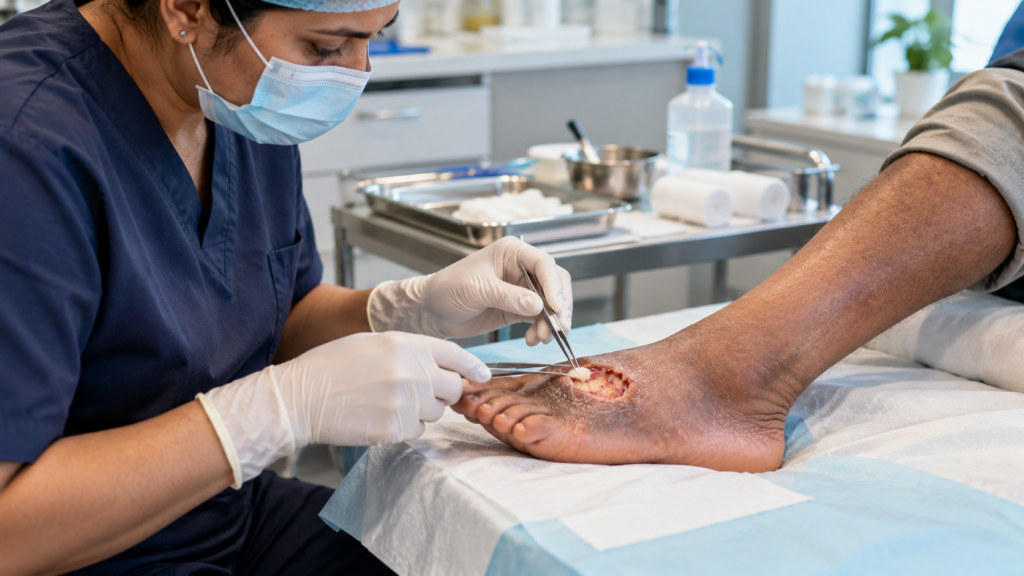
A diabetic foot wound may develop dead tissue, slough, thick callus or unhealthy tissue around its edges. When this material interferes with wound healing, a clinician may recommend debridement.
Debridement means removing tissue that is no longer healthy so that the wound can be properly assessed and treated. Depending on the wound and the patient’s overall condition, debridement may be performed as a day-care procedure rather than requiring an overnight hospital stay.
For many patients, the procedure itself takes around 20 to 60 minutes, although the complete visit can take longer because it includes assessment, consent, anaesthesia, recovery and dressing.
What Is Debridement?
Debridement is the controlled removal of tissue that is not helping the wound heal.
Depending on the wound, this may include:
- Dead or non-viable tissue
- Slough
- Thickened callus around a pressure area
- Unhealthy wound edges
- Other material that prevents proper wound assessment
The objective is not simply to make the wound smaller. Removing unhealthy tissue can allow the wound bed to be assessed more clearly and can support the wider wound-care plan.
Debridement is only one part of diabetic foot treatment. Blood-sugar control, infection management, circulation assessment, pressure relief, footwear and appropriate dressings may also be necessary.
Is Diabetic Foot Debridement Painful?
Pain varies according to the depth and location of the wound, the patient’s sensation and the type of debridement being performed.
Some people with diabetic neuropathy have reduced sensation in the foot and may feel less than expected. Others can experience discomfort, particularly around sensitive or inflamed tissue.
Local or regional anaesthesia may be used when appropriate.
The clinician should assess the wound and discuss pain control before starting the procedure. Do not assume that severe pain is something you simply have to tolerate.
What Anaesthesia Is Used?
Many day-care debridements can be performed using local or regional anaesthesia, depending on the wound and the procedure required.
The exact approach depends on:
- Wound size and depth
- Location of the wound
- Amount of tissue that needs to be removed
- Sensation in the foot
- Infection or inflammation
- Other medical conditions
- The clinician’s assessment
The anaesthetic plan is discussed before the procedure.
How Long Does Debridement Take?
The debridement itself may take approximately 20 to 60 minutes, although this is not a fixed time.
The total visit can be longer because the patient may need:
- Initial assessment
- Consent and preparation
- Anaesthesia
- Debridement
- Wound cleaning and dressing
- Recovery observation
- Discharge instructions
The time required therefore depends on the wound rather than simply the procedure itself.
What Happens During the Procedure?
The first step is usually an assessment of the wound.
The clinician looks at the wound’s size, depth, tissue condition and surrounding skin. Circulation, sensation and signs of infection may also be considered.
After appropriate preparation and anaesthesia, the clinician removes unhealthy tissue using the selected debridement technique.
The wound may look different immediately afterwards. In some cases, it can appear larger because dead tissue or an overlying callus that was hiding the true wound dimensions has been removed.
This does not necessarily mean that the wound has suddenly become worse. The wound needs to be assessed based on its actual depth and tissue condition.
The wound is then cleaned and dressed according to the treatment plan.
What Happens After Debridement?
After the procedure, you may spend some time in a recovery area while the clinical team checks that you are stable and gives you instructions for home care.
You may be advised about:
- Dressing care
- Foot protection
- Weight-bearing or activity restrictions
- Pain medication, if required
- Blood-sugar management
- When to change the dressing
- When to return for review
Whether you can walk normally afterwards depends on the wound, the procedure and the clinician’s instructions. Do not assume that being discharged means the foot can immediately be used normally.
Can You Go Home the Same Day?
Many appropriately selected diabetic foot debridements can be performed as day-care procedures, allowing the patient to return home after recovery and discharge assessment.
However, day-care treatment is not appropriate for every wound.
Hospital admission may be required when there is significant infection, systemic illness, extensive tissue involvement, poor circulation or another problem requiring closer monitoring or additional treatment.
The decision should be made after examining the patient rather than based only on the word “debridement.”
What Should You Expect During the First 48 Hours?
The first two days are important because the wound needs to be monitored after tissue removal.
Follow the dressing and activity instructions provided by your clinical team.
Depending on the wound, you may have some soreness or mild bleeding. The expected amount varies according to the procedure.
Keep the dressing protected and avoid putting additional products on the wound unless they have been recommended.
If you have diabetes, continue following your prescribed diabetes-management plan and monitor your glucose as advised.
When Is the Next Dressing?
The timing of the next dressing depends on:
- Wound size
- Amount of drainage
- Type of dressing
- Depth of the wound
- Infection status
- The debridement performed
Some wounds require an early review, while others may follow a different dressing schedule.
The next visit is not simply about replacing the dressing. The clinician may reassess the wound bed, drainage, tissue quality, surrounding skin and signs of infection.
Can Debridement Make the Wound Look Bigger?
Yes, the wound can sometimes appear larger immediately after debridement.
This can happen because dead tissue, slough or thick callus was covering part of the wound.
The important question is not simply whether the visible opening looks bigger. The clinical team needs to determine whether unhealthy tissue has been removed and what the underlying wound looks like.
The wound should then be managed according to its actual depth, infection status, circulation and pressure exposure.
Day-Care Debridement: Visit Timeline
| Stage | What happens | Approximate timing | What you may feel | What you receive |
|---|---|---|---|---|
| Arrival and assessment | Wound and general condition are assessed | Variable | Usually minimal discomfort | Treatment plan |
| Consent and preparation | Procedure and risks are explained | Short visit stage | Questions can be discussed | Consent and instructions |
| Anaesthesia | Local or regional anaesthesia may be given | Variable | Temporary numbness or pressure | Pain-control plan |
| Debridement | Unhealthy tissue is removed | About 20–60 minutes in many cases | Pressure or sensation depending on anaesthesia | Wound assessment |
| Recovery | Observation and wound care | Variable | Numbness may persist temporarily | Discharge instructions |
| Discharge | Dressing and home-care plan explained | Variable | Usually ready to leave when clinically appropriate | Dressing and follow-up plan |
| Next dressing | Wound is reassessed and dressing changed | As advised | Depends on wound | Updated wound-care plan |
What Symptoms Mean You Should Return the Same Day?
After debridement, seek prompt medical assessment if you develop concerning symptoms such as:
- Bleeding that soaks through the dressing
- Fever
- Spreading redness around the wound
- Severe or rapidly increasing pain
- Increasing swelling
- Pus or worsening discharge
- A sudden deterioration in the appearance of the wound
For a person with diabetes, a worsening foot wound should not be left until a routine appointment simply because a procedure has already been completed.
If you feel significantly unwell or have signs of a serious infection, urgent medical care may be necessary.
What Is Chemical Debridement?
Not every debridement is performed with surgical instruments.
Chemical debridement uses an appropriate chemical or enzymatic approach to help remove selected non-viable tissue. The choice depends on the wound and the treatment plan.
Sharp or surgical debridement and chemical debridement are therefore not interchangeable for every patient.
The appropriate method depends on the wound’s characteristics and the clinician’s assessment.
When Is Debridement Recommended?
Debridement may be considered when unhealthy tissue is interfering with wound assessment or healing.
However, the decision should take into account the complete clinical picture, including:
- Wound depth
- Infection
- Blood supply
- Neuropathy
- Pressure on the wound
- Blood-sugar control
- Tissue viability
- Overall health
A diabetic foot wound should not be treated with debridement alone while ignoring the underlying cause.
For more information, read the guide on when debridement surgery is needed and the clinic’s diabetic foot patient guide.
What Happens After You Go Home?
Going home is not the end of treatment.
The wound usually needs an ongoing plan that may include dressing changes, pressure offloading, footwear modification, infection treatment, glucose management and scheduled reviews.
If the wound is on a weight-bearing area, reducing pressure on it may be particularly important. Walking on an open wound can continue the mechanical stress that contributed to the problem in the first place.
Your clinical team should tell you exactly how much weight you can put on the foot and whether an offloading device is required.
Final Takeaway
Day-care debridement for a diabetic foot wound is often a relatively short procedure, with many cases taking around 20 to 60 minutes for the debridement itself. Local or regional anaesthesia may be used, and suitable patients can often return home after recovery and discharge assessment.
The wound may look different or even appear larger immediately afterwards because unhealthy tissue or callus has been removed. What matters is the condition of the underlying wound and the plan for continued healing.
Follow the dressing, activity and follow-up instructions carefully. Most importantly, do not wait for the next appointment if you develop soaked bleeding, fever, spreading redness or severe pain.
Frequently Asked Questions
Pain varies. Local or regional anaesthesia may be used when appropriate, and the amount of discomfort depends on the wound and the patient’s sensation.
The debridement itself commonly takes around 20 to 60 minutes, although the complete visit takes longer.
The debridement itself commonly takes around 20 to 60 minutes, although the complete visit takes longer.
It can. Removing dead tissue or callus may reveal the true size and depth of the wound.
Only if your clinical team says it is safe. Weight-bearing depends on the wound and the procedure performed.
Bleeding that soaks through the dressing or severe or rapidly increasing pain requires prompt medical assessment, particularly when accompanied by fever, spreading redness or swelling.