
Custom Insole Fitting in Surat: Visits and Timeline
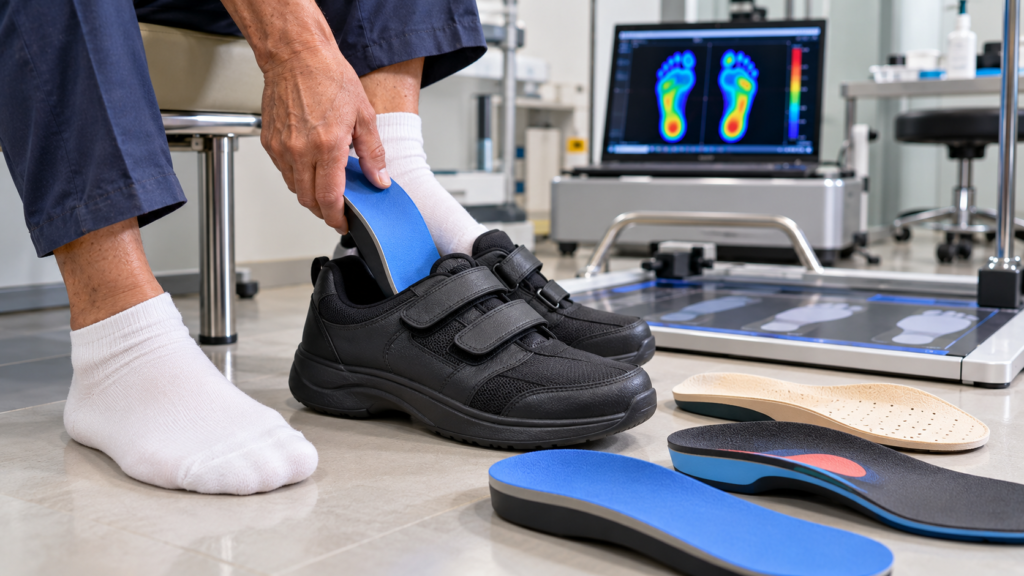
A custom insole for diabetic foot in Surat is designed around the individual’s foot shape, pressure distribution and specific foot-care needs. Unlike a standard insole bought from a shop, a custom orthotic is made to provide targeted cushioning, support and pressure redistribution.
For people with diabetes, this can be particularly important when there are pressure points, recurrent calluses, previous ulcers, foot deformity or other problems that make ordinary footwear unsuitable.
At Elegance Diabetic Foot & Ulcers Clinic, custom orthotics are described as specially designed insoles tailored to the patient’s foot structure and needs. The service focuses on pressure redistribution, cushioning and support.
Why Might You Need A Custom Insole?
Diabetes can be associated with neuropathy, changes in foot shape and altered pressure distribution. When protective sensation is reduced, a person may not notice excessive pressure or friction until the skin has already been damaged.
A custom insole may be considered when there is:
- A recurrent pressure point
- Callus or corn formation
- A previous diabetic foot ulcer
- A history of sores or wounds
- Foot deformity
- Flat feet or high arches
- Difficulty finding suitable footwear
- A need for specialised pressure redistribution
The current clinic guidance specifically lists pressure points, sores, previous ulcers, flat feet and high arches among situations where custom orthotics may be considered.
A custom insole is not simply intended to make a shoe softer. The goal is to provide appropriate support and redistribute pressure away from vulnerable areas.
What Happens At The First Assessment?
The first stage is a clinical assessment of the foot and footwear needs.
The clinician may consider:
- Foot shape
- Pressure points
- Calluses
- Previous ulcers
- Existing wounds
- Foot deformity
- Walking pattern
- Current footwear
- The need for pressure redistribution
The clinic’s insole and footwear service also emphasises daily foot inspection, skin care, foot hygiene and appropriate footwear as part of diabetic-foot prevention.
The exact assessment required depends on the patient’s risk and reason for requesting an orthotic.
What Is A Pedobarogram?
A pedobarogram is a pressure-mapping test that measures how pressure is distributed across the soles of the feet.
At the clinic, the patient walks across a pressure-sensitive platform and the system produces a pressure map. This can identify areas where pressure is concentrated.
The test can be useful when a patient has:
- Recurrent calluses
- Previous foot ulcers
- Abnormal walking patterns
- Pain or discomfort in specific areas
- Suspected pressure-related problems
The current clinic information specifically states that pedobarogram pressure mapping can help with the creation of custom orthotics and pressure-redistribution planning.
How Does Pressure Mapping Help With A Custom Insole?
Imagine that one part of the sole is repeatedly receiving much more pressure than the surrounding areas.
If that area also corresponds to a callus or previous ulcer, the pressure becomes clinically important.
Pressure mapping gives the clinician additional information about where the load is concentrated.
This information can be considered alongside the physical examination and footwear assessment when planning pressure redistribution.
The aim is not to make every part of the foot experience exactly the same pressure. It is to manage excessive pressure in areas that are vulnerable to injury.
How Is The Foot Measured?
Custom orthotics are made from an assessment of the individual’s foot.
The clinic’s current information states that custom orthotics are made by taking impressions of the feet and creating insoles tailored to individual needs.
Depending on the clinical situation and orthotic process, the assessment may also incorporate pressure-mapping information.
The final design should take into account the patient’s foot shape and the purpose of the orthotic.
What Is A Harris Mat Test?
A Harris mat is another method of looking at the contact pattern of the foot.
It can provide a visual footprint showing areas of contact and pressure distribution.
It may be useful as part of a broader foot assessment when the clinician wants to understand how the foot contacts the ground.
It should not be treated as a replacement for the complete diabetic-foot examination.
How Many Visits Does A Custom Insole Need?
There is no fixed number of visits that applies to every patient.
The exact process can vary depending on:
- The patient’s foot condition
- Whether pressure mapping is required
- The type of orthotic
- Whether an impression or mould is needed
- The footwear being used
- Whether adjustments are required
- The patient’s response after fitting
A typical process may include an assessment and measurement stage, preparation of the custom orthotic, fitting and a subsequent review if required.
Therefore, it is better to describe the process as several stages rather than promise a fixed three-visit schedule.
Custom Insole Visit Planner
| Stage | What happens | What is assessed |
|---|---|---|
| Initial assessment | Foot, pressure areas and footwear are evaluated | Foot shape, pressure points, ulcers, calluses and footwear needs |
| Pressure assessment | Pedobarogram or another appropriate pressure test may be performed | Areas of increased plantar pressure and walking pattern |
| Impression / measurement | Foot measurements or an impression may be taken | Shape and dimensions needed for the custom orthotic |
| Fitting | The completed orthotic is placed in the intended footwear | Fit, comfort, shoe space and pressure management |
| Follow-up | The foot and orthotic are reviewed when clinically required | Skin condition, pressure areas, footwear fit and need for adjustment |
The timing between these stages depends on the orthotic process and individual clinical requirements.
What Happens During The Fitting?
A custom insole needs to work together with the shoe.
The clinician may check:
- Whether the insole sits correctly
- Whether the shoe has enough space
- Whether the foot is positioned appropriately
- Whether there are new pressure points
- Whether the footwear remains comfortable
- Whether the insole needs adjustment
Professional shoe fitting is particularly important for people with diabetes because poorly fitting footwear can contribute to blisters, sores and ulcers. The clinic’s shoe-fitting service includes measuring the feet and assessing foot shape and individual needs.
Why Can’t The Insole Be Judged Only By Comfort?
Comfort is useful, but it is not the only consideration.
A person with diabetic neuropathy may have reduced protective sensation and may not reliably feel harmful pressure.
An insole can also feel soft while a particular bony area continues to receive excessive load.
This is why pressure assessment, foot examination and proper shoe fitting can be important for higher-risk feet.
The current clinic guidance specifically states that proper footwear and insoles help reduce pressure points and ulcer risk.
How Should You Start Using A New Insole?
There is no single break-in schedule that is appropriate for every diabetic foot.
Your clinician should advise how quickly to increase use based on your foot risk and the type of orthotic.
When starting a new insole, inspect your feet regularly for:
- Redness
- Blisters
- Rubbing
- Skin irritation
- New callus
- Swelling
- Broken skin
- Any new wound
This is particularly important if you have reduced sensation.
Do not rely only on whether the insole feels comfortable.
What If The Insole Causes A Red Mark?
A new or persistent pressure mark should not simply be ignored.
Remove the footwear and examine the affected area.
If redness persists, becomes worse or is accompanied by blistering, broken skin, swelling or other changes, contact the clinician who fitted the orthotic.
If you have an open wound, spreading redness, significant swelling, pus, unusual colour change or other signs of infection, seek medical assessment promptly.
The aim of a custom orthotic is to redistribute pressure, not create a new pressure injury.
Can A Shop-Bought Insole Be Used Instead?
Sometimes a standard insole may be appropriate.
The choice depends on the individual foot.
The clinic’s current guidance states that proper insoles and footwear should be selected according to individual needs, and custom orthotics may be appropriate where specialised support is required.
A custom insole becomes more relevant when there is a specific pressure problem, deformity, previous ulcer or other reason for individualised pressure management.
A retail insole should not automatically be considered equivalent to a custom orthotic.
How Long Does A Custom Insole Last?
There is no universal replacement period for every custom insole.
The clinic’s current footwear guidance recommends replacing footwear when it shows signs of wear or no longer provides adequate support and comfort.
The same principle is useful when monitoring an orthotic.
The clinician may need to review the insole if:
- The material becomes worn
- The shape changes
- Cushioning deteriorates
- The foot changes
- A new pressure point develops
- The previous pressure problem returns
- The footwear no longer fits properly
The condition of the foot is just as important as the age of the insole.
Will A Custom Insole Fit My Normal Shoes?
Not necessarily.
A custom orthotic needs enough room inside the shoe.
A shoe that is already too narrow or shallow may not be suitable for an orthotic.
This is why footwear assessment should form part of the process.
The clinic’s professional shoe-fitting service assesses foot measurements, foot shape and individual requirements before recommending appropriate footwear.
If you are attending a fitting appointment, bringing the shoes you actually intend to wear can help the clinician assess the complete foot-and-shoe combination.
What If You Have An Active Diabetic Foot Ulcer?
A new insole should not be used as a substitute for medical treatment of an active ulcer.
An active diabetic foot ulcer requires assessment of the wound, pressure, circulation, infection and overall foot condition.
Offloading may be an important part of treatment.
The clinic’s current diabetic-foot guidance describes custom footwear and moulded insoles as particularly relevant to long-term pressure management and prevention after an ulcer has healed.
The correct offloading method depends on the ulcer and the patient’s clinical condition.
When Should You Seek Prompt Medical Attention?
Do not wait for a routine footwear review if you develop:
- A new open wound
- Pus or discharge
- Spreading redness
- Significant swelling
- Increasing warmth
- Black, blue or grey tissue
- A rapidly worsening wound
- Fever or chills
- A major change in foot shape
- A hot, swollen foot
These changes can indicate infection, tissue damage or other complications requiring assessment.
The clinic’s current diabetic-foot guidance highlights spreading redness, warmth or swelling, pus, foul-smelling discharge, black or grey tissue and systemic symptoms as warning signs requiring prompt care.
What Does Follow-Up Check?
Follow-up is used to determine whether the footwear and orthotic are working as intended.
The clinician may look for:
- New pressure points
- Callus
- Skin irritation
- Blisters
- Ulcer recurrence
- Changes in foot shape
- Wear of the insole
- Changes in footwear fit
The current professional shoe-fitting service specifically describes ongoing monitoring and adjustment when needed.
There is no need to impose the same review interval on every patient. Follow-up should be based on foot risk, symptoms, footwear condition and clinical assessment.
Custom Insole Fitting In Surat: The Practical Process
The process can be understood in five steps:
1. Assess the foot
Look at foot shape, pressure points, callus, previous wounds and footwear.
2. Measure pressure when appropriate
A pedobarogram can identify areas of high plantar pressure.
3. Take measurements or an impression
Custom orthotics are made according to the individual’s foot requirements.
4. Fit the orthotic with suitable footwear
The shoe and insole need to work together without creating new pressure points.
5. Review the result
Follow-up can identify pressure problems, skin changes or the need for adjustment.
The number and timing of appointments can vary. There is no need to promise every patient the same schedule.
The Bottom Line
A custom insole for diabetic foot in Surat is not simply a softer shoe insert.
It is part of a broader approach to pressure management.
A proper assessment can include examination of the foot, footwear evaluation and, when appropriate, pressure mapping with a pedobarogram. Custom orthotics can then be made using impressions and tailored to the patient’s foot structure and requirements.
The fitting process does not have one fixed number of visits for everyone. Some patients may need additional assessment or adjustment depending on their foot condition and orthotic requirements.
The most important point is to monitor the foot after fitting.
If a new insole causes persistent redness, blistering, skin breakdown or a new wound, stop relying on comfort as the test and have the foot assessed.
For people with diabetes, the right insole is the one that fits the foot, works with the footwear and manages pressure without creating new skin problems.
Frequently Asked Questions
There is no fixed number for every patient. The process can include assessment, pressure testing, foot measurement or impression, fitting and follow-up if adjustment is required.
A standard insole may be suitable for some people. Custom orthotics may be considered when individual pressure redistribution or specialised support is needed.
There is no universal lifespan. Wear, changes in the foot, material condition and footwear fit should determine when an orthotic needs review or replacement.
It depends on the shoe. The footwear needs adequate space and appropriate support. Professional shoe fitting can help determine whether the shoe and orthotic are compatible.
Remove the footwear and inspect the area. Persistent redness, blistering, broken skin or a new wound should be assessed rather than ignored.
Related Foot-Care Resources
Learn more about Pedobarogram and how plantar pressure is assessed.
Read about Custom Orthotics and pressure-redistributing insoles.
You can also read Harris Mat Test for another method of assessing foot contact and pressure.
For footwear selection, see Insole and Footwear Selection.