
What Is Surgical Offloading for Diabetic Foot Ulcers?
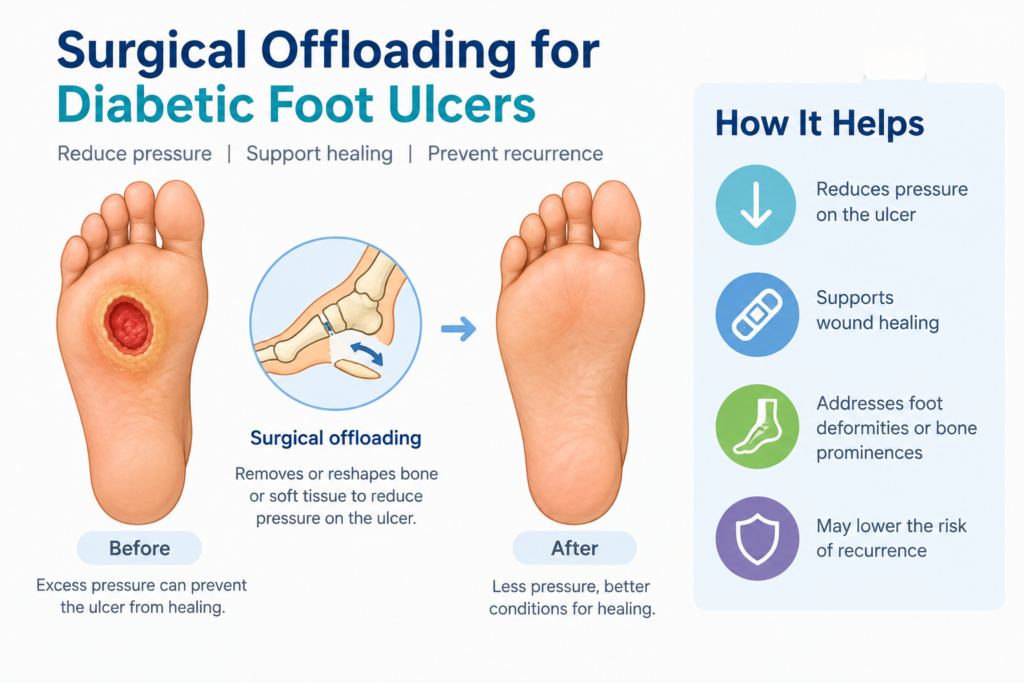
Surgical offloading for diabetic foot is a treatment approach used to reduce excessive pressure on a specific area of the foot, especially when repeated pressure is preventing a diabetic foot ulcer from healing. In selected patients, surgery can change the way pressure is distributed across the foot and help create better conditions for wound healing.
At Elegance Diabetic Foot And Ulcers Clinic in Surat, surgical offloading may be considered when an ulcer continues to recur or does not heal despite appropriate wound care, footwear changes, and non-surgical offloading.
Why Is Offloading Important for Diabetic Foot Ulcers?
Pressure is one of the major factors that can delay healing of diabetic foot ulcers. Walking repeatedly places stress on areas such as the heel, ball of the foot, toes, or prominent bones.
Diabetes can also cause reduced sensation in the feet. As a result, a person may continue walking on an injured area without realizing how much pressure is being applied.
Offloading aims to remove or reduce this mechanical pressure so the ulcer has a better opportunity to heal.
What Does Surgical Offloading Mean?
Surgical offloading involves a procedure designed to reduce pressure from the area of the ulcer. Depending on the patient’s foot structure and the location of the wound, different surgical techniques may be considered.
The exact procedure depends on factors such as:
- Location of the ulcer
- Foot deformity
- Bone prominence
- Pressure distribution
- Depth and severity of the wound
- Presence of infection
- Blood circulation
- Overall health and diabetes control
Therefore, there is no single surgical offloading procedure that is suitable for every diabetic foot ulcer.
When Is Surgical Offloading Considered?
Surgical offloading may be considered when an ulcer continues to experience excessive pressure despite appropriate conservative treatment.
A specialist may evaluate surgical options when:
- The ulcer repeatedly returns at the same location
- Foot deformity creates excessive pressure
- A bony prominence contributes to the ulcer
- Custom footwear or other offloading methods are insufficient
- The ulcer is difficult to heal because of mechanical pressure
- Long-term pressure reduction is needed to prevent recurrence
However, surgery is not automatically required for every non-healing ulcer.
What Happens Before Surgery?
A detailed diabetic foot assessment is essential before surgical offloading.
The doctor may assess the wound, circulation, sensation, foot structure, pressure points, and signs of infection. Blood glucose control and the patient’s general health are also considered.
In some cases, vascular investigations may be required to determine whether the foot has adequate blood flow for healing.
If there is an active infection or significant circulation problem, that issue may need to be addressed before elective offloading surgery.
Is Surgical Offloading Better Than Non-Surgical Offloading?
Not necessarily. Non-surgical offloading is generally an important part of diabetic foot ulcer management, and options may include specialized footwear, removable devices, casts, orthotics, and other pressure-relieving methods.
Surgical offloading is usually considered when conservative methods are not providing adequate pressure reduction or when a structural problem continues to cause the ulcer.
The best approach depends on the individual patient rather than choosing surgery simply because it is more advanced.
How Can Surgical Offloading Help?
The primary goal is to reduce repeated mechanical stress on the ulcer.
By addressing the structural cause of excessive pressure, surgical offloading may help:
- Reduce pressure on the wound
- Support ulcer healing
- Reduce repeated trauma
- Address certain foot deformities
- Potentially reduce the risk of ulcer recurrence
The outcome depends on the patient’s circulation, diabetes control, wound condition, infection status, and ability to follow post-treatment care.
The Role of Dr. Ashutosh Shah
Dr. Ashutosh Shah is a board-certified plastic surgeon with qualifications including M.B., M.S., M.Ch., and D.N.B. His professional profile also highlights training in microvascular and reconstructive surgery, which is relevant to complex tissue and wound management.
At Elegance Diabetic Foot And Ulcers Clinic, treatment planning focuses on understanding the cause of the ulcer and selecting an appropriate approach based on the patient’s individual condition.
Can Surgical Offloading Prevent Future Ulcers?
It may help reduce recurrence when excessive pressure or a structural abnormality is a major contributing factor. However, surgery alone cannot prevent every future diabetic foot ulcer.
After treatment, patients may still need:
- Regular foot examinations
- Proper diabetic control
- Appropriate footwear
- Pressure management
- Skin and wound monitoring
- Follow-up with a diabetic foot specialist
Surgical Offloading Diabetic Foot in Surat
If a diabetic foot ulcer is not healing or repeatedly develops in the same location, pressure may be an important contributing factor. Surgical offloading diabetic foot treatment can be considered in selected patients after a complete clinical assessment.
At Elegance Diabetic Foot And Ulcers Clinic in Surat, Dr. Ashutosh Shah can evaluate the ulcer, foot structure, circulation, and other factors to determine whether surgical or non-surgical offloading is appropriate.
Important: Surgical offloading is not suitable for every diabetic foot ulcer. Treatment should be recommended only after an individualized medical evaluation.
FAQs
Surgical offloading diabetic foot treatment involves a surgical procedure designed to reduce excessive pressure on the area of a diabetic foot ulcer, helping create better conditions for healing.
It may be considered when an ulcer does not heal with appropriate wound care and non-surgical offloading, or when a foot deformity or bony prominence continues to create excessive pressure.
Yes, in selected cases. By reducing repeated pressure and mechanical stress, surgical offloading may support ulcer healing and reduce the chance of recurrence.
Depending on the ulcer, options may include specialized footwear, custom orthotics, removable offloading devices, casts, and other pressure-relieving methods.
The level of discomfort varies according to the procedure and individual patient. Your doctor can explain pain management and recovery expectations before treatment.