
Can Fat Grafting Help Heal Diabetic Foot Ulcers?
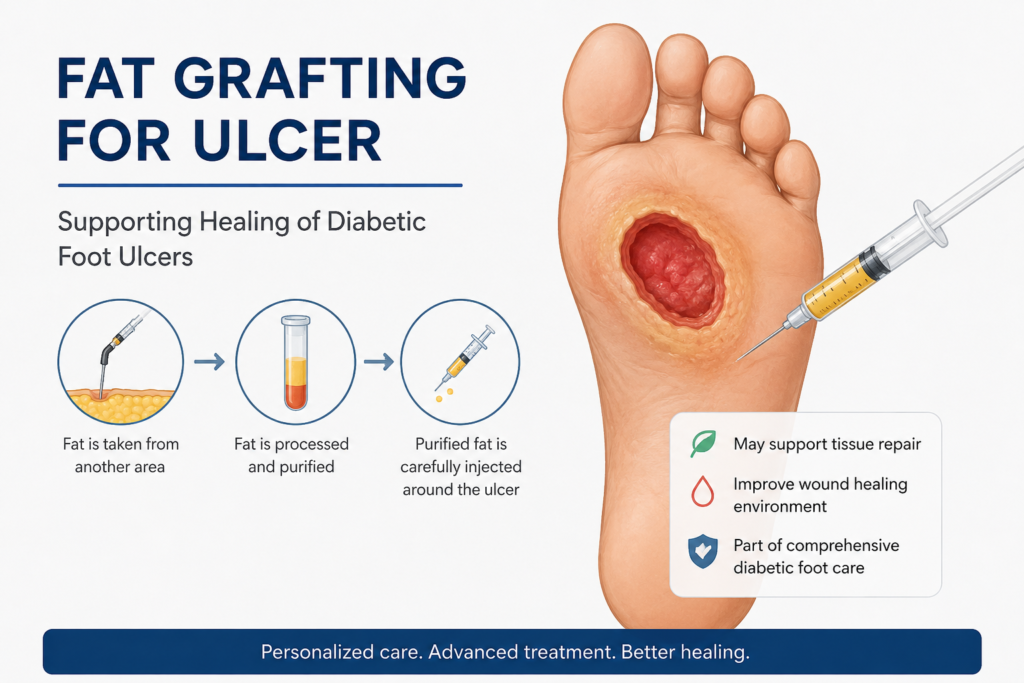
Fat grafting for ulcers is an emerging option that may be considered for selected patients with difficult or chronic diabetic foot ulcers. It involves using a patient’s own fat tissue and placing it around or beneath damaged areas to support soft tissue repair. However, it should be considered only after a detailed assessment of the ulcer, circulation, infection status, pressure on the foot, and overall diabetic control.
For patients in Surat looking for advanced options for difficult wounds, Elegance Diabetic Foot And Ulcers Clinic provides specialized evaluation and treatment planning for diabetic foot problems.
What Is Fat Grafting for Ulcers?
Fat grafting involves removing a small amount of the patient’s own fat from a suitable donor area, processing it, and carefully placing it into the required area.
Fat tissue contains cells and biological factors that may support the local tissue environment. Therefore, in carefully selected cases, it may help improve soft tissue quality and support the healing process.
However, fat grafting is not a replacement for standard diabetic foot ulcer care. The underlying cause of the ulcer must also be identified and treated.
How Can Fat Grafting Support Ulcer Healing?
Diabetic foot ulcers can be difficult to heal because diabetes may affect sensation, circulation, immunity, and tissue repair. Repeated pressure can also prevent the wound from closing.
In selected cases, fat grafting may help by providing additional soft tissue around an area where tissue quality or cushioning is poor. The aim is to create a healthier environment for tissue repair.
The potential benefits depend on the individual patient. Results can vary according to the size and depth of the ulcer, blood supply, infection, diabetes control, and overall health.
Who May Be Considered for Fat Grafting?
Not every diabetic foot ulcer requires or is suitable for fat grafting. A specialist may consider it when an ulcer is:
- Chronic or slow to heal
- Associated with poor soft tissue quality
- Located in an area exposed to repeated pressure
- Difficult to manage with conventional wound care
- Suitable for an additional reconstructive approach after controlling underlying problems
Before recommending treatment, the doctor should carefully evaluate the wound and determine why healing has been delayed.
What Happens Before Fat Grafting?
A proper assessment is an important part of treatment. The doctor may examine the wound, surrounding skin, circulation, sensation, infection status, and pressure points.
Blood sugar control is also important. If there is an active infection, significant tissue damage, or inadequate blood supply, those problems generally need attention before considering reconstructive procedures.
Depending on the patient’s condition, treatment may involve wound cleaning, debridement, infection management, offloading, appropriate dressings, vascular assessment, and improved diabetes management.
Why Is Offloading Important?
Even an advanced treatment may not work effectively if continuous pressure is being placed on the ulcer.
Offloading reduces pressure on the affected area and gives the tissue a better opportunity to heal. Footwear modifications, specialized devices, or other offloading methods may be recommended depending on the ulcer location.
Therefore, fat grafting should be viewed as part of a comprehensive diabetic foot treatment plan, rather than as a standalone solution.
Role of Dr. Ashutosh Shah
Dr. Ashutosh Shah is an M.B., M.S., M.Ch., D.N.B. board-certified plastic surgeon and director of Elegance Clinic. According to his professional profile, he completed his M.Ch. in Plastic Surgery from The M.S. University of Baroda and DNB in Plastic Surgery. He also underwent microvascular training at Ganga Hospital, Coimbatore, with additional reconstructive surgery training.
His background includes reconstructive and microvascular surgery, which is particularly relevant when treatment involves damaged or compromised tissues. His professional profile also lists membership in organizations including the Association of Plastic Surgeons of India and the Indian Podiatry Association.
At Elegance Diabetic Foot And Ulcers Clinic, patients can undergo an individualized assessment to understand the cause of a non-healing ulcer and determine which treatment options may be appropriate.
Is Fat Grafting a Cure for Diabetic Foot Ulcers?
No. It is important to have realistic expectations.
Fat grafting for ulcers may support healing in carefully selected patients, but it does not cure diabetes or eliminate the factors that caused the ulcer. Continued diabetic management, pressure reduction, wound care, proper footwear, and regular follow-up remain important.
The outcome also varies from patient to patient. A treatment that may be appropriate for one ulcer may not be suitable for another.
When Should You See a Diabetic Foot Specialist?
Do not ignore a wound on the foot simply because it is painless. Diabetes can reduce sensation, allowing an ulcer or infection to progress without obvious discomfort.
Seek professional evaluation if you notice a wound that is not healing, increasing redness or swelling, discharge, foul smell, skin discoloration, increasing pain, or changes in the temperature of the foot.
Early assessment can help identify the cause and allow treatment to begin before the problem becomes more serious.
Fat Grafting for Ulcer in Surat
If you have a chronic or difficult diabetic foot ulcer, consult a qualified specialist before considering advanced procedures. At Elegance Diabetic Foot And Ulcers Clinic, treatment can be planned according to the ulcer’s condition, tissue quality, circulation, pressure factors, and overall health.
For suitable patients, fat grafting for ulcers may be considered as one component of a broader wound and reconstructive treatment strategy. A personal consultation with Dr. Ashutosh Shah can help determine whether this approach is appropriate for your specific condition.
FAQs
Yes, fat grafting for ulcers may support healing in selected patients with chronic or difficult diabetic foot ulcers. It is generally considered alongside comprehensive wound care.
Fat grafting involves taking a small amount of the patient’s own fat, processing it, and placing it around or beneath damaged tissue to support soft tissue repair and the wound-healing environment.
No. Suitability depends on factors such as ulcer depth, blood circulation, infection, tissue quality, pressure, and diabetes control. A specialist evaluation is necessary.
It may be considered for selected chronic ulcers when conventional wound management alone has not provided adequate healing. The underlying cause of delayed healing must first be evaluated.
Seek evaluation for any foot wound that is not healing, particularly if there is redness, swelling, discharge, discoloration, increasing pain, or an unpleasant smell. Early treatment can help prevent complications.