
Can Amputation Be Prevented in Diabetic Foot?
Dr. Ashutosh Shah, M.Ch., DNB (Plastic Surgery) has more than 22 years of surgical experience. His plastic and reconstructive surgery background, including advanced microvascular training, is relevant when diabetic foot problems involve complex wounds, tissue loss, reconstruction, or limb-preservation planning.
At EDFC, the aim is not simply to “save the foot at any cost.” The priority is to identify reversible problems early, preserve viable tissue where possible, and choose the safest functional treatment for each patient.
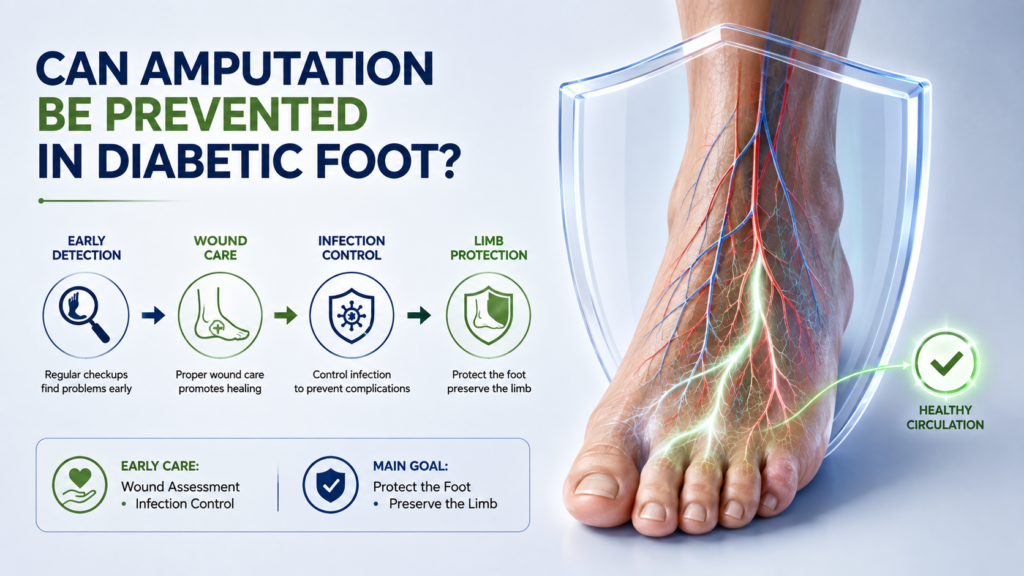
In many situations, the risk of diabetic foot amputation can be reduced by recognising foot problems early and treating the factors that allow them to progress. However, not every diabetes-related amputation can be prevented, and no treatment can guarantee limb preservation.
For people searching for ways to stop amputation in diabetes, the most important point is not to wait until a wound becomes severe. Diabetes can damage nerves in the feet, reducing the ability to feel pressure, blisters, cuts, or wounds. Diabetes can also be associated with reduced blood flow, making some wounds harder to heal.
A diabetic foot problem may begin with something that looks minor—a callus, blister, small wound, redness, or pressure point. When sensation is reduced, the person may continue walking on the injured area without enough pain to recognise the problem. Infection, tissue damage, or poor circulation can then make the situation more complex.
Preventing progression therefore requires more than dressing an existing wound. It can involve regular foot checks, pressure management, appropriate footwear, infection treatment, circulation assessment, wound care, and timely surgical or reconstructive intervention when indicated.
At Elegance Diabetic Foot And Ulcers Clinic (EDFC), Surat, diabetic foot care can focus on recognising threats to the foot early and determining whether limb-preservation treatment is medically appropriate.
Key Takeaways
- Not every diabetic foot problem leads to amputation.
- Daily foot observation can help identify problems before they become more advanced.
- Neuropathy can make a serious foot injury surprisingly painless.
- Infection, repeated pressure, poor circulation, and tissue damage can increase the risk of progression.
- Treating the visible wound without correcting pressure or circulation problems may be insufficient.
- Limb salvage may involve several treatments rather than one procedure.
- Amputation can still be medically necessary when tissue damage or infection becomes too severe.
Why Can Diabetes Increase the Risk of Foot Amputation?
Diabetes can contribute to nerve damage, foot wounds, infection, and reduced blood flow. When a wound is not detected or does not heal appropriately, tissue damage may progress. Severe infection, gangrene, or non-healing ulcers can eventually make amputation necessary in some patients.
Diabetic Neuropathy: Diabetes-related nerve damage that can reduce protective sensation in the feet.
NIDDK explains that reduced sensation can prevent a person from noticing a blister or injury. Reduced blood flow can also make sores and infections harder to heal.
This combination makes prevention particularly important.
What Are the Early Warning Signs Before a Diabetic Foot Becomes Serious?
Early warning signs can include a new blister, cut, callus, redness, swelling, wound, drainage, skin colour change, unusual warmth, or a pressure-related area that repeatedly returns. A new change deserves attention even when it does not cause significant pain.
Check both feet regularly, including the soles and between the toes.
Look for changes rather than waiting for discomfort.
NIDDK recommends daily foot checks for problems such as cuts, sores, red spots, swelling, blisters, corns, and calluses.
A person who cannot easily see the sole may need a mirror or assistance from another person.
Why Should You Not Wait for Foot Pain?
Pain is not a reliable warning system when diabetic neuropathy has reduced sensation. A person may have significant pressure, a blister, or an open wound without experiencing the level of pain normally expected from that injury.
This is one of the reasons diabetic foot problems can progress unnoticed.
A painless wound should never automatically be considered a minor wound.
NIDDK notes that peripheral neuropathy can prevent people from noticing pressure and injuries that lead to blisters and sores. Finding and treating foot problems early can lower the chance of serious infection.
Can Early Treatment Help Reduce Amputation Risk?
Early treatment can identify and address factors that may otherwise allow a diabetic foot problem to progress. Depending on the findings, treatment may involve wound care, pressure relief, infection management, removal of unhealthy tissue, circulation assessment, footwear modification, surgery, or reconstruction.
The earlier question should be:
“Why is this area of the foot becoming damaged?”
For example, repeatedly dressing an ulcer while the patient continues placing excessive pressure on it may not address an important underlying factor.
Likewise, treating infection without recognising severely impaired circulation may leave another major barrier unresolved.
How Does Limb Preservation Work?
Limb preservation combines the treatments required to protect viable tissue and maintain useful foot function when medically achievable. There is no single limb-salvage procedure because diabetic foot problems can involve different combinations of infection, pressure, wounds, circulation problems, and tissue loss.
Limb Salvage: A coordinated treatment approach intended to preserve a threatened limb or part of it when doing so is medically safe and functionally appropriate.
When a wound has already become complex, Limb Salvage Treatment may form part of a broader treatment plan.
Some patients may require debridement of unhealthy tissue. Others may need infection treatment, vascular intervention, offloading, or reconstructive wound coverage.
Surgical treatment may also become necessary when deeper structures are involved.
Why Are Pressure and Circulation Important?
Repeated pressure can prevent vulnerable tissue from recovering, while inadequate blood supply can limit the oxygen and nutrients required for healing. Both factors should be considered when a diabetic foot wound is persistent, recurrent, or showing signs of deterioration.
Offloading: Reducing or redistributing pressure away from a vulnerable or wounded part of the foot.
Pressure may come from footwear, foot deformity, walking mechanics, or repeated loading of the same area.
Circulation is a separate issue.
The 2023 intersocietal guideline on peripheral arterial disease in people with diabetes and foot ulcers specifically addresses PAD assessment and management because vascular disease can materially affect limb outcomes.
When surgery becomes necessary for infection, tissue damage, structural problems, or reconstruction, Diabetic Foot Surgery can be considered within an individual treatment plan.
Can Every Diabetic Foot Amputation Be Prevented?
No. Not every diabetes-related amputation can be prevented. Severe uncontrolled infection, irreversible tissue death, critically impaired blood supply, or a limb that cannot safely provide useful function may make amputation the medically appropriate treatment.
This distinction is important when discussing how to stop amputation in diabetes.
Limb preservation should not mean delaying necessary treatment simply to avoid an amputation.
In some advanced cases, removing severely damaged tissue can help control infection and protect the patient’s overall health.
The appropriate objective is therefore safe limb preservation when possible not limb preservation at any cost.
How Can People With Diabetes Protect Their Feet?
1. Check the feet every day.
Look for cuts, blisters, calluses, redness, swelling, colour changes, or new wounds.
2. Do not rely only on pain.
Reduced sensation can make injuries difficult to notice.
3. Wear appropriate footwear.
Shoes should not create repeated rubbing or excessive pressure.
4. Avoid cutting corns and calluses yourself.
Accidental skin injury can create another route for complications.
5. Protect the feet from extreme heat.
Reduced sensation can make burns harder to recognise.
6. Attend diabetic foot examinations.
Professional assessment can identify changes in sensation, circulation, pressure, or skin condition.
7. Manage diabetes with your healthcare team.
NIDDK recommends diabetes management and regular foot care as part of reducing diabetes-related foot problems.
When Does a Diabetic Foot Need Urgent Assessment?
Urgent medical assessment is important when a diabetic foot develops rapidly worsening redness or swelling, significant discharge, a deep or worsening wound, dark or black tissue, unusual coldness, spreading infection, fever, or deterioration in general health.
Do not wait for severe pain before seeking care.
A patient with neuropathy may not feel the seriousness of a wound.
A rapidly changing foot should also not be managed only with home dressings while waiting to see whether it improves.
Preventing the Next Stage at EDFC
At Elegance Diabetic Foot And Ulcers Clinic, Surat, preventing amputation begins with identifying what is putting the foot at risk before damage becomes irreversible.
That may mean evaluating pressure and sensation in one patient, circulation in another, or infection and tissue viability in someone with an established wound.
Dr. Ashutosh Shah‘s more than 22 years of surgical experience, together with his plastic, reconstructive, and microvascular background, can be particularly relevant when diabetic foot problems require tissue preservation, wound reconstruction, or limb-salvage planning.
The treatment plan should match the actual problem rather than applying the same wound-care approach to every diabetic foot.
Conclusion
For patients searching for ways to stop amputation in diabetes, prevention begins much earlier than the decision about amputation itself.
Regular foot observation, appropriate footwear, pressure management, early wound assessment, infection control, circulation evaluation, and timely specialist treatment can all play important roles in preventing diabetic foot problems from progressing. International diabetic-foot guidance also emphasises prevention strategies for people at risk of ulceration.
However, no clinic can responsibly guarantee that every amputation will be prevented. When infection, circulation failure, or tissue destruction becomes severe, amputation may sometimes be the safest treatment.
For patients in Surat, Elegance Diabetic Foot And Ulcers Clinic can assess a diabetic foot problem and determine whether preventive care, wound management, surgery, or a limb-preservation strategy is appropriate.
Worried that a diabetic foot wound is getting worse?
Consult Dr. Ashutosh Shah at Elegance Diabetic Foot And Ulcers Clinic, Surat, for an assessment of the wound, circulation, pressure, infection, and available limb-preservation options.
Frequently Asked Questions
No. Many risk factors can be treated, but severe infection, irreversible tissue loss, or critically impaired circulation may still make amputation necessary.
Yes. Reduced sensation can allow pressure or injury to continue unnoticed, while infection or circulation problems can complicate healing.
Yes. Neuropathy can reduce protective sensation, so absence of pain does not reliably indicate the severity of a wound.
Limb salvage combines appropriate wound, infection, pressure, vascular, surgical, and reconstructive treatments to preserve viable tissue when medically possible.
When reduced arterial blood flow contributes to a threatened foot, vascular assessment and appropriate treatment can be an important part of limb-preservation planning.