
What Are the Signs That Diabetic Foot Amputation May Be Needed?
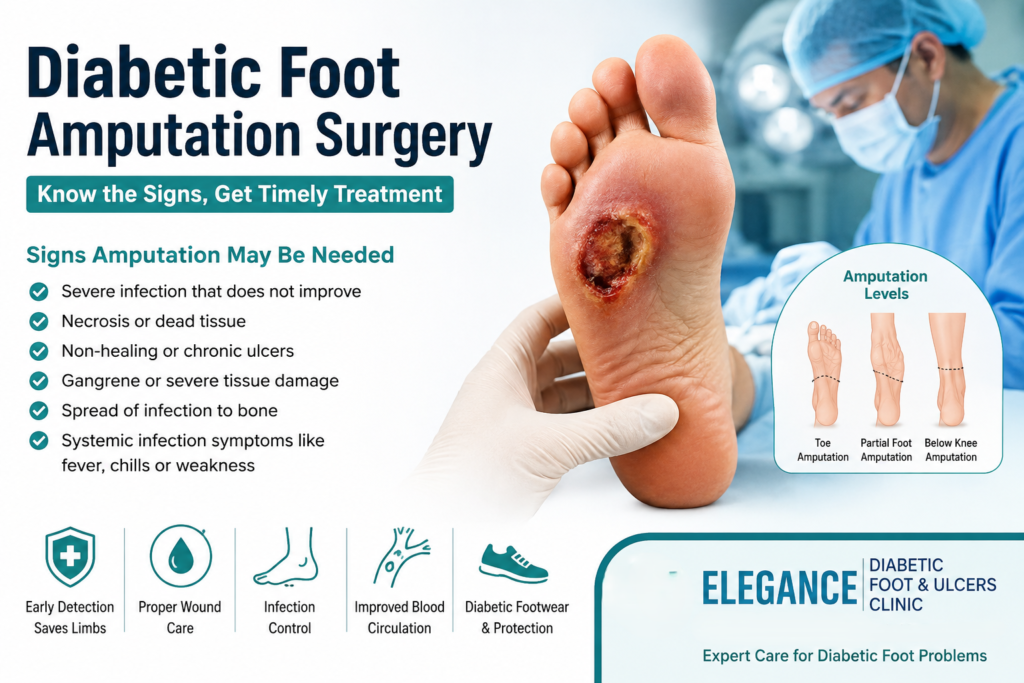
For people living with diabetes, a foot wound should never be ignored. High blood sugar can affect nerves, reduce blood circulation, and make infections harder to control. As a result, a small cut or ulcer can sometimes become a serious diabetic foot complication. Diabetic foot amputation surgery is generally considered only when the affected tissue cannot be saved or when a severe infection threatens the patient’s health. The main goal is to remove diseased tissue, stop the spread of infection, and protect the patient’s life.
What Are the Signs That Amputation May Be Needed?
Amputation is not automatically required for every diabetic foot ulcer. Doctors first evaluate whether the wound can be treated with medication, wound care, debridement, vascular treatment, or reconstructive procedures.
However, certain warning signs may indicate that the condition has become severe.
1. Severe Infection That Does Not Improve
A serious foot infection that continues despite appropriate treatment can become dangerous. Increasing redness, swelling, warmth, discharge, foul odour, or worsening wound condition should be assessed promptly.
If an infection continues to spread into deeper tissues, urgent treatment may be required. In severe cases where the infection cannot be controlled, amputation may become necessary.
2. Extensive Tissue Death or Necrosis
Dead tissue, also called necrosis, can prevent a diabetic wound from healing. When a significant amount of tissue has died and cannot be restored, removing the affected area may be necessary.
The extent of surgery depends on how much healthy tissue remains and how far the infection or tissue damage has progressed.
3. A Persistent Non-Healing Ulcer
A diabetic foot ulcer that does not heal despite proper wound care needs specialist evaluation. Persistent ulcers can become infected and may eventually affect deeper structures.
Early treatment can sometimes help prevent progression to more serious complications.
4. Gangrene or Severe Tissue Damage
Gangrene occurs when tissue dies because of infection, inadequate blood supply, or both. Black or severely discoloured tissue, a foul-smelling wound, or rapidly worsening tissue damage can be warning signs of a serious condition.
Gangrene requires urgent medical assessment because advanced tissue death may threaten the surrounding foot and the patient’s overall health.
5. Signs of a Systemic Infection
Fever, chills, weakness, or feeling significantly unwell can indicate that an infection is affecting the body beyond the original foot wound.
These symptoms should not be ignored. A severe diabetic foot infection accompanied by systemic symptoms may require urgent hospital-based treatment.
Can Diabetic Foot Amputation Be Avoided?
In many situations, the priority is limb salvage. Treatment depends on the condition of the wound, blood circulation, infection, tissue damage, and the patient’s overall health.
Depending on the case, doctors may consider:
- Wound care and specialized dressings
- Antibiotic treatment when appropriate
- Removal of dead tissue through debridement
- Offloading pressure from the affected area
- Treatment to improve blood circulation
- Reconstructive procedures for suitable wounds
- Close monitoring of blood glucose levels
- Appropriate diabetic footwear and preventive foot care
Some complex wounds may require reconstructive procedures such as flap or free flap surgery when there is significant tissue loss or exposed deeper structures.
Therefore, seeing a diabetic foot specialist early can be important when an ulcer is not healing or shows signs of infection.
What Happens During Diabetic Foot Amputation Surgery?
If amputation becomes necessary, the surgeon removes the diseased or non-viable portion while aiming to preserve as much healthy tissue as possible.
The procedure is performed under anesthesia. The surgeon removes the affected tissue, controls bleeding, and shapes the remaining limb appropriately. The wound is then closed and dressed.
The level of amputation depends on the extent of infection and tissue damage. It may involve part of the foot, a toe, below the knee, or above the knee in more extensive cases.
What Is Recovery Like After Amputation?
Recovery varies from patient to patient. Wound healing, blood sugar control, circulation, general health, and the level of amputation can all affect recovery.
Postoperative care may include:
- Wound monitoring and dressing
- Pain management
- Blood sugar management
- Physical therapy
- Mobility training
- Rehabilitation
- Prosthetic evaluation when appropriate
Some patients may also experience phantom limb sensations or pain after amputation. Rehabilitation and appropriate medical treatment can help manage these symptoms.
When Should You See a Diabetic Foot Specialist?
Do not wait for a diabetic foot ulcer to become severe. Seek medical evaluation if you notice a wound that is not healing, increasing swelling or redness, persistent discharge, tissue discoloration, worsening pain, or signs of infection.
A diabetic foot specialist can assess the wound and determine whether conservative treatment, surgery, vascular treatment, reconstruction, or another approach is appropriate.
Diabetic Foot Amputation Surgery in Surat
At Elegance Diabetic Foot And Ulcers Clinic in Surat, diabetic foot conditions are evaluated to control infection and preserve the limb whenever possible. The clinic provides surgical and non-surgical diabetic foot care, corrective procedures, reconstructive surgery, vascular procedures, and footwear and prosthetic services.
Dr. Ashutosh Shah, a diabetic foot surgeon in Surat with over 22 years of experience, provides evaluation and treatment for complicated diabetic foot ulcers. Each patient is assessed individually to determine the most appropriate treatment, with a focus on controlling infection and preserving the limb whenever possible.
Frequently Asked Questions
Increasing redness, swelling, warmth, discharge, foul odour, tissue discoloration, worsening wound condition, fever, or chills can indicate a serious infection and require prompt medical assessment.
Depending on the extent of damage, surgery may involve a toe or part of the foot, below-knee amputation, above-knee amputation, or removal through a joint.
Yes. Poor circulation can make wounds more difficult to heal and can contribute to serious diabetic foot complications. Vascular assessment and appropriate treatment may therefore be important in selected patients.
Recovery varies according to the patient’s health, blood sugar control, circulation, wound condition, and level of amputation. Rehabilitation and physical therapy may be required.