
Harris Mat Test: Understanding Foot Pressure
Reviewed with clinical input from Dr. Ashutosh Shah, M.Ch., DNB (Plastic Surgery)
Plastic & Reconstructive Surgeon
Diabetic Foot and Biomechanics Practice
22+ Years of Experience
A callus or diabetic foot ulcer that repeatedly develops in the same place may be telling you something important about how pressure passes through your foot.
When one area receives excessive pressure during standing or walking, the skin can become vulnerable to repeated damage.
This can be particularly dangerous when diabetic neuropathy reduces protective sensation.
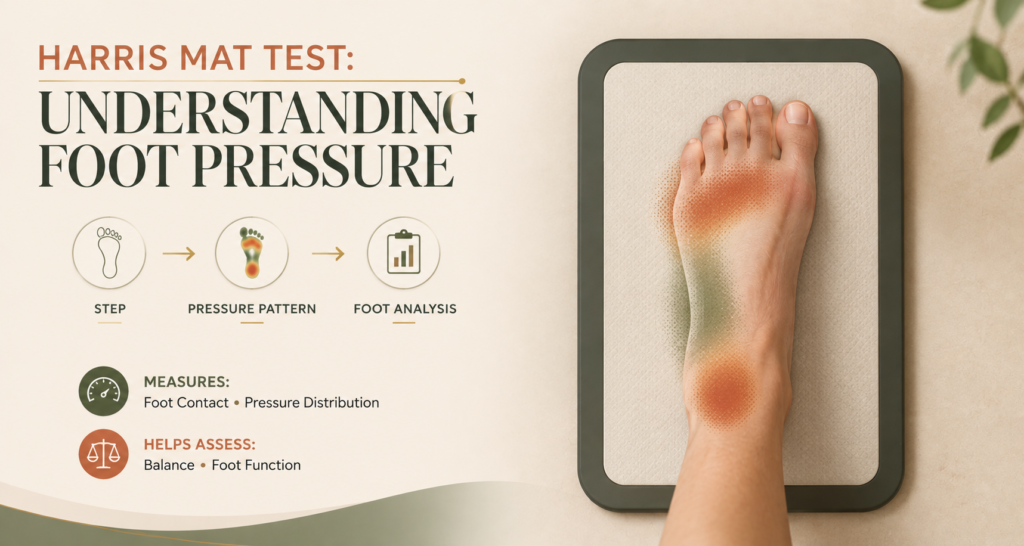
The Harris Mat test is a simple, non-invasive foot-pressure assessment that produces a visual footprint showing areas of relatively greater and lower pressure.
Elegance Diabetic Foot Care (EDFC) uses pressure assessment as part of its approach to understanding diabetic foot biomechanics and preventing pressure-related complications.
Harris Mat at a Glance
| Feature | Details |
|---|---|
| Test | Harris Mat |
| Purpose | Visualise foot pressure distribution |
| Procedure | Patient steps on a pressure-impression mat |
| Pain | Non-invasive and painless |
| Useful for | Pressure points, calluses and recurrent ulcers |
| Result | Visual footprint |
| Main benefit | Helps identify areas exposed to greater pressure |
What Exactly Is a Harris Mat?
A Harris Mat is a traditional pressure-assessment tool used to produce a footprint.
Different parts of the impression can help indicate how pressure is distributed beneath the foot.
EDFC provides the Harris Mat foot pressure test to help identify high-pressure areas and understand pressure distribution.
Why Does Foot Pressure Matter in Diabetes?
Normally, discomfort helps protect the foot.
If one area is receiving too much pressure, pain may encourage a person to change position, stop walking or change footwear.
Diabetic neuropathy can reduce this warning sensation.
As a result, a person may continue walking on a high-pressure area without realising damage is developing.
Over time, repeated pressure can contribute to:
- callus,
- skin breakdown,
- sores,
- and recurrent diabetic foot ulcers.
Who May Need a Harris Mat Test?
The test may be useful for patients with:
- diabetes and neuropathy,
- repeated callus formation,
- recurrent foot ulcers,
- unusual foot shape,
- previous foot surgery,
- suspected abnormal pressure,
- or footwear-related pressure problems.
It may also be used when clinicians are planning strategies to redistribute pressure.
How Is the Test Performed?
The patient places the foot onto the Harris Mat according to instructions.
The pressure applied through the sole creates an impression.
Areas experiencing different levels of loading produce different patterns.
The clinician then examines the footprint in relation to the patient’s foot structure, calluses, wounds and walking pattern.
The test does not involve needles or surgery.
What Can the Footprint Tell Us?
A Harris Mat may help show whether pressure is concentrated around particular parts of the sole.
For example, a pressure pattern may correspond with:
- a recurrent callus,
- a previous ulcer,
- a prominent metatarsal area,
- altered foot structure,
- or uneven loading.
The test does not diagnose every foot condition by itself.
It is one piece of information used alongside examination and medical history.
Harris Mat vs Pedobarogram
These tests both evaluate pressure but provide different levels of information.
The Harris Mat provides a relatively simple visual footprint.
A pedobarogram uses pressure-measurement technology to provide more detailed information about plantar pressure distribution.
The choice depends on the clinical question being investigated.
Can Pressure Testing Help Prevent Ulcers?
Pressure testing cannot guarantee that an ulcer will never occur.
However, identifying a repeatedly overloaded area can help clinicians plan preventive measures before skin breakdown develops.
These may include:
- footwear changes,
- insoles,
- offloading,
- callus management,
- closer monitoring,
- or corrective treatment in selected cases.
How Does It Help With Footwear?
Footwear should do more than simply feel soft.
For a diabetic foot, it may need to protect vulnerable areas and redistribute pressure.
After identifying problematic loading patterns, patients may be advised about appropriate insole and footwear selection.
This can be particularly useful for people with neuropathy because they may not reliably feel harmful pressure inside a shoe.
Can Harris Mat Testing Be Useful After Surgery?
Yes, in selected situations.
Foot surgery can change how weight and pressure pass through the sole.
After adequate healing, pressure assessment may help determine whether a previously overloaded area has improved or whether new pressure points require attention.
The timing of testing should depend on the operation and recovery.
Why Do Some Ulcers Keep Coming Back?
Healing the skin does not necessarily correct the mechanical cause of an ulcer.
If the same area remains exposed to excessive pressure, the skin can break down again.
That is why recurrent ulcers often require a broader assessment of:
pressure + sensation + circulation + foot structure + footwear.
Finding the reason for recurrence can be just as important as closing the wound.
Turning Pressure Information Into Prevention
Dr. Ashutosh Shah has experience in diabetic foot surgery and assessment of the structure, alignment and biomechanics of the foot.
The broader services described about Elegance Diabetic Foot Care include pressure assessment, customised footwear, surgical offloading and other diabetic foot treatments.
The Harris Mat itself does not treat an ulcer. Its value is in showing where pressure may be concentrated, so that the information can guide further prevention or treatment.
If calluses or wounds repeatedly develop in the same area of your foot, contact Elegance Diabetic Foot Care to discuss whether foot-pressure assessment may be appropriate.
FAQs
It is a tool used to visualise foot-pressure patterns.
No. It is non-invasive.
It can help identify pressure areas in diabetic feet.
No. A pedobarogram provides more detailed pressure information.
Yes. Pressure findings can support footwear and insole planning.