
Are Superfeet Insoles Suitable for People With Diabetes?
Foot Biomechanics Review: Dr. Ashutosh Shah, M.Ch., DNB (Plastic Surgery)
Focus: Diabetic Foot Care, Pressure Management & Footwear
Experience: 22+ Years
Clinic: Elegance Diabetic Foot & Ulcers Clinic, Surat
Last Updated: August 2026
For someone with diabetes, choosing an insole is about more than comfort.
Neuropathy can reduce protective sensation, while foot deformity and altered walking mechanics can create high-pressure areas that repeatedly stress the skin. This means an insole that feels soft is not automatically the right insole for a high-risk diabetic foot.
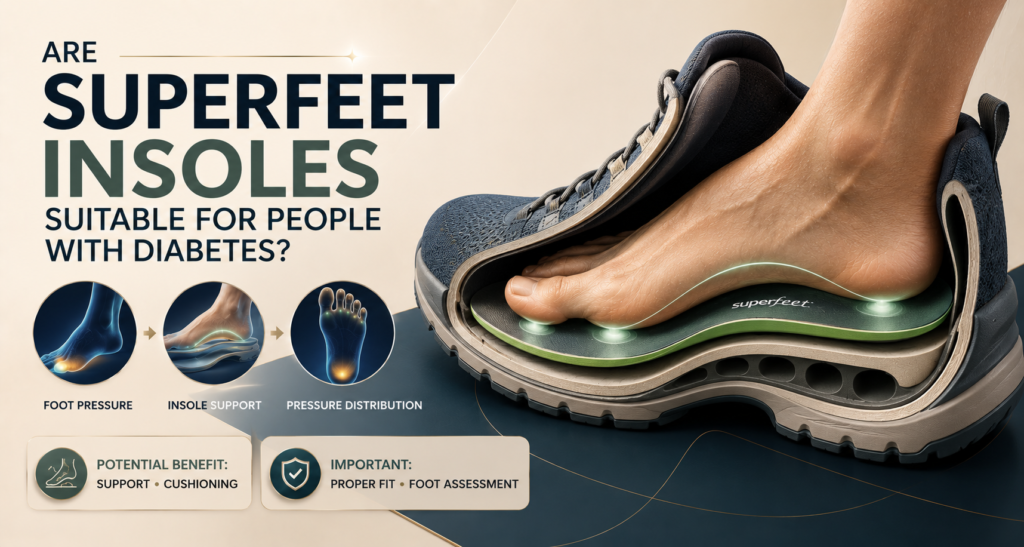
Superfeet insoles include different designs for cushioning and support, and the manufacturer currently offers an Everyday Pressure Relief model intended for sensitive feet, including diabetic neuropathy. However, an off-the-shelf product should not automatically replace clinical pressure assessment or custom therapeutic footwear in someone with previous ulcers, major deformity or active wounds.
At Elegance Diabetic Foot & Ulcers Clinic in Surat, insole selection can be based on foot shape, neuropathy, pressure points and pedobarogram findings rather than brand name alone.
Key Takeaways
- Insoles can influence how pressure is distributed beneath the foot.
- Superfeet makes different insole designs rather than one universal product.
- The brand currently offers a pressure-relief model for sensitive feet and diabetic neuropathy.
- This does not mean every Superfeet insole is appropriate for every person with diabetes.
- Neuropathy can prevent you from feeling harmful pressure.
- Previous ulcers and deformity increase the need for careful footwear assessment.
- A pedobarogram can identify high-pressure areas.
- Custom orthotics may be more appropriate for selected high-risk feet.
- An insole should work together with properly fitted footwear.
- An active diabetic ulcer requires medical assessment, not simply a new insole.
Why Do Insoles Matter in Diabetes?
The sole of the foot experiences repeated pressure with every step.
Normally, pain or discomfort encourages someone to shift weight or change shoes.
With diabetic neuropathy, that warning system may be reduced.
A person can therefore continue loading one vulnerable area thousands of times without realising it.
The purpose of an appropriate insole is not merely to make the shoe softer. It should help manage how forces are distributed beneath the foot.
What Are Superfeet Insoles?
Superfeet is a commercial brand offering a range of structured and cushioned shoe insoles.
Different models vary in:
- arch profile,
- cushioning,
- thickness,
- flexibility,
- intended activity,
- and footwear compatibility.
Therefore, the question should not simply be, “Are Superfeet good?”
The more useful question is:
Is this specific insole appropriate for this specific diabetic foot?
Are Superfeet Insoles Made for Diabetic Neuropathy?
Superfeet currently markets an Everyday Pressure Relief model for sensitive feet, diabetic neuropathy and other nerve conditions.
It uses soft conforming foam and cushioning with flexible support.
That product information can help identify its intended use, but it does not replace medical assessment for a high-risk diabetic foot.
A commercial insole cannot determine whether you have:
- severe neuropathy,
- poor circulation,
- Charcot changes,
- an ulcer,
- a major deformity,
- or a dangerous pressure point.
Insole Choice Based on Foot Risk
| Foot Situation | Insole Approach |
|---|---|
| Diabetes without neuropathy or deformity | Properly fitted supportive footwear may be sufficient |
| Sensitive feet or mild neuropathy | A suitable pressure-relief insole may be considered |
| Recurrent callus | Pressure assessment is advisable |
| Previous diabetic foot ulcer | Medical footwear/offloading assessment is important |
| Significant foot deformity | Custom orthotic may be more appropriate |
| Active plantar ulcer | Requires clinical offloading, not self-selected insoles alone |
| Charcot foot | Specialist footwear/orthotic management is required |
| New redness or pressure mark | Stop relying on comfort alone and have the foot checked |
Individual assessment can change these recommendations.
Why Isn’t a Soft Insole Always Enough?
Softness and pressure redistribution are not identical.
A thick cushion may feel comfortable while a specific bony prominence continues to receive excessive pressure.
Insole shape, shoe depth, foot deformity and gait all influence loading.
This is why EDFC uses insole and footwear selection as part of diabetic-foot management rather than choosing footwear only according to softness.
What Is a Pedobarogram?
A pedobarogram maps pressure beneath the foot during standing or walking.
It can reveal areas that are repeatedly receiving high loads.
EDFC provides a pedobarogram assessment to identify abnormal pressure distribution.
This information can help answer questions such as:
- Where is pressure highest?
- Is a callus located over a pressure hotspot?
- Does the foot require redistribution?
- Would custom footwear be more appropriate?
- Is an existing insole actually reducing the intended pressure?
Are Custom Insoles Better Than Superfeet?
Not automatically.
The choice depends on risk and purpose.
An appropriate commercial insole may provide useful support or cushioning for some feet.
A custom orthotic becomes more relevant when the foot has an individual mechanical problem requiring targeted modification.
EDFC describes customised orthotics and therapeutic footwear as options for redistributing pressure in patients with diabetic-foot risks.
When Is Custom Footwear More Appropriate?
Custom or therapeutic footwear may be considered when there is:
- significant deformity,
- recurrent callus,
- previous ulceration,
- a known pressure hotspot,
- difficulty fitting standard shoes,
- neuropathy,
- or a need for targeted offloading.
EDFC’s footwear and prosthetics service includes preventive, therapeutic and orthopaedic footwear as well as orthotic support.
Can Superfeet Prevent Diabetic Foot Ulcers?
No commercial insole should be promised to prevent every ulcer.
Ulcer risk depends on more than footwear.
Important factors include:
- neuropathy,
- pressure,
- circulation,
- deformity,
- skin condition,
- previous ulceration,
- glucose management,
- and daily foot inspection.
An appropriate insole may form one part of a prevention strategy.
Can You Use Superfeet With an Active Ulcer?
Do not try to manage an active diabetic foot ulcer simply by purchasing a new insole.
Active ulcers require wound assessment and appropriate offloading.
The pressure-relief method depends on wound location, severity, infection, circulation and foot mechanics.
A standard retail insole may not remove enough pressure from the exact ulcer site.
How Do You Know an Insole Is Causing Pressure?
Check the feet after using new footwear or insoles.
Look for:
- persistent redness,
- rubbing,
- blistering,
- new callus,
- skin indentation,
- swelling,
- or breakdown.
Someone with neuropathy should not wait for pain before deciding that an insole is causing a problem.
Should You Trim Insoles Yourself?
Some commercial insoles are designed to be trimmed to fit footwear.
However, someone with a high-risk diabetic foot should be cautious about modifying an insole without checking the final fit.
An edge, fold or poor fit that seems minor can create repeated pressure.
The entire shoe-insole-foot combination matters.
Diabetic Insole Selection at EDFC
At EDFC in Surat, footwear decisions can be supported by examination and pressure assessment.
Dr. Ashutosh Shah has more than 22 years of surgical experience and works with diabetic-foot biomechanics, pressure management and reconstruction.
Patients can also learn about EDFC and its surgical and nonsurgical diabetic-foot services.
Choose an Insole for Your Foot, Not Just the Brand
Superfeet offers products designed for different feet, and one current model is specifically marketed for sensitive feet and diabetic neuropathy.
But diabetes changes the question from “Is this comfortable?” to “Is this safely redistributing pressure?”
If you have neuropathy, deformity, recurrent callus or a previous ulcer, pressure assessment and individual footwear planning may be more important than choosing a product from the shelf.
Patients in Surat can contact EDFC for diabetic-foot pressure and footwear assessment.
Frequently Asked Questions
Some may be able to, but suitability depends on neuropathy, pressure points, deformity and ulcer history.
No. Proper pressure distribution and fit matter more than softness alone.
It is a test that maps pressure beneath the feet while standing or walking.
They may be more appropriate when there is deformity, recurrent pressure or previous ulceration.
Not by itself. Active ulcers require clinical wound care and appropriate offloading.