
Debridement Surgery in Bardoli
What Is Debridement Surgery?
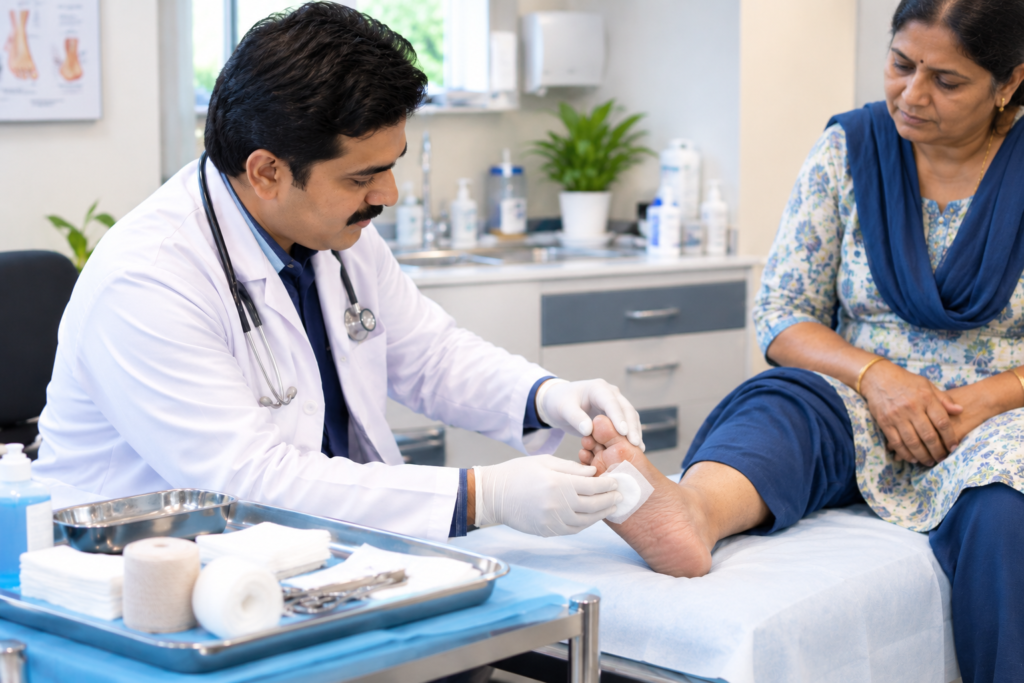
Debridement is a procedure that removes dead, damaged or infected tissue from a wound when clinically appropriate. It may be recommended for selected diabetic foot ulcers and non-healing wounds when unhealthy tissue interferes with wound assessment or treatment.
For people searching for debridement surgery in Bardoli, the treatment plan depends on the wound’s depth, infection, circulation and overall health. When surgical debridement is needed, it may be arranged in Surat. Follow-up wound dressings may then be coordinated at the Bardoli OPD if the treating team considers this suitable.
Not every wound requires surgery. A clinical assessment helps determine the safest approach.
Who May Need Debridement?
A specialist may recommend debridement when unhealthy tissue is preventing a wound from progressing towards healing. It may be considered for:
- Diabetic foot ulcers: Wounds containing dead tissue or not healing as expected.
- Black or dead tissue: Areas that need prompt assessment to identify the cause and extent of tissue damage.
- Infected wounds: Selected wounds where removal of unhealthy tissue is part of infection management.
- Wounds with slough: Wounds covered with material that interferes with assessment or treatment.
- Deep or complicated ulcers: Wounds that require careful evaluation of their depth and surrounding tissue.
- Non-healing wounds: Ulcers that need reassessment because routine care has not been sufficient.
A wound’s appearance alone does not determine whether debridement is needed. The clinician must consider blood supply, infection and the condition of the tissue before choosing a procedure.
How Is a Wound Assessed Before Surgery?
Before planning debridement, the healthcare team examines the wound and looks for factors that may delay healing.
The assessment may include:
- Wound examination: Checking the size, depth, tissue condition, discharge and surrounding skin.
- Circulation assessment: Evaluating blood supply and deciding whether additional vascular tests are needed.
- Infection assessment: Checking for spreading redness, swelling, pus or other signs of infection.
- General health review: Considering diabetes control, medications and other medical conditions.
- Treatment planning: Deciding whether dressings, debridement, pressure relief, infection treatment or another intervention is appropriate.
Some wounds can be managed with outpatient care. Others may require hospital admission or urgent surgery. The decision depends on clinical findings, not simply the location of the patient.
Why Might Debridement Be Done in Surat?
Some wounds require surgical facilities, anaesthesia, closer monitoring or additional treatment that may not be appropriate for a routine OPD appointment. In such cases, the treating team may arrange debridement in Surat after assessing the patient.
The procedure may involve removing selected non-viable tissue, examining the remaining wound and planning further wound care. The extent of treatment varies according to the wound and the patient’s condition.
Debridement may be one part of a wider treatment plan. Infection management, blood-flow assessment, pressure relief and diabetes care may also be necessary.
Read the clinic’s guide to Diabetic Foot Surgery and debridement for more information about why this procedure may be recommended.
Can Dressings Be Done at the Bardoli OPD?
After surgical treatment, some patients may be able to receive follow-up wound dressings at the Bardoli OPD. This depends on the wound’s condition, the type of procedure performed and the instructions provided by the treating team.
Follow-up care may include:
- Changing dressings according to the prescribed schedule.
- Checking the wound for discharge, swelling or new redness.
- Monitoring healing and identifying changes that need medical review.
- Reviewing pressure-relieving footwear or offloading recommendations.
- Arranging further assessment if the wound is not improving.
Before travelling, confirm the OPD’s current timings and dressing availability. You can visit the Bardoli diabetic foot ulcer treatment and OPD page for local service information.
Do not wait for a routine dressing appointment if the wound deteriorates or you develop signs of a serious infection.
What Helps a Wound Heal After Debridement?
Removing unhealthy tissue does not automatically resolve the cause of a wound. Good recovery also depends on managing the factors that contributed to it.
Your care plan may include:
- Blood glucose management: Follow your prescribed diabetes treatment.
- Pressure relief: Use recommended footwear or offloading devices.
- Infection management: Take prescribed medicines as directed and attend reviews.
- Appropriate wound dressings: Follow the schedule and method advised by your care team.
- Circulation assessment: Follow recommendations for additional tests or vascular treatment.
- Daily foot checks: Look for cuts, blisters, swelling, colour changes or new wounds.
Never attempt to cut away dead tissue yourself. People with diabetes may have reduced sensation, allowing a wound to worsen without significant pain.
When Should You Seek Urgent Care?
Seek prompt medical attention if you notice increasing redness, swelling, pus, a worsening smell, new black tissue or a wound that is becoming deeper.
Fever, confusion, rapidly spreading infection or a suddenly cold, pale or darkening foot may indicate a serious problem requiring emergency assessment. Do not wait for a scheduled OPD visit if these warning signs appear.
Frequently Asked Questions
Debridement may be recommended when dead, damaged or infected tissue interferes with wound management. A specialist assesses the wound, circulation and infection before deciding whether surgical or non-surgical debridement is appropriate.
No. Some ulcers can be managed with appropriate dressings, pressure relief and treatment of the underlying cause. Debridement is considered when the wound’s condition makes tissue removal appropriate.
Surgical debridement may be arranged in Surat when the patient’s wound and treatment requirements call for it. The treating team should confirm the procedure location, preparation and follow-up plan for each patient.
Follow-up dressings may be arranged at the Bardoli OPD when suitable for the wound and the treating team’s instructions. Confirm the current service availability and appointment details with the centre.
The schedule depends on the wound, dressing type and amount of discharge. Follow the instructions provided by your healthcare team rather than changing dressings at a fixed frequency without guidance.
Conclusion
Debridement can help manage selected diabetic foot wounds by removing unhealthy tissue and allowing the wound to be assessed more clearly. The procedure and treatment location depend on the patient’s clinical needs. When surgical debridement is arranged in Surat, follow-up dressings may be coordinated at the Bardoli OPD if appropriate. Continued wound care, pressure relief and management of infection and diabetes remain important for healing.