
Cut on Foot Not Healing With Diabetes in Bardoli: Causes and When to Get Help
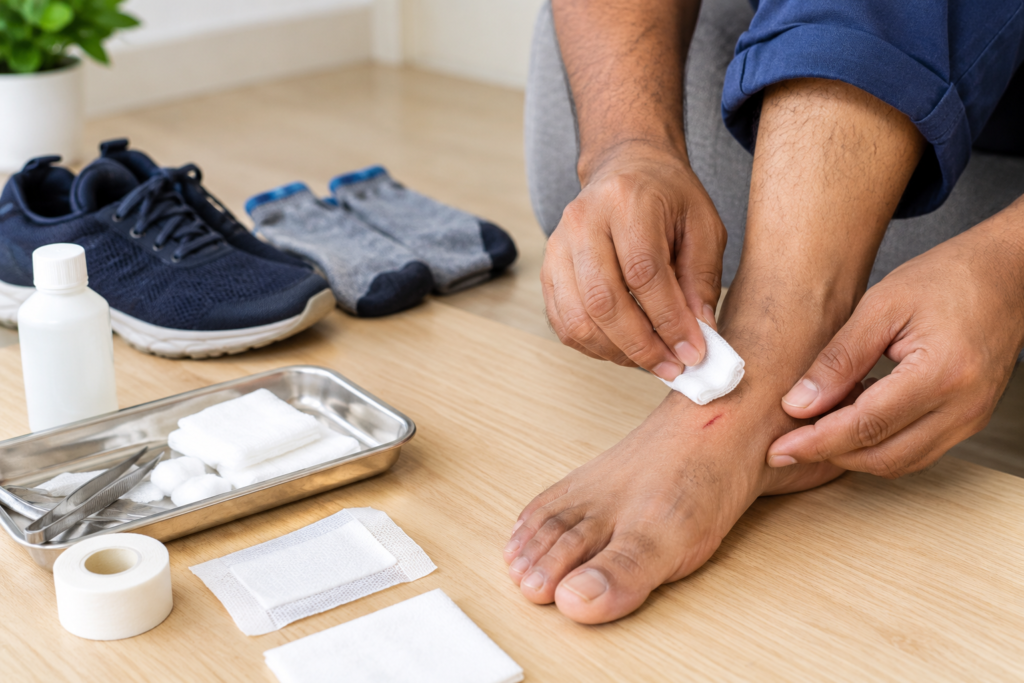
A small cut on the foot can become a serious concern when you have diabetes, particularly if it is not healing as expected. Nerve damage may make the injury difficult to feel, while reduced blood flow and infection can delay healing. Keep the wound clean and covered, reduce pressure on the affected area, and arrange prompt medical assessment instead of waiting for pain or visible worsening.
Why is a small foot cut not healing with diabetes?
Normal wound healing depends on healthy skin, adequate blood flow and the body’s ability to repair damaged tissue. Diabetes can affect these processes in several ways.
- Reduced circulation: Narrowed or damaged blood vessels may limit the oxygen and nutrients reaching the wound.
- Nerve damage: Diabetic neuropathy can reduce sensation, making it harder to notice cuts, friction or pressure injuries.
- High blood glucose: Poor glucose management can interfere with the body’s normal healing and infection response.
- Repeated pressure: Walking, standing for long periods or wearing tight footwear may repeatedly irritate the injured area.
- Infection: Germs can enter broken skin and cause a wound to worsen.
- Other health factors: Smoking and some additional medical conditions can also affect circulation and healing.
More than one factor may be involved. A clinical examination helps determine whether the wound needs special dressings, pressure relief, infection treatment or further circulation assessment.
How do you know if a diabetic foot cut is getting worse?
Do not judge a wound only by its size or the amount of pain it causes. A person with reduced sensation may have a significant injury without feeling much discomfort.
Look for changes such as:
| Sign | What it may indicate |
|---|---|
| Redness or warmth around the cut | Possible inflammation or infection |
| Increasing swelling | Worsening inflammation or another complication |
| Pus or unusual discharge | Possible infection |
| A cut that is widening or deepening | The injury may be deteriorating |
| Dark, blue or black tissue | Possible serious tissue damage or poor blood supply |
| New numbness or colour change | Possible nerve or circulation problem |
| Fever or feeling unusually unwell | Possible more serious infection |
Seek urgent medical care if the wound is deteriorating. Rapidly spreading redness, severe pain, black or blue tissue, or feeling seriously unwell requires emergency assessment.
What should you do if you find a cut on your foot?
If you discover a small cut, take basic protective steps while arranging appropriate medical advice.
- Wash your hands before handling the wound.
- If it is bleeding, apply gentle, steady pressure with clean gauze or a clean cloth.
- Rinse the cut with clean running water.
- Cover it with a sterile, non-stick dressing.
- Avoid shoes or activities that rub or press on the injured area.
- Replace the dressing if it becomes wet or dirty, following professional advice.
- Arrange prompt assessment if the cut is not starting to heal after a few days, or sooner if it worsens.
Do not soak the foot, cut away skin, dig into the wound or use blades, needles, harsh chemicals or unverified home remedies. A deep puncture, embedded object or bleeding that will not stop needs urgent medical attention.
These first-aid steps do not replace professional assessment for a diabetic foot wound.
When should you seek medical help for a non-healing cut?
People with diabetes should contact a healthcare professional promptly when a foot cut, blister or bruise does not begin to heal after a few days. Seek assessment sooner if the wound is getting larger, becomes red or swollen, produces discharge or changes colour.
Do not wait for pain to appear. Nerve damage can reduce pain sensation, and poor blood flow can make a wound harder to heal.
Seek emergency care for rapidly spreading infection, severe or sudden pain, black or blue tissue, uncontrolled bleeding or signs of serious illness. Do not delay urgent care while waiting for a routine appointment.
How can you protect the wound while it heals?
Reducing repeated injury is important because pressure and friction can prevent damaged skin from recovering.
- Avoid walking barefoot, including indoors.
- Choose footwear that does not press or rub against the wound.
- Follow clinical advice about reducing weight-bearing on the affected foot.
- Keep the dressing clean and use the products recommended for your wound.
- Inspect both feet daily for new cuts, blisters, cracks or swelling.
- Follow your prescribed diabetes treatment and glucose-monitoring plan.
- Avoid smoking and discuss possible circulation problems with your healthcare professional.
- Attend follow-up appointments until the wound is healing appropriately.
Do not try to remove hard skin or calluses yourself, and do not apply corn-removal chemicals to diabetic feet. These actions can damage the skin and increase the risk of a wound.
What treatment may help a diabetic foot wound?
Treatment depends on the wound’s depth, location, circulation, pressure and whether infection is present. A clinician may examine the wound, assess sensation and foot pulses, review glucose management and check whether footwear is contributing to the problem.
Depending on the findings, treatment may include:
- Suitable wound dressings and cleaning
- Pressure relief or offloading
- Treatment for a diagnosed infection
- Circulation testing when indicated
- Clinician-performed removal of unhealthy tissue when appropriate
- Review of diabetes management and other health factors
- Follow-up checks to monitor healing
Antibiotics are not required for every open wound. They should be used when a clinician determines they are appropriate. Do not take leftover antibiotics or apply prescription medicines without professional advice.
Can nonsurgical management help a diabetic foot wound?
Some diabetic foot wounds can be managed without major surgery. Depending on the wound, nonsurgical care may involve appropriate dressings, pressure relief, infection management when needed, glucose management and regular clinical monitoring.
However, nonsurgical management does not mean treating a non-healing wound entirely at home. A wound affected by severe circulation problems, deep infection or dead tissue may require specialist procedures or surgery. The appropriate approach depends on the clinical findings.
Read more about the clinic’s Nonsurgical Management options through the relevant page on the Surat Diabetic Foot Care website. Add the verified internal URL to this anchor text before publishing.
Where can you get a diabetic foot wound checked in Bardoli?
If you have diabetes and a foot cut is not healing, arrange a prompt assessment rather than waiting for the injury to become larger or painful. The clinician can examine the wound, check for infection, assess circulation and sensation, and recommend appropriate treatment.
For local care, visit the Diabetic Foot Ulcer Treatment OPD in Bardoli. Confirm the current OPD timings and appointment details before travelling.
Before your visit, note when the cut appeared, how it happened, whether it has changed and whether you have had previous foot wounds. Bring your current medicine details and relevant diabetes records if available. If the wound is rapidly worsening or you have emergency warning signs, seek urgent care instead of waiting for a routine appointment.
Daily foot-check checklist for people with diabetes
Use this simple routine to notice injuries early:
- Inspect the tops, soles and heels of both feet.
- Check between the toes.
- Look for cuts, blisters, cracks, swelling or discharge.
- Compare both feet for new colour changes.
- Check the inside of your shoes for rough seams or objects.
- Wear comfortable, protective footwear.
- Seek professional advice for a new wound or persistent change.
If you cannot see the soles clearly, use a mirror or ask someone to help. Daily inspection is useful, but it cannot replace a professional foot examination.
Frequently Asked Questions
Reduced blood flow, nerve damage, high blood glucose, repeated pressure and infection can all contribute to delayed healing. A cut that does not begin to heal after a few days needs prompt medical assessment. Seek care sooner if the wound becomes red, swollen, deeper, discoloured or starts producing discharge.
Yes. Diabetic nerve damage can reduce the ability to feel pain, so a wound may worsen without causing much discomfort. Check both feet daily and seek professional assessment for a cut that is not healing, even if it looks small or feels painless.
Do not assume every antiseptic, cream or home remedy is suitable for a diabetic foot wound. Rinse a minor cut with clean running water and cover it with a sterile dressing. Seek professional advice if it is not healing or shows concerning changes, and use antibiotics only when clinically indicated.
Arrange prompt assessment if a foot cut is not starting to heal after a few days. Seek help sooner if it becomes red, warm, swollen, deeper or produces discharge. Rapidly spreading changes, black or blue tissue, severe pain or feeling seriously unwell require emergency evaluation.
Some wounds can be managed with dressings, pressure relief, infection treatment when needed and regular monitoring. The right plan depends on the wound, circulation and overall health. Some cases need specialist procedures or surgery, so an examination is necessary before deciding on treatment.
Inspect your feet daily, wear properly fitting footwear, avoid walking barefoot and check shoes for objects or rough areas. Follow your diabetes care plan and attend regular foot examinations, especially if you have numbness, circulation problems or a history of ulcers.
Citable medical evidence
The National Institute of Diabetes and Digestive and Kidney Diseases explains that diabetes-related nerve damage can make foot injuries harder to notice, while reduced blood flow can make wounds more difficult to heal. Its guidance recommends contacting a healthcare professional promptly for a foot cut, blister or bruise that does not begin to heal after a few days. Read the NIDDK guidance on diabetes and foot problems.
The US Centers for Disease Control and Prevention recommends daily foot checks for people with diabetes and advises seeking care for wounds that are not healing. Read the CDC guidance on diabetes and foot health.