
Can Brittle Toenails Be a Sign of Diabetes or Other Health Problems?
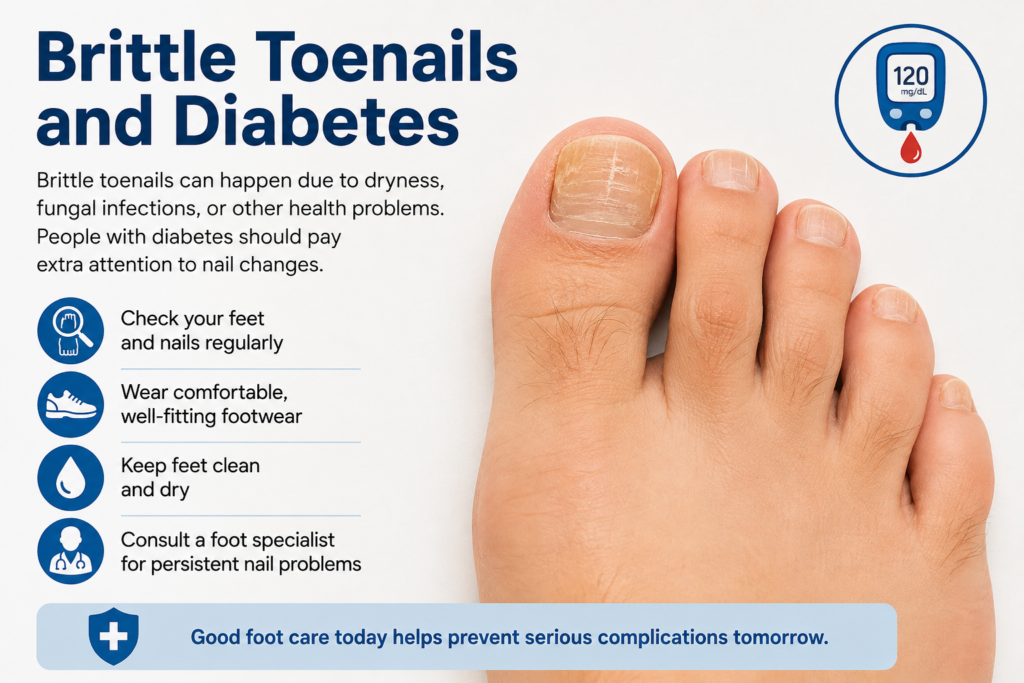
Brittle toenails and diabetes can sometimes occur together, although brittle nails can also have other causes, including dryness, repeated trauma, fungal infections, nutritional deficiencies, and certain health conditions. For people with diabetes, persistent nail changes deserve special attention because foot problems may take longer to heal and can sometimes develop into more serious complications. If your toenails are repeatedly cracking, splitting, peeling, becoming discolored, or causing discomfort, a professional diabetic foot and nail evaluation can help identify the underlying cause and determine the appropriate treatment.
What Are Brittle Toenails?
Brittle toenails are weak, dry, thin, or damaged nails that can crack, split, peel, or break easily.
Common signs include:
- Nails that split or crack
- Peeling nail layers
- Dry or rough toenails
- Thin or weakened nails
- Changes in nail color or texture
- Pain or discomfort around the nail
Occasional nail dryness may not be serious. However, persistent or worsening changes should be assessed, particularly if you have diabetes.
Brittle Toenails and Diabetes, Why Does It Matter?
Brittle toenails and diabetes should be evaluated carefully because diabetes can affect circulation and nerve sensation in the feet. This is why diabetic nail care is more than simply trimming the nails. Regular examination can help identify potential problems early. A brittle toenail does not automatically mean that you have diabetes or a diabetic foot complication. However, if you already have diabetes, persistent nail changes should not be ignored.
What Causes Brittle Toenails?
Several factors can contribute to brittle toenails.
Fungal Nail Infection
Fungal infections can change the appearance and structure of a toenail. The nail may become thick, discolored, crumbly, or brittle.
People with diabetes should have suspected fungal nail infections evaluated rather than attempting aggressive self-treatment.
Repeated Pressure or Trauma
Tight shoes and repeated pressure on the toes can damage the nail. Activities that repeatedly impact the toes may also contribute to cracking or splitting.
Dryness
Very dry nails and surrounding skin can become more susceptible to cracking and peeling.
Nutritional Factors
Certain nutritional deficiencies may affect nail health. If nail changes persist, a healthcare professional can determine whether further evaluation is appropriate.
Other Health Conditions
Some skin and systemic conditions can cause abnormal nail changes. Therefore, identifying the underlying cause is important before choosing treatment.
When Should You See a Foot Specialist?
Consider professional evaluation if your brittle toenails:
- Keep cracking or splitting
- Become thick or discolored
- Cause pain or tenderness
- Develop redness or swelling
- Have discharge or signs of infection
- Change significantly in appearance
- Are associated with a wound or skin breakdown
- Do not improve with basic nail care
For people with diabetes, it is especially important to seek professional care when a nail problem occurs together with a wound, swelling, redness, reduced sensation, or other unusual foot changes.
Why Should Diabetics Avoid Aggressive Nail Treatment at Home?
Cutting or treating abnormal toenails yourself can sometimes cause accidental skin injury.
This can be particularly concerning when diabetes has affected sensation in the feet. A small cut may go unnoticed, while an infection can potentially become more difficult to manage.
Instead of aggressively cutting, digging into, or removing a damaged nail, professional assessment can help determine the safest approach.
What Does Professional Brittle Toenail Treatment Involve?
Treatment depends on why the toenail has become brittle.
During a professional assessment, the foot specialist may examine:
- Nail color and thickness
- Nail texture
- Surrounding skin
- Signs of fungal infection
- Pressure or trauma from footwear
- Circulation and sensation
- Signs of infection or inflammation
- Overall diabetic foot health
Once the cause is identified, the appropriate treatment or nail-care approach can be recommended.
The goal is not simply to improve the appearance of the nail. For people with diabetes, professional care also focuses on protecting the surrounding skin and reducing the risk of avoidable foot complications.
Can Brittle Toenails Be Treated?
Yes, treatment is possible in many cases, but the appropriate treatment depends on the underlying cause.
For example, a fungal infection requires a different approach from nail damage caused by repeated pressure. Similarly, a nail affected by trauma may require different care from one associated with another medical condition.
Therefore, brittle toenail treatment for diabetics should be based on a proper assessment rather than a one-size-fits-all solution.
How Can Diabetics Protect Their Toenails?
Good diabetic foot care can help reduce avoidable nail and foot problems.
Simple measures include:
- Check your feet and toenails regularly.
- Keep feet clean and dry.
- Wear properly fitting footwear.
- Avoid shoes that place pressure on the toes.
- Trim toenails carefully.
- Do not pick or tear damaged nails.
- Avoid aggressive home treatment of abnormal nails.
- Seek professional care when nail changes persist.
Regular foot assessments can also be valuable for people who have diabetes or a history of diabetic foot problems.
Brittle Toenail Treatment in Surat
If you are looking for brittle toenail treatment for diabetics in Surat, professional assessment can help determine the cause of your nail problem and whether treatment is required.
At Elegance Diabetic Foot And Ulcers Clinic, patients can receive diabetic foot and nail evaluation along with appropriate preventive and treatment guidance.
The clinic focuses on diabetic foot health, including nail conditions, wounds, infections, and preventive foot care.
Why Choose Dr. Ashutosh Shah?
Dr. Ashutosh Shah is a plastic, reconstructive, and diabetic foot surgeon with 22+ years of surgical experience. He has been involved in diabetic foot care since 2004 and has experience managing diabetic foot ulcers, nail conditions, fungal foot infections, cellulitis, and complex non-healing wounds.
Dr. Shah is qualified M.B., M.S., M.Ch., D.N.B. and has received specialised diabetic foot surgery training at Ganga Hospital, Coimbatore. He is also associated with the Indian Podiatry Association and Diabetic Foot Society of India.
At Elegance Diabetic Foot And Ulcers Clinic in Surat, his approach includes detailed foot assessment, preventive care, wound management, and appropriate surgical or non-surgical treatment when required.
When Is a Nail Problem an Emergency?
If you have diabetes and notice a rapidly worsening foot problem, seek medical attention promptly.
Warning signs can include:
- Increasing redness or swelling
- Pus or other discharge
- Severe or increasing pain
- A new foot wound
- Black or severely discolored tissue
- Fever associated with a foot infection
- A wound that is not healing
Early professional assessment can be important in preventing a minor problem from becoming more serious.
Conclusion
Brittle toenails are not always a sign of diabetes, but persistent or damaged toenails should receive extra attention when you have diabetes.
Fungal infections, dryness, repeated trauma, nutritional factors, and other health conditions can all affect toenail health. The best treatment depends on identifying the underlying cause.
FAQs
Yes, brittle toenails and diabetes can sometimes occur together. However, brittle toenails can also result from fungal infections, dryness, repeated trauma, nutritional deficiencies, or other health conditions.
Not necessarily. Brittle toenails alone cannot diagnose diabetes. However, people with diabetes should pay attention to persistent changes in their toenails and feet.
Professional evaluation is recommended if toenails are persistently cracking, splitting, thickening, changing color, or causing pain. Redness, swelling, discharge, or a wound requires prompt attention.
Yes. Fungal nail infections can make toenails thick, discolored, crumbly, weak, and brittle. Proper diagnosis is important before starting treatment.
Treatment depends on the underlying cause. A professional assessment can determine whether the problem requires treatment for fungal infection, trauma, dryness, or another condition.