
Toe Amputation Surgery in Bardoli
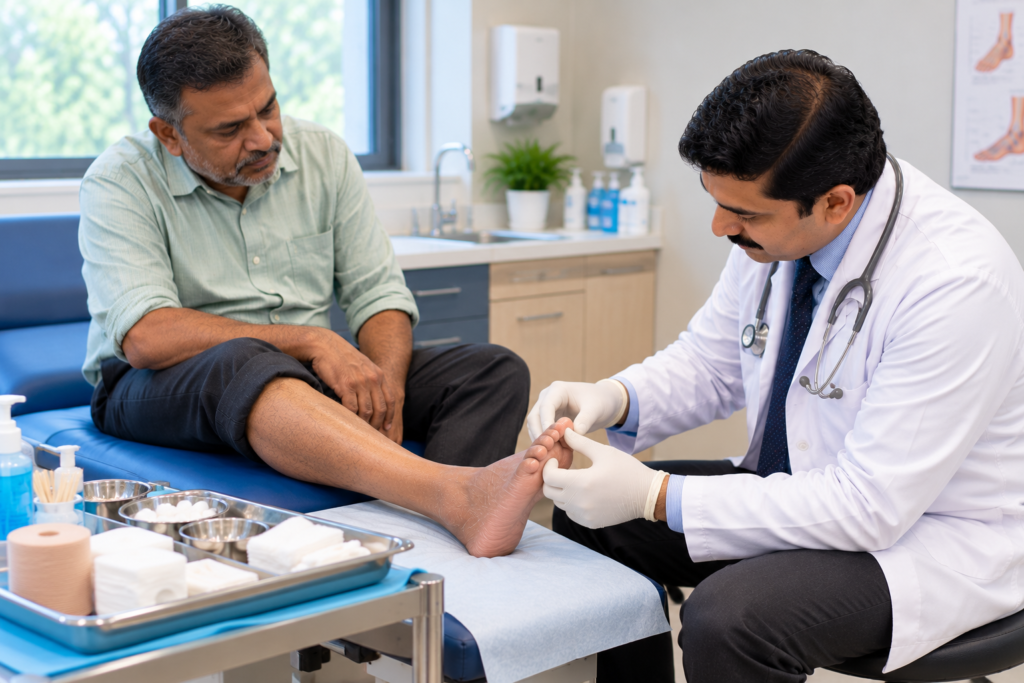
What Is Toe Amputation Surgery?
Toe amputation is a surgical procedure to remove a toe or part of a toe when the tissue is severely damaged, infected, or no longer viable. In people with diabetes, it may be considered when gangrene, a deep infection, or critically poor blood supply threatens the toe or surrounding foot.
The goal is to control the problem while preserving as much healthy tissue and useful foot function as safely possible. Not every diabetic foot ulcer requires amputation. Early assessment can help identify suitable treatment options.
When Is Toe Removal Necessary?
A specialist may consider toe amputation after examining the wound, circulation, infection, and extent of tissue damage. Possible reasons include:
- Gangrene: Part of the toe has died because of inadequate blood supply, infection, or both.
- Severe infection: Infection has spread into deeper tissues and cannot be controlled adequately with other treatment.
- Extensive tissue damage: The affected tissue cannot recover or be preserved safely.
- Complicated non-healing wounds: A persistent ulcer has progressed despite appropriate treatment and is threatening surrounding structures.
- Risk to overall health: An uncontrolled infection may spread and become life-threatening.
Black or purple discoloration, increasing swelling, foul-smelling discharge, or a rapidly worsening wound needs urgent medical assessment. Do not wait for pain to develop, because diabetes-related nerve damage can reduce foot sensation.
Can Toe Amputation Be Avoided?
In selected cases, yes. The treatment depends on how much healthy tissue remains and whether infection and blood flow can be managed.
Depending on the clinical findings, the care team may consider:
- Specialist wound care and appropriate dressings
- Antibiotics when a bacterial infection requires them
- Debridement to remove unhealthy tissue
- Pressure relief through offloading and suitable footwear
- Vascular assessment and treatment to improve blood flow when indicated
- Reconstructive procedures for suitable wounds
- Blood glucose management and regular follow-up
These options cannot guarantee that amputation will be avoided. If tissue has died extensively or infection threatens the patient’s health, surgery may be the safest option.
Read more about treatment options on the Diabetic Foot Surgery page, which explains when amputation may be considered and why the decision depends on the severity of the condition.
How Do Doctors Decide How Much Tissue to Remove?
Before recommending surgery, the medical team assesses the toe and the rest of the foot. This may include:
- Wound examination: Checking the depth of the ulcer, damaged tissue, discharge, and signs of infection.
- Circulation assessment: Evaluating blood supply and arranging vascular tests when required.
- Infection assessment: Determining whether the infection involves skin, deeper tissue, or bone.
- Overall health review: Considering blood glucose control, other medical conditions, and fitness for surgery.
- Treatment planning: Deciding whether the toe can be preserved or whether removal is needed to control the problem.
The level of amputation depends on the affected tissue and the clinical findings. The aim is to remove tissue that cannot be safely preserved while retaining viable structures wherever possible.
What Happens During Toe Amputation Surgery?
If toe amputation is recommended, the procedure is performed in an appropriate surgical setting with suitable anesthesia. The surgeon removes the affected portion, manages the damaged tissue, and decides whether the wound can be closed or needs continued wound care.
The patient may require hospital monitoring, medication, dressings, and follow-up appointments. The exact plan depends on the infection, circulation, wound condition, and general health.
Patients should follow the treating team’s instructions carefully. They should not attempt to cut away blackened tissue, drain a wound, or apply unprescribed substances at home.
How Can You Protect the Rest of Your Foot?
After treatment, preventing another wound is essential. Diabetes can reduce sensation, so pressure injuries or small cuts may go unnoticed.
Helpful steps include:
- Check both feet daily, including the soles and between the toes.
- Keep follow-up appointments for wound and circulation checks.
- Use prescribed footwear or offloading devices to reduce pressure.
- Avoid walking barefoot, especially when sensation is reduced.
- Check shoes for rough seams or objects before wearing them.
- Follow the diabetes care plan and monitor blood glucose as advised.
- Seek prompt assessment for new blisters, cuts, swelling, discoloration, or discharge.
If a toe has been removed, ask the treating specialist whether footwear adjustments, rehabilitation, or other support is needed to maintain balance and reduce pressure on the remaining foot.
Toe Amputation Surgery in Bardoli: Where to Seek Assessment
People looking for toe amputation surgery in Bardoli should arrange a clinical assessment for a non-healing diabetic foot wound, suspected infection, or changes in toe colour. The appropriate treatment may involve wound care, debridement, vascular treatment, reconstructive surgery, or amputation, depending on the findings.
You can review local assessment information on the Bardoli Diabetic Foot OPD page. Contact the centre before travelling to confirm OPD availability and whether your concern can be assessed during that visit.
Important: A blackening toe, spreading redness, rapidly worsening swelling, foul-smelling discharge, fever, chills, or feeling seriously unwell requires urgent medical attention. Do not wait for a routine OPD appointment if these signs are present.
Frequently Asked Questions
No. Many ulcers can be treated with appropriate wound care, pressure relief, infection management, and circulation assessment. Amputation may be necessary when tissue is irreversibly damaged or infection cannot be controlled safely. A specialist must assess the wound to determine the appropriate treatment.
Warning signs include black or purple discoloration, increasing swelling, spreading redness, discharge, foul odour, or a wound that is getting worse. Fever or chills may indicate a more serious infection. Seek urgent medical assessment rather than waiting for the toe to become painful.
Function varies according to which toe is removed, the extent of surgery, healing, and the person’s overall health. Some people need footwear modifications, rehabilitation, or additional support to manage balance and pressure. The treating team can advise on recovery and preventive foot care.
Start with a qualified diabetic foot or surgical specialist who can examine the wound and assess blood circulation and infection. The Bardoli OPD page provides local service information. Severe or rapidly worsening symptoms require urgent hospital assessment.
Conclusion
Toe amputation may be necessary when infection or irreversible tissue damage threatens a toe, but it is not the automatic treatment for every diabetic foot wound. Timely assessment, appropriate wound care, infection control, circulation management, and pressure relief can help preserve healthy tissue when medically possible. After treatment, daily foot checks and ongoing diabetes care are important for protecting the remaining foot.