
Skin Graft for Diabetic Wound in Bharuch
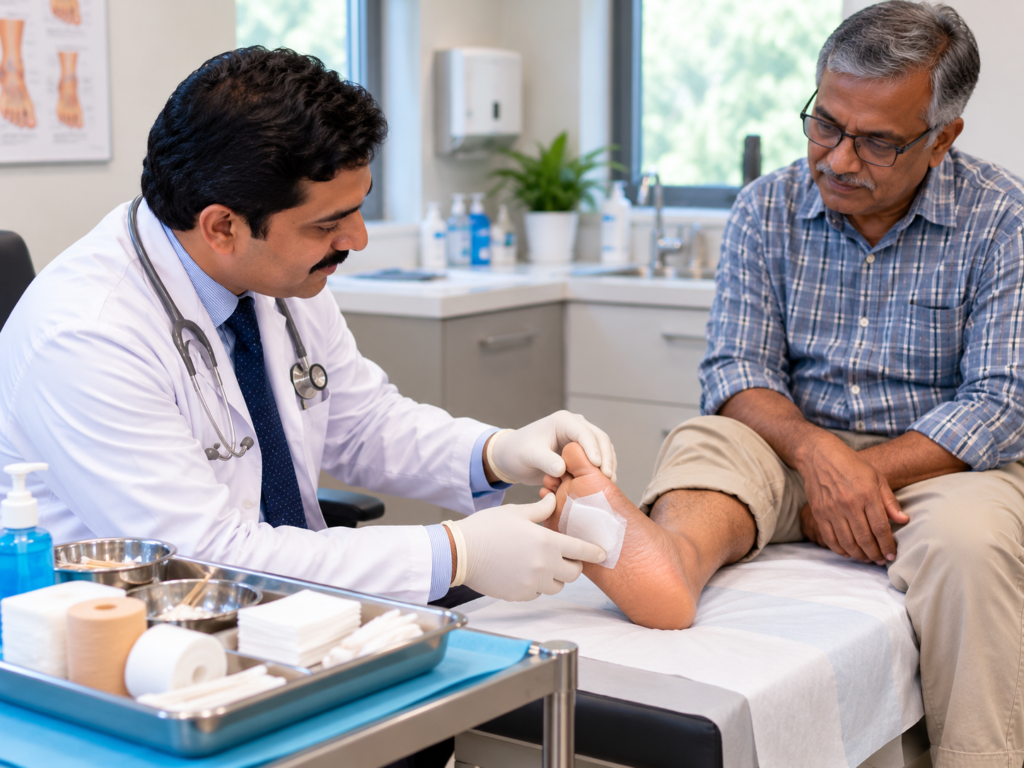
What Is a Skin Graft for a Diabetic Wound?
A skin graft is a surgical technique in which a thin layer of skin is taken from a donor site and placed over a suitable wound to help provide coverage. In selected patients with diabetes, it may be considered when a foot wound has lost skin and cannot close adequately on its own.
For people searching for a skin graft for diabetic wound in Bharuch, the first step is a specialist assessment. The wound must be evaluated for infection, blood supply, healthy tissue and pressure. A skin graft is not suitable for every diabetic foot ulcer, and treating the underlying wound problems is essential for recovery.
When Is a Diabetic Foot Wound Ready for a Skin Graft?
A wound may be considered for skin grafting when the wound bed is healthy enough to support the graft and the factors interfering with healing have been addressed as far as possible.
The surgical team may assess:
- Infection control: Active infection needs appropriate treatment before definitive wound coverage is considered.
- Healthy wound tissue: The wound bed should be suitable for the graft to attach and receive nourishment.
- Blood circulation: Adequate blood supply is important for healing. Poor circulation may require further investigation or treatment.
- Wound depth: Exposed bone, tendon or other structures may require a different reconstructive approach rather than a simple skin graft.
- Pressure and friction: The team considers how pressure from walking or footwear can affect the graft.
- Overall health: Diabetes management, nutrition, medications and other medical conditions may influence surgical planning.
There is no single wound size or fixed number of days that makes every wound ready for grafting. The decision depends on examination and the patient’s individual condition.
When Might a Skin Graft Not Be Suitable?
A skin graft may fail if the wound bed cannot support it. For example, uncontrolled infection, inadequate blood supply or exposed structures without suitable coverage may require additional treatment.
Depending on the findings, the team may recommend wound cleaning, debridement, circulation assessment, pressure relief or another reconstructive procedure. A flap procedure may sometimes be considered when a wound needs tissue with its own blood supply or more substantial coverage.
The aim is to select the method that provides suitable coverage while preserving as much healthy and functional foot tissue as possible.
Read more about diabetic foot surgery and reconstructive treatment to understand other options for complex wounds.
How Is Skin Grafting Performed?
The procedure varies according to the wound and the patient’s health. In general, the surgical team may:
- Examine the wound and review relevant circulation and infection assessments.
- Prepare the wound bed, including removing unhealthy tissue if required.
- Take a suitable layer of skin from a donor site.
- Place and secure the graft over the wound.
- Apply a dressing and provide instructions to protect both the graft and donor site.
The graft and donor site both need care after surgery. The team will explain how to protect the areas, when dressings should be reviewed and which activities should be limited.
What Is Recovery Like After a Skin Graft?
Recovery differs from person to person. It depends on the wound’s condition, blood supply, infection control, diabetes management and how well the graft attaches.
After surgery, care may include:
- Protecting the graft: Avoid rubbing, unnecessary movement or pressure on the treated area.
- Following dressing instructions: Keep the dressing in place as directed and attend scheduled reviews.
- Reducing weight-bearing: Use the footwear, offloading device or mobility support recommended by the treating team.
- Caring for the donor site: Follow instructions for cleaning, dressing and monitoring the area from which skin was taken.
- Managing diabetes: Follow your prescribed treatment plan and discuss glucose readings with your healthcare professional.
- Attending follow-up appointments: The team checks graft attachment, wound healing and any signs of complications.
Do not remove a graft dressing or begin walking normally without guidance from the surgical team. Returning to usual activities too early can damage the graft.
What Problems Can Affect Skin Graft Healing?
A graft may not attach successfully if the area develops infection, bleeding beneath the graft, movement or repeated pressure. Poor circulation and uncontrolled blood glucose can also complicate recovery.
Contact your treating team promptly if you notice increasing redness, swelling, discharge, a worsening smell or a sudden change in the graft’s appearance. Fever, rapidly spreading redness, severe illness or a suddenly cold, pale or darkening foot requires urgent medical assessment.
Even when a graft heals, continued foot protection is important. Diabetes-related nerve damage or pressure can lead to new wounds elsewhere on the foot.
Skin Graft for Diabetic Wound in Bharuch: Where to Seek Assessment
Patients in Bharuch with a persistent diabetic foot wound can seek an assessment to determine whether wound care, debridement, skin grafting or another treatment may be appropriate.
Visit the Bharuch diabetic foot ulcer treatment and OPD page for local service information. Contact the centre to confirm current OPD availability and whether further surgical assessment in Surat is recommended.
If the wound has blackened tissue, rapidly spreading redness, pus with fever, or the foot becomes suddenly cold or pale, seek urgent medical care rather than waiting for a routine appointment.
Frequently Asked Questions
A wound may be ready when the wound bed is suitable for graft attachment and infection, circulation and other healing barriers have been assessed. The surgeon makes this decision after examining the wound; there is no universal waiting period.
No. Some wounds heal with appropriate wound care, while others need debridement, circulation treatment or a different reconstructive procedure. Exposed deeper structures and inadequate blood supply can affect whether a skin graft is appropriate.
Healing time varies with the wound, blood supply, infection control, diabetes management and pressure on the graft. Your surgical team will monitor the graft and advise when dressing changes, weight-bearing and normal activities can safely progress.
Walking may need to be restricted initially to protect the graft. The timing of weight-bearing depends on the wound location, graft stability and the surgeon’s instructions. Follow the prescribed offloading and footwear plan.
Check the Bharuch diabetic foot ulcer treatment and OPD page for local service information. Confirm appointment availability and whether a surgical consultation in Surat is needed.
Conclusion
A skin graft may help cover selected diabetic foot wounds when the wound bed is suitable and important healing barriers have been addressed. Careful assessment of infection, circulation, tissue condition and pressure helps determine the right treatment. For Bharuch patients, the next step is to arrange a clinical evaluation and follow the recommended plan for surgery, dressing care and recovery.