
Cut on Foot Not Healing with Diabetes in Vyara
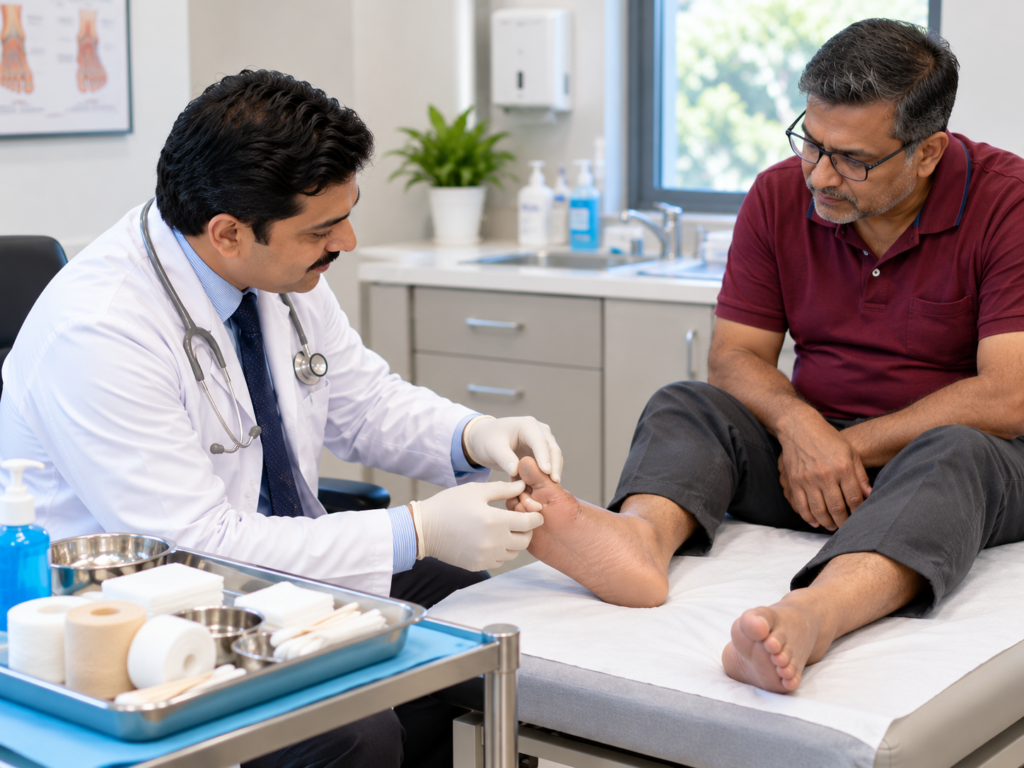
Why Is a Small Foot Cut Not Healing in Diabetes?
A small cut on the foot that does not heal can be an early warning sign of a diabetic foot complication. High blood glucose, reduced circulation, nerve damage and infection can all delay recovery. If you have diabetes and a cut is not improving, arrange medical assessment promptly rather than waiting for pain or swelling to develop.
Why Do Small Foot Cuts Heal Slowly?
Several factors can interfere with wound healing in people with diabetes.
1. Reduced Blood Circulation
Diabetes can contribute to blood vessel damage, reducing the oxygen and nutrients reaching injured tissue. Poor circulation may make even a small cut difficult to heal.
2. Diabetic Nerve Damage
Diabetic neuropathy can reduce sensation in the feet. You may not notice a cut caused by footwear, a blister or a sharp object. The wound can worsen before you realise it is there.
3. High Blood Glucose
Blood glucose levels that remain above your individual target can interfere with normal healing and increase the risk of complications. Follow your prescribed diabetes treatment plan and discuss persistent high readings with your clinician.
4. Infection
An open cut can become infected. Redness, warmth, swelling, discharge or an unpleasant smell may indicate a problem. People with reduced sensation may have a serious wound without much pain.
5. Repeated Pressure or Friction
Walking on an injured area or wearing shoes that rub against the cut can repeatedly damage the tissue and delay healing.
What Are the Warning Signs of a Non-Healing Foot Cut?
Check your feet every day, including the soles and spaces between your toes. Seek prompt medical assessment if you notice:
- A cut that is not beginning to heal.
- Redness, warmth or swelling around the wound.
- Pus, fluid discharge or an unpleasant smell.
- A wound that is becoming larger or deeper.
- New skin discolouration or repeated bleeding.
- Increasing tenderness or pain.
Seek emergency medical care immediately if your foot or toe turns black, becomes suddenly cold or pale, redness spreads rapidly, or you develop fever, confusion or severe illness alongside a foot wound. Do not wait for a routine appointment.
What Should You Do if a Cut Is Not Healing?
If you have diabetes, do not treat a persistent foot wound as an ordinary cut.
- Arrange medical assessment promptly. Do not wait several more days to see whether it improves.
- Protect the wound. For a minor, superficial cut, gently rinse it with clean running water and cover it with a clean dressing while arranging care.
- Reduce pressure. Avoid footwear or activities that rub against the injured area. Ask your clinician whether offloading is needed.
- Avoid home procedures. Do not cut away dead skin, squeeze the wound or use harsh chemicals or unprescribed remedies.
- Follow your diabetes treatment plan. Take prescribed medicines as directed and discuss glucose readings with your healthcare team.
- Follow professional wound-care instructions. A clinician can advise on dressing changes and whether further treatment is needed.
Deep, dirty or puncture wounds and wounds containing embedded material need prompt medical advice. Uncontrolled bleeding or signs of serious infection require urgent care.
How Is a Non-Healing Diabetic Foot Wound Assessed?
The healthcare professional examines the wound and checks for problems that could be preventing healing.
- Wound examination: The size, depth, surrounding skin and signs of infection are assessed.
- Circulation checks: Foot pulses and other findings may indicate whether additional blood-flow tests are needed.
- Sensation testing: Reduced sensation may explain why the injury went unnoticed.
- Infection assessment: Tests, wound sampling or imaging may be recommended depending on the findings.
- Treatment planning: The clinician determines whether dressings, pressure relief, medication or specialist intervention is appropriate.
The treatment depends on the individual wound. Not every cut needs surgery, but some wounds need urgent specialist care.
What Nonsurgical Treatments May Help?
Many diabetic foot wounds can be managed without surgery when the clinical findings support conservative treatment. The plan may include professional wound cleaning, appropriate dressings, pressure relief, footwear advice and management of infection when present.
Blood glucose management and circulation assessment are also important. If blood flow is severely reduced, infection is deep, or tissue has died, dressings alone may not be enough.
Learn more about Nonsurgical Management for diabetic foot problems. Your clinician can explain which options are appropriate for your wound.
Cut on Foot Not Healing with Diabetes in Vyara: Where to Seek Care
If you have diabetes and a foot cut is not healing, seek assessment rather than waiting for it to become painful. Early evaluation can help identify infection, reduced circulation or pressure-related injury.
You can visit the Vyara diabetic foot ulcer treatment and OPD page for local service information. Contact the centre to confirm the next OPD date, appointment availability and whether your specific wound can be assessed there.
If the foot is turning black, suddenly cold or pale, or the wound is accompanied by rapidly spreading redness or severe illness, go to the nearest emergency department immediately. Do not wait for the next OPD session or travel to Surat before obtaining emergency assessment.
How Can You Prevent Small Cuts from Becoming Serious?
Daily foot care can help you identify injuries before they worsen.
- Inspect both feet every day, including the soles, heels and spaces between the toes.
- Use a mirror or ask someone to help if you cannot see the bottom of your feet.
- Wear comfortable, well-fitting footwear and avoid walking barefoot.
- Check inside your shoes for stones or rough areas before wearing them.
- Wash your feet gently and dry them carefully, especially between the toes.
- Do not cut corns or calluses yourself.
- Attend recommended diabetes and foot-care appointments.
- Seek medical advice promptly for new wounds, swelling, discharge or colour changes.
Frequently Asked Questions
Reduced blood circulation, nerve damage, high blood glucose or infection may delay healing. These factors can occur together. A cut that is not improving should be assessed promptly rather than treated with home remedies alone.
Seek prompt assessment if the cut is not improving or you notice redness, swelling, discharge or skin changes. A blackened foot, sudden coldness, rapidly spreading infection or severe illness requires emergency care.
Yes. Persistently high blood glucose can interfere with normal healing and increase the risk of complications. Follow your prescribed treatment plan and ask your clinician for advice if your readings remain above your individual target.
Some wounds can be managed with professional wound care, dressings, pressure relief and treatment of underlying problems. Deep infection, dead tissue or severely reduced blood supply may require additional specialist or surgical treatment.
Check the Vyara diabetic foot ulcer treatment and OPD page for local service information. Confirm the appointment details directly. Seek emergency care immediately for serious warning signs.
Conclusion
A small foot cut can become a serious problem when you have diabetes, especially if circulation is reduced or sensation is impaired. Prompt assessment, appropriate wound care, pressure relief and diabetes management can help address factors that delay healing. Do not wait for pain to appear before seeking help.