
Diabetic Foot Blister Treatment in Vyara: How to Prevent Ulcers
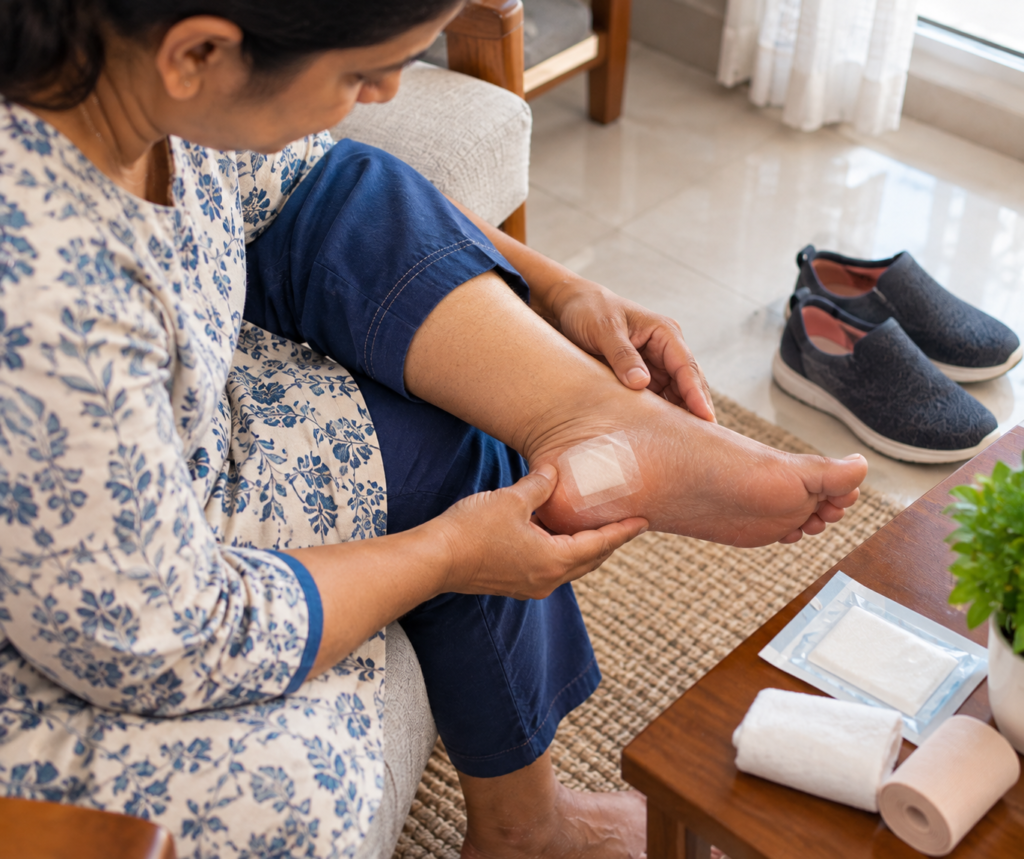
A foot blister in a person with diabetes should be taken seriously because friction, reduced sensation and poor circulation can allow a small skin injury to worsen. Do not pop, cut or peel the blister yourself. Protect the area from pressure and arrange prompt medical advice, particularly if the blister is open, discoloured, swollen or draining fluid.
Why Can Foot Blisters Become Ulcers in Diabetes?
A blister develops when the outer layers of skin separate, often because of friction or pressure from footwear. In people with diabetes, nerve damage may reduce the ability to feel rubbing, pain or heat. This can allow a blister to grow before it is noticed.
Reduced blood flow can also slow healing. If the blister breaks, the exposed skin may become vulnerable to infection and deeper tissue damage. Repeated pressure on the same area can further delay healing and contribute to a diabetic foot ulcer.
Common Causes of Diabetic Foot Blisters
Foot blisters may develop because of:
- Tight shoes or footwear that rubs against the toes or heel.
- Long periods of walking or standing in poorly fitting footwear.
- Seams, folds or foreign objects inside shoes.
- Moisture and friction between the toes.
- Reduced sensation that makes pressure injuries harder to notice.
- Foot deformities that place extra pressure on certain areas.
Check the inside of your shoes before wearing them and choose footwear that fits comfortably without rubbing.
How to Care for a Diabetic Foot Blister Safely
If you notice a blister, take these precautions while arranging medical advice:
- Do not pop or drain it. The intact skin provides a natural protective barrier.
- Reduce pressure and friction. Avoid the footwear or activity that caused the blister.
- Keep the area clean. Gently clean surrounding skin with clean water and avoid scrubbing.
- Protect the blister. Use a clean, non-stick dressing if appropriate, without wrapping it tightly.
- Avoid home remedies. Do not apply harsh chemicals, corn-removal products or unprescribed creams.
- Arrange prompt assessment. People with diabetes should seek advice early, especially if sensation or circulation is reduced.
If the blister has already burst, do not peel away attached skin. Cover the area with a clean, sterile, non-stick dressing and seek medical advice.
Warning Signs That Need Prompt Medical Attention
Contact a healthcare professional promptly if you notice:
- Increasing redness, warmth or swelling.
- Pus, unusual drainage or an unpleasant smell.
- A blister that has opened or is not healing.
- New pain, tenderness or worsening numbness.
- Skin that becomes purple, blue or black.
- A blister in someone with a previous foot ulcer or known circulation problems.
Seek emergency care if the foot suddenly becomes cold, pale or blue, or if there is rapidly spreading redness, severe swelling, blackened tissue, fever or feeling very unwell. Do not wait for pain if you have diabetic nerve damage.
Diabetic Foot Blister Treatment in Vyara: When to Get Checked
If you have a blister and diabetes, a clinical assessment can help identify pressure damage, reduced sensation, poor circulation or early infection. The appropriate treatment depends on the blister’s condition and your individual risk factors. Some blisters need professional dressing and pressure relief; more serious wounds may require specialised wound care.
Read the clinic’s guide to Diabetic Foot Conditions for information about common diabetic foot problems. Patients can also check the Diabetic Foot Ulcer Treatment in Vyara OPD page for local clinic information.
Do not delay assessment because the blister looks small. A wound can worsen without causing much pain when sensation is reduced.
How to Help Prevent Future Blisters
- Check both feet every day, including the soles and between the toes.
- Wear properly fitting footwear and clean, comfortable socks.
- Inspect shoes for rough seams, stones or other objects before wearing them.
- Avoid walking barefoot, even indoors.
- Keep feet clean and dry; dry carefully between the toes.
- Avoid using heating pads or hot water to warm numb feet.
- Attend regular foot checks if you have neuropathy, circulation problems or a history of ulcers.
- Follow your clinician’s advice on blood glucose management and foot protection.
Frequently Asked Questions
No. Popping a blister can break the skin’s protective barrier and increase the risk of infection. Avoid pressure on the area, protect it with an appropriate clean dressing and seek medical advice. Do not drain it yourself, even if it appears filled with fluid.
Yes. If the blister breaks or pressure continues, the damaged skin can develop into an ulcer. Reduced sensation may prevent a person from noticing the injury, while poor circulation can delay healing. Early assessment and pressure relief can help reduce the risk of complications.
Seek prompt medical advice for any new blister, particularly if you have numbness or circulation problems. Redness, warmth, swelling, pus, an open blister or discoloured skin needs urgent assessment. Sudden colour or temperature changes, fever or rapidly worsening symptoms require emergency care.
Patients can check the Vyara diabetic foot OPD page for local clinic information. If the blister is infected, the skin has turned black, or symptoms are worsening rapidly, seek urgent medical care rather than waiting for a routine appointment.