
Debridement Surgery in Bharuch: Who Needs It and What Happens Next?
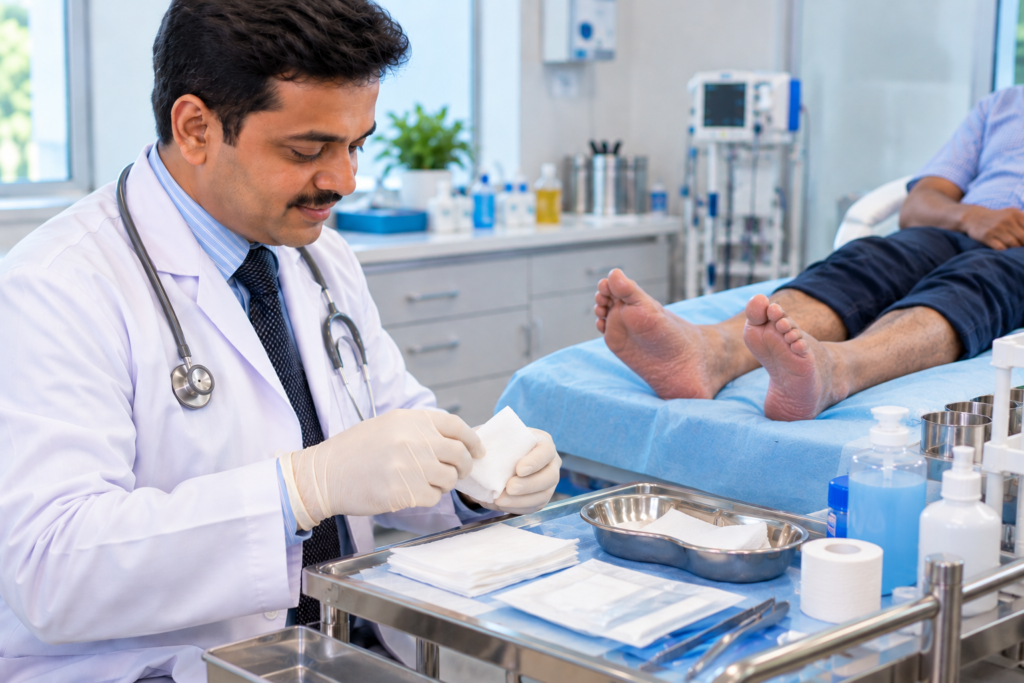
Debridement surgery in Bharuch may be relevant for people with diabetic foot ulcers containing dead, damaged or infected tissue that interferes with healing. When surgical debridement is required, the procedure is performed in Surat, with follow-up wound dressings arranged at the Bharuch OPD when clinically appropriate. The treatment plan depends on wound depth, infection, circulation and the patient’s overall health.
What Is Debridement Surgery?
Debridement is a procedure that removes dead, damaged or non-viable tissue from a wound. In diabetic foot ulcers, this tissue can make it difficult to assess the wound properly and may interfere with healing.
The clinician examines the wound to determine whether debridement is needed and which method is appropriate. Depending on the findings, treatment may involve surgical removal of unhealthy tissue or another suitable wound-care approach.
Debridement is only one part of diabetic foot treatment. Blood sugar management, infection treatment, circulation assessment, pressure relief and appropriate dressings may also be necessary.
For more details, read the guide to debridement surgery and when it is needed.
Who May Need Debridement Surgery?
A person with diabetes may need debridement when a foot ulcer contains unhealthy tissue or is not progressing as expected with appropriate wound care.
A specialist may consider the procedure when there is:
- Dead or blackened tissue within or around an ulcer.
- Slough or damaged tissue interfering with wound assessment.
- An infected wound requiring removal of non-viable tissue as part of treatment.
- A persistent ulcer that is not healing as expected.
- Tissue damage that needs to be assessed before further wound treatment or reconstruction.
Not every diabetic foot ulcer requires surgery. The decision depends on the wound’s condition, blood supply, infection status and the patient’s overall health. Severe infection or poor circulation may require urgent treatment.
Where Is Debridement Surgery Performed for Patients in Bharuch?
Patients from Bharuch who need surgical debridement can be assessed for treatment at the clinic in Surat. The appropriate procedure and location depend on the severity of the wound and the clinical assessment.
The Diabetic Foot Surgery – Debridement page explains the procedure and its role in diabetic foot ulcer management.
Before treatment, the clinical team evaluates the wound and explains the proposed approach, preparation, aftercare and follow-up requirements. Patients should confirm their appointment and treatment arrangements with the clinic before travelling.
What Happens After Debridement Surgery?
After debridement, the wound is dressed and a follow-up plan is provided. The dressing method and review schedule depend on the wound’s size, depth, drainage and healing progress.
Aftercare may include:
- Following the prescribed dressing instructions.
- Keeping the wound protected as advised.
- Reducing pressure on the affected area.
- Following the prescribed diabetes management plan.
- Attending wound reviews and reporting new symptoms promptly.
Debridement does not guarantee that an ulcer will heal immediately. Some wounds require repeated assessment or additional treatment, particularly when infection, poor circulation or pressure continues to affect healing.
Can Dressings Be Done at the Bharuch OPD After Surgery in Surat?
Yes, follow-up dressings may be arranged at the Bharuch OPD when the treating team considers this appropriate. The plan should be coordinated with the team that performed the procedure so that wound progress can be monitored and any concerns can be escalated.
Patients should bring their discharge instructions and dressing plan to follow-up visits. If the wound becomes more swollen, develops increasing discharge or an unpleasant smell, or shows new discolouration, they should contact a healthcare professional promptly.
You can check the Bharuch diabetic foot ulcer treatment and OPD page for local service information and appointment details.
When Should You Seek Urgent Medical Attention?
Do not wait for a routine dressing appointment if a diabetic foot wound is getting worse.
Seek urgent medical assessment if you notice spreading redness, pus, increasing swelling, a foul smell, fever or rapidly worsening tissue changes. A suddenly cold, pale or blackened foot, or signs of severe illness, require emergency assessment.
People with diabetes may have reduced foot sensation, so a serious wound may not always cause significant pain. Do not attempt to cut away dead tissue or perform debridement at home.
Frequently Asked Questions
No. Some ulcers can be managed with appropriate wound care, pressure relief and treatment of underlying problems. Debridement is considered when unhealthy tissue needs to be removed and the procedure is clinically appropriate.
When surgical debridement is required, patients may be assessed for the procedure in Surat. The location and treatment plan depend on clinical findings. Confirm the arrangements with the treating clinic before travelling.
Follow-up dressings may be arranged at the Bharuch OPD when appropriate. The schedule and care instructions should be coordinated with the treating team in Surat.
Not always. Healing may also require infection management, pressure relief, circulation assessment, blood sugar control and regular wound care. Treatment depends on the factors affecting the individual ulcer.
Seek urgent assessment for fever, spreading redness, pus, increasing swelling, a foul smell or worsening tissue colour. A suddenly cold, pale or blackened foot requires emergency assessment.
Conclusion
Debridement surgery may help manage selected diabetic foot ulcers by removing unhealthy tissue, but it must be part of a wider wound-care plan. For patients from Bharuch, surgical treatment may be arranged in Surat, with follow-up dressings at the Bharuch OPD when suitable. Early assessment and coordinated follow-up are important for monitoring healing and identifying complications.