Festival and Wedding Season Foot Injuries in Diabetes: Bare Floors and New Footwear
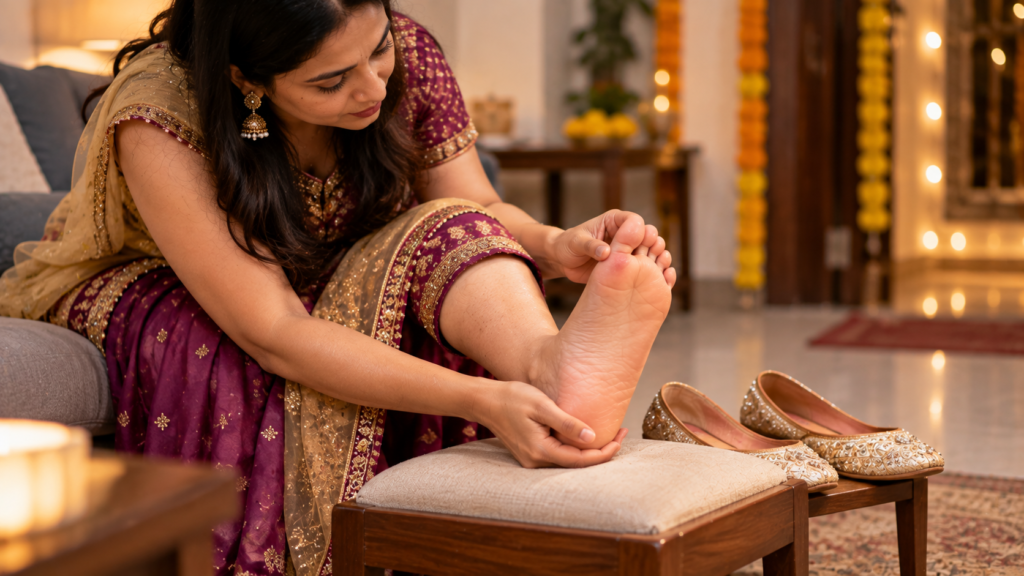
Festival and wedding season often means more walking, longer periods of standing, dancing, travelling between venues and wearing footwear that may not be used regularly.
For someone with diabetes, these changes can increase the risk of foot injury, especially when there is reduced sensation or diabetic neuropathy.
Three common situations create particular risk during the season:
- Walking barefoot on hot floors
- Walking barefoot on rough or gravel surfaces
- Wearing brand new footwear for a full day
Long periods of standing and dancing can add further pressure and friction.
When sensation is reduced, heat, pressure, rubbing or a small injury may not be felt normally. A person may continue walking or standing without realising that the skin has been damaged.
That is why the feet should be checked every night during festival and wedding season.
Why Do Foot Injuries Rise During Festival And Wedding Season?
Festival and wedding events are different from a normal day.
A person may remove footwear before entering a temple or another venue, walk across hot outdoor flooring, stand for several hours, dance, walk over uneven ground or wear formal footwear that has not been used before.
Each situation can put extra stress on the feet.
A numb foot may not give the normal warning of pain. A blister, pressure mark or small injury can therefore develop without being noticed.
The problem may only become visible during the nightly foot check.
The aim is not to avoid festivals or weddings. It is to plan ahead, protect the feet during the event and check them carefully afterwards.
What Does Walking Barefoot On A Hot Floor Do To A Numb Foot?
Hot floors can expose the sole of the foot to heat without the person realising how hot the surface is.
This can be especially important for someone with reduced sensation.
Temple floors, outdoor stone surfaces and other areas exposed to strong sunlight may become very hot.
Avoid walking barefoot on hot surfaces whenever possible.
If footwear has to be removed for a religious or cultural activity, keep the barefoot period as short as possible and avoid hot areas.
Afterwards, check the soles, heels and toes for redness, unusual colour, blisters or damaged skin.
What Does Walking Barefoot On A Rough Or Gravel Floor Do?
Rough flooring, gravel and uneven surfaces can create pressure and friction against the sole.
Small stones or rough areas can also irritate the skin.
If sensation is reduced, the person may continue walking without noticing the problem.
Use suitable protective footwear whenever possible.
If you have to walk barefoot briefly, avoid rough or uneven areas and check the feet carefully afterwards.
Pay particular attention to the sole and heel.
How Should New Footwear Be Introduced Before An Event?
Do not wear brand new footwear for the first time during an entire wedding or festival day.
New footwear can create pressure and rubbing at areas that have not previously been exposed to that shoe.
Introduce new footwear gradually before the event.
Wear it for a short period and then check the feet.
Look for:
- Redness
- Pressure marks
- Rubbing
- Blisters
- New calluses
- Skin irritation
If the footwear repeatedly creates pressure in one area, stop using it and have the fit checked.
For professional information about appropriate footwear fitting, see Shoe Fitting.
How Should Long Standing Hours Be Broken Up?
Standing for several hours can increase pressure on the feet.
At a long wedding or festival event, take regular sitting breaks whenever possible.
Do not remain standing continuously for many hours.
If dancing or walking is involved, include periods of rest.
Wear suitable footwear and change position regularly.
After the event, check both feet rather than waiting for pain or discomfort.
This is particularly important when sensation is reduced because the person may not realise how much pressure has been placed on one part of the foot.
What Should You Carry To A Long Event?
A little preparation can help reduce foot problems.
Depending on the event, consider carrying:
- Comfortable and appropriate footwear
- A suitable spare pair if needed
- Clean socks
- Regularly prescribed medicines
- Any dressing supplies recommended by the healthcare team
Do not use the event as the first test of new footwear.
The goal is to reduce unnecessary pressure, friction, heat and moisture.
What Should Be Checked Every Night During The Season?
Check both feet every night in good light.
Inspect:
- The top of each foot
- The soles
- The heels
- The sides
- The toes
- Between the toes
- Around the toenails
Look for:
- Redness
- Warmth
- Swelling
- Blisters
- Cuts
- Open areas
- Pressure marks
- New calluses
- Skin colour changes
- Unusual smell
- Discharge
If your parent or family member cannot bend easily enough to see the sole or heel, use a mirror or ask another person to help.
Do not skip the check simply because there is no pain.
For additional daily foot care information, see Daily Care of the Foot.
Seasonal Risk Table
| Seasonal situation | What it does to a numb foot | How to prevent it | What to check afterwards | Finding that needs same day care |
|---|---|---|---|---|
| Barefoot on hot floor | Heat may damage skin without being felt normally | Avoid hot surfaces and minimise barefoot time | Redness, unusual colour, blisters or damaged skin | New blister, significant redness or open area |
| Barefoot on rough or gravel floor | Pressure and rough surfaces can irritate or injure the sole | Avoid rough surfaces and use protective footwear | Sole, heel, toes and between toes | Blister, open area or significant skin damage |
| New footwear worn all day | Friction and pressure can cause blisters and calluses | Introduce footwear gradually and check after short use | Redness, pressure marks, rubbing and blisters | Persistent redness, blister or open area |
| Standing over four hours | Prolonged pressure can affect weight bearing areas | Take regular sitting breaks | Soles, heels and pressure areas | New swelling, redness or open area |
| Dancing | Repeated pressure and friction can irritate the feet | Use suitable footwear and take breaks | Toes, soles, heels and rubbing areas | Blister, swelling or open area |
| Wet floors | Moisture can soften skin and increase friction | Avoid prolonged wet contact and dry feet properly | Between toes, soles and exposed areas | Open area, redness or swelling |
What If I Find A Blister After An Event?
Do not ignore a blister, even if it looks small.
Do not deliberately puncture, cut or remove it yourself.
Protect the area from further pressure and friction and contact the appropriate healthcare professional for advice.
If the blister has opened or there is increasing redness, warmth, swelling, discharge or an unpleasant smell, seek same day care.
More information is available at Blisters on the Diabetic Foot.
What About Calluses After A Long Event?
A new or worsening callus can indicate repeated pressure on a particular area of the foot.
Do not cut or shave a callus yourself.
Do not use a blade or sharp instrument.
Instead, consider whether new footwear, prolonged standing, walking or dancing created extra pressure.
Professional assessment can help identify the cause and determine whether footwear or pressure needs to be addressed.
See Calluses for more information.
How Do I Check My Feet If I Cannot Bend Easily?
Sit safely on a stable chair and use a handheld mirror to see the sole and heel.
If you still cannot inspect the feet properly, ask a family member to help.
Make sure there is enough light.
Check the heel, sole, sides, toes and spaces between the toes.
The important thing is that the entire foot is checked, not only the part that is easy to see.
Findings After An Event That Need Care The Next Day Or Sooner
Contact the clinic or appropriate healthcare professional promptly if you find:
- A new blister
- Redness that does not settle
- New warmth
- New swelling
- An open area
- A new wound
- Discharge
- Unusual smell
- Blackening or darkening
- Significant skin damage
- Sudden difficulty walking
- A parent who suddenly refuses to walk
Do not wait several days to see whether a concerning change disappears.
When Does A Festival Season Injury Become An Emergency?
Seek urgent medical care if there is rapidly worsening redness or swelling, significant blackening, severe infection symptoms, a rapidly worsening wound or another serious change.
Do not wait for a routine appointment when the foot is deteriorating quickly.
Reduced sensation can mean that the amount of pain does not accurately reflect the seriousness of an injury.
Is It Safe To Walk Barefoot At A Temple With Diabetes?
Walking barefoot can expose the foot to hot, rough or uneven surfaces. If sensation is reduced, the person may not notice an injury.
Avoid unnecessary barefoot walking and minimise the time spent barefoot when footwear must be removed.
Check the feet afterwards.
A Safer Festival And Wedding Routine
Festival and wedding season does not have to mean avoiding normal activities.
The important part is preparation.
Avoid hot and rough barefoot surfaces whenever possible.
Introduce new footwear before the event instead of wearing it for the first time all day.
Take sitting breaks during long periods of standing.
Wear suitable footwear for walking and dancing.
Check both feet every night.
Use a mirror or ask for help if the sole or heel cannot be seen easily.
Pay attention to blisters, pressure marks, redness, swelling, calluses and open areas.
If a concerning change appears, contact the clinic promptly rather than trying to treat the injury yourself.
The nightly foot check is particularly important when sensation is reduced because a person may not feel heat, pressure or friction normally.
Frequently Asked Questions
Start before the event and use the footwear for short periods. Check the feet after each use for rubbing, pressure marks or blisters.
Carry suitable comfortable footwear, clean socks, any necessary prescribed medicines and supplies recommended by your healthcare team.
Do not cut or deliberately puncture it. Protect it from further pressure and contact the healthcare team for advice.
Use a handheld mirror to inspect the sole and heel or ask a family member to help.
Rapidly worsening redness or swelling, significant blackening, a rapidly worsening wound or severe infection symptoms require urgent medical attention.