
Foot Fungus and Cracked Heels in Diabetes: Small Problems That Start Big Ulcers
Cracked Heels and Foot Fungus in Diabetes: Why Small Problems Matter
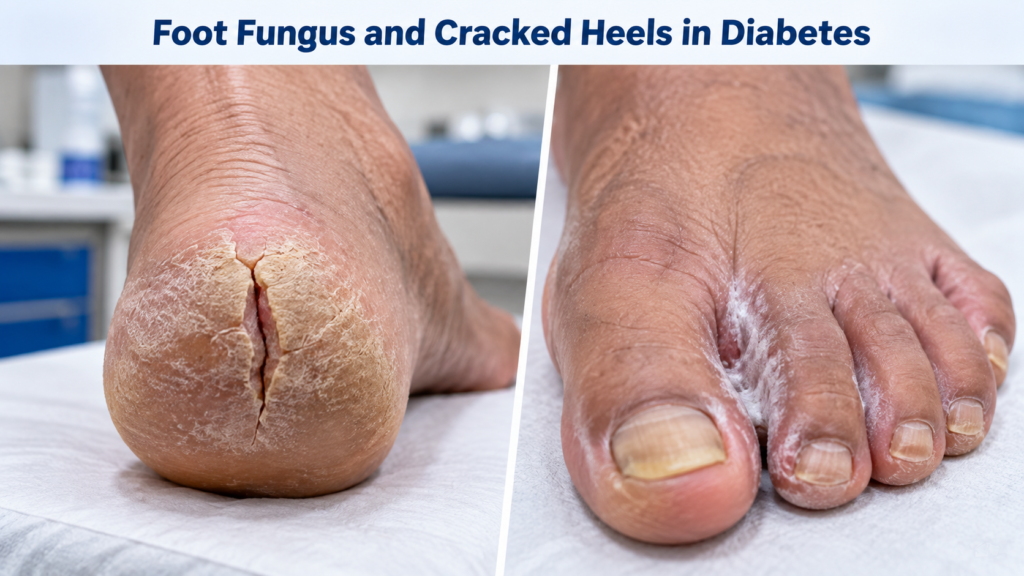
A heel fissure is an actual break in the skin, not simply a cosmetic dry skin problem. In diabetes, especially when sensation or circulation is reduced, that break can become an entry point for infection and may be slow to heal. Fungal infection between the toes can also damage and macerate the skin barrier, creating opportunities for bacteria to enter. CDC guidance specifically lists dry, cracked skin and athlete’s foot between the toes among diabetic foot problems that should prompt medical attention.
That does not mean every crack becomes an ulcer or every fungal infection causes cellulitis. The important point is that these problems should be treated early rather than ignored until the skin opens further.
How Does a Heel Fissure Become an Ulcer?
A heel fissure usually develops when dry, thickened skin loses flexibility and splits under repeated pressure.
The sequence can look like this:
Dry skin → thickened heel skin → loss of flexibility → fissure → open wound → possible infection → ulcer
The heel carries substantial mechanical load while standing and walking. If the skin is already dry and rigid, repeated pressure can deepen a crack.
In a person without diabetes, a superficial fissure may heal without major consequences. In diabetes, the situation can be different because neuropathy can reduce awareness of injury, while circulation problems can interfere with healing.
The fissure does not need to look dramatic to deserve attention.
What makes a heel fissure more concerning?
- The crack is deep or bleeding
- The skin around it becomes red or warm
- There is swelling
- Discharge or pus appears
- The fissure becomes painful, although pain may be absent with neuropathy
- The person has reduced sensation
- The foot has poor circulation
- The crack is repeatedly exposed to pressure
- The wound is becoming larger instead of smaller
This is why heel fissure treatment diabetes should focus on protecting the skin barrier and identifying complications early rather than simply making the heel look smoother.
Why Does Fungus Between the Toes Let Bacteria In?
Athlete’s foot, or tinea pedis, commonly affects the spaces between the toes. It can produce itching, peeling, scaling, redness and sometimes macerated white skin.
When the skin becomes cracked or macerated, its protective barrier is weakened.
That matters because bacteria normally living on or around the skin can gain access through damaged skin. CDC guidance identifies chronic fungal skin infections such as athlete’s foot as a risk factor for cellulitis because they can disrupt the skin barrier.
So the athletes foot diabetic risk is not simply that the fungal infection is uncomfortable. The concern is that untreated skin breakdown can provide a route for a bacterial infection.
Watch for these changes
If itching between toes diabetes is accompanied by:
- Increasing redness
- Warmth
- Swelling
- Pain or tenderness
- Cracks that are opening
- Pus
- Redness spreading beyond the toes
- Fever or chills
the situation needs medical assessment rather than continued self-treatment.
What Is Safe to Use at Home and What Is Not?
Home foot care can help prevent minor skin problems from becoming larger ones, but it should not replace assessment when the skin is open or infection is suspected.
Generally sensible foot care
Wash the feet gently with warm, not very hot, water.
Dry carefully, particularly between the toes.
Apply an appropriate moisturiser to dry skin on the heels and other dry areas.
Wear clean socks and properly fitting footwear.
Avoid walking barefoot.
Inspect the feet every day, including the soles and spaces between the toes. CDC recommends daily inspection and specifically advises against applying lotion between the toes because excess moisture there can contribute to infection.
What should you avoid?
Do not:
- Cut deep cracks yourself
- Cut away thick callus with a blade
- Use a sharp object to remove hard skin
- Aggressively scrub an open fissure
- Apply strong acids or unverified home remedies to broken skin
- Ignore a spreading red area
- Keep walking normally on a painful or open heel wound
- Put moisturiser between the toes
- Pick or scratch peeling fungal skin
- Use someone else’s prescription cream
If a fungal infection is suspected, an appropriate antifungal treatment may be needed. The exact medicine depends on the type and location of the infection, so persistent or extensive infection should be assessed rather than repeatedly trying random products. CDC advises discussing treatment for fungal infections with a healthcare professional.
How Should Heels Be Moisturised?
The basic rule is:
Moisturise dry heel skin, but keep the spaces between the toes dry.
This distinction is particularly important in diabetes.
A suitable moisturiser can be applied to dry skin on the heel and sole after washing and thoroughly drying the feet. The cream should not be deliberately worked into the interdigital spaces.
Why?
The heel usually needs help with excessive dryness and loss of flexibility. The toe spaces are naturally enclosed areas where moisture can accumulate. Persistent moisture can encourage fungal growth and maceration.
CDC specifically recommends lotion on the top and bottom of diabetic feet while advising not to put lotion between the toes.
If the heel is already deeply cracked, bleeding or ulcerated, moisturiser alone is not treatment for the wound. That needs proper clinical assessment.
How Is a Fungal Nail Different From a Fungal Skin Infection?
These are related but different problems.
Fungal skin infection
Athlete’s foot affects the skin. It commonly causes:
- Itching
- Scaling
- Peeling
- Redness
- Cracking
- Maceration between the toes
It may also affect the sole or heel.
Fungal nail infection
A fungal nail infection affects the nail itself. The nail may become:
- Thickened
- Yellow or discoloured
- Brittle
- Cracked
- Distorted
- Separated from the nail bed
CDC notes that toenail fungal infections can occur together with fungal skin infection of the foot.
This distinction matters because simply treating the surrounding skin may not resolve an infected nail.
Skin Problem Triage Table
| Skin problem | Safe home care | Unsafe practices | When it needs clinical care this week | Sign that makes it same-day |
|---|---|---|---|---|
| Heel fissure | Gentle washing, thorough drying, moisturiser on intact dry heel skin, protective footwear | Cutting the fissure, blades, aggressive filing, harsh chemicals | Deep, persistent, recurrent or non-healing fissure | Spreading redness, pus, increasing warmth, blackening or fever |
| Interdigital fungus | Keep spaces clean and dry, change socks regularly, use appropriate antifungal treatment as advised | Scratching, keeping toes constantly damp, sharing towels or footwear | Persistent itching, peeling, recurrent infection or skin breakdown | Redness spreading onto the foot, swelling, pus or fever |
| Fungal nail | Keep nail clean and dry and avoid traumatic trimming | Cutting deeply into the nail, sharing nail instruments, aggressive digging | Thick, discoloured or repeatedly breaking nail, especially with diabetes | Surrounding redness, swelling, drainage or fever |
| Dry scaling | Gentle washing, drying and moisturising appropriate dry skin | Harsh scrubbing, blades or acid preparations | Persistent scaling, cracks or suspected fungal infection | New redness, warmth, swelling or open skin |
| Macerated white skin between toes | Keep the area clean and thoroughly dry and seek advice if persistent | Applying moisturiser between toes, leaving wet socks on, scratching | Persistent maceration, peeling or suspected fungal infection | Spreading redness, discharge, swelling or fever |
The purpose of this table is to separate skin maintenance from infection management. A person with diabetes should have a lower threshold for clinical assessment when the skin barrier is broken.
Which Skin Problems Need a Clinic Visit This Week?
Several apparently minor problems deserve professional review during the week rather than being ignored.
A deep heel fissure
A superficial dry line is different from a fissure that is deep, bleeding or repeatedly reopening.
Persistent athlete’s foot
If itching, scaling and peeling between the toes do not improve with appropriate care, the diagnosis and treatment should be reassessed.
Recurrent fungal infection
Repeated fungal infections can keep damaging the skin barrier. The cause of recurrence should be considered.
Thick or distorted fungal nails
A fungal nail can become brittle and difficult to manage safely. Diabetes increases the importance of avoiding accidental injury during nail care.
Skin that is becoming wet and white between the toes
Maceration means the skin barrier is compromised. If it persists or becomes associated with redness or discharge, clinical review is appropriate.
CDC advises people with diabetes to contact a doctor or foot specialist for dry, cracked skin, athlete’s foot, thickened yellow toenails, sores and other changes in the feet rather than waiting for the problem to become severe.
When Does a Crack or Itch Need a Doctor?
A crack or itch deserves medical attention when there is a change from a simple skin problem to a possible wound or infection.
Look for:
Redness: especially redness extending beyond the original area.
Warmth: a noticeably warmer area can indicate inflammation or infection.
Swelling: new swelling around a crack or infected area is concerning.
Discharge: pus or cloudy fluid needs assessment.
Odour: a new foul smell from an open wound should not be ignored.
Fever: fever or chills with a foot problem require urgent attention.
Rapid progression: worsening over hours or a day is more concerning than stable dry skin.
CDC advises immediate medical attention when cellulitis causes rapidly spreading redness or fever or chills.
What Are the Same-Day Warning Signs?
A diabetic foot skin problem should move from routine care to same-day assessment when there is evidence of a spreading infection or systemic illness.
Same-day warning signs
- Redness spreading up the foot
- Fever or chills
- Rapidly increasing swelling
- Pus or significant drainage
- Black or dead-looking tissue
- Severe or rapidly worsening infection
- New ulceration
- A deep heel fissure with surrounding infection
- New warmth and redness around a previously minor crack
These findings can indicate cellulitis or a deeper diabetic foot infection. IWGDF guidance considers rapidly progressive infection, necrosis or gangrene, deeper tissue involvement and systemic features such as fever or chills among findings associated with more serious diabetic foot infection.
Can I Use a Pumice Stone on Cracked Heels?
A pumice stone can be risky when diabetes has caused reduced sensation or when the skin is already cracked.
The problem is not the pumice stone itself. The problem is how much tissue is removed and whether the person can accurately feel injury.
Do not aggressively grind a heel that is:
- Already fissured
- Bleeding
- Painful
- Numb
- Inflamed
- Showing signs of infection
If thick callus keeps returning over a pressure area, professional foot assessment is safer than repeatedly removing it yourself.
Which Cream Is Safe for Diabetic Heels?
For intact dry heel skin, a suitable moisturising cream can help reduce excessive dryness and cracking.
The important distinction is between intact dry skin and an open fissure or ulcer.
A moisturiser may help maintain the surrounding skin, but it does not replace wound treatment when the skin has split deeply.
Do not put moisturiser between the toes. CDC specifically recommends lotion on the top and bottom of diabetic feet while advising against applying it between the toes.
If the skin is persistently cracked despite regular care, the cause should be assessed.
Should Moisturiser Be Applied Between the Toes?
No.
The spaces between the toes should be kept clean and dry rather than deliberately moisturised. Excess moisture can contribute to maceration and fungal problems.
Moisturise the dry heel and other appropriate areas instead.
How Long Does Foot Fungus Take to Clear?
There is no single treatment time that applies to every fungal infection.
It depends on:
- Whether the diagnosis is actually fungal
- How extensive the infection is
- Whether the nails are involved
- The treatment selected
- Whether treatment is used consistently
- Whether moisture and reinfection are continuing
Skin athlete’s foot and fungal nail infections also behave differently. Nail infections generally require a longer treatment course than superficial skin infection.
If symptoms persist despite appropriate treatment, the diagnosis should be reviewed rather than continuously changing creams without guidance.
Can Fungal Nails Be Cut at Home?
Nails should be kept trimmed, but people with diabetes need to be careful about accidental injury.
Do not dig into the corners, cut deeply into thickened nail or use sharp instruments to remove diseased nail material.
If sensation is reduced, vision is poor, the nail is very thick or there has already been an injury, professional nail and foot care may be safer.
A thickened yellow nail should not automatically be assumed to be fungal either. Diagnosis matters because several nail conditions can look similar.
Why Early Treatment Matters
The goal is not to frighten someone with diabetes about every dry heel or itchy toe.
The goal is to recognize the point at which a skin problem becomes a foot problem.
A dry heel can become a fissure.
A fissure can become an open wound.
Fungal skin between the toes can damage the skin barrier.
A damaged skin barrier can allow bacteria to enter.
Bacterial infection can become cellulitis, and diabetic foot infection can become much more complicated when it spreads into deeper tissues. CDC identifies athlete’s foot and other breaks in the skin as risk factors for cellulitis.
That is why early attention is more useful than waiting for obvious pain. Neuropathy can reduce the warning signal that normally tells someone an injury is getting worse.
Practical Daily Foot Routine for Diabetes
A simple daily routine can reduce the chance that small skin problems go unnoticed.
Check
Look at the heels, soles, between the toes and around the nails.
Wash
Wash gently with warm water and mild cleansing products.
Dry
Dry thoroughly, especially between the toes.
Moisturise
Apply moisturiser to appropriate dry skin such as the heels, but avoid the spaces between the toes.
Inspect
Look for cracks, redness, swelling, peeling, blisters, wounds or nail changes.
Protect
Wear properly fitting footwear and avoid going barefoot.
Escalate
If you notice an open wound, spreading redness, pus, blackening, significant swelling or fever, seek medical assessment rather than continuing routine home care.
Daily foot inspection and appropriate footwear are recommended as part of diabetic foot prevention.
When Should You See a Foot Clinic?
A clinic visit is appropriate when a skin problem is persistent, recurrent or progressing.
You should particularly consider assessment when:
- A heel fissure is deep or repeatedly reopening
- Athlete’s foot keeps returning
- Fungal infection is not improving
- A fungal nail is thick and difficult to trim safely
- Skin between the toes remains macerated
- A crack has become an open wound
- You have reduced sensation
- You have known circulation problems
- The skin changes are accompanied by redness or swelling
For persistent dry or cracked skin, see Dry skin on the diabetic foot.
For suspected fungal infection, see Fungal infection of the foot.
For athlete’s foot specifically, see Athlete’s foot.
You can also read Why diabetic feet crack for more information about recurrent dry and cracked skin.
Final Takeaway
Cracked heels and fungal infection in diabetes should not be treated as purely cosmetic problems.
A deep heel fissure can become an open wound, while fungal infection between the toes can damage the skin barrier and provide an entry point for bacteria. That does not mean every fissure or fungal infection will become an ulcer or cellulitis, but diabetes makes early recognition and treatment more important.
Keep dry heel skin moisturised, keep between the toes clean and dry, avoid aggressive self-treatment, inspect your feet every day and arrange clinical assessment when cracks are deep, infections persist or the skin starts changing rapidly.
If redness is spreading, the foot is becoming increasingly swollen or warm, pus or foul-smelling drainage appears, or fever develops, seek same-day medical attention rather than waiting for the problem to settle.
FAQs
Avoid aggressive pumicing if the skin is cracked, numb, bleeding or inflamed. Professional assessment may be safer.
A suitable moisturiser can be used on intact dry heel skin. Do not put moisturiser between the toes.
No. Keep the spaces between the toes clean and dry.
It varies with the type and extent of infection and the treatment used. Persistent infection needs reassessment.
Trim carefully without digging into the nail or surrounding skin. Thick or difficult nails may need professional care.
Seek care when it becomes deep, persistent, infected, associated with redness or swelling, or accompanied by fever or rapidly worsening symptoms.