
What Are the Signs You May Need Fungal Nail Surgery?
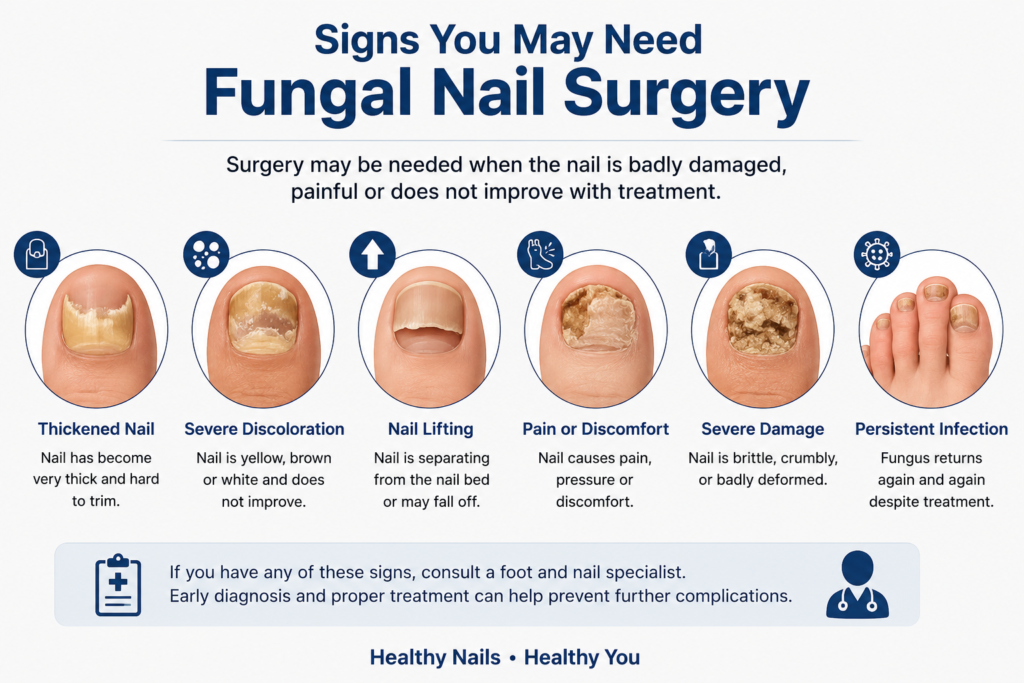
A fungal nail infection, also called onychomycosis, often starts with changes such as nail discoloration, thickening, brittleness, or an unpleasant smell. Many cases can improve with antifungal medicines and proper nail care. However, when the infection becomes persistent or causes significant nail damage, a doctor may consider a surgical procedure. Fungal nail surgery is not usually the first treatment. It may be considered when other treatments have not worked or when the affected nail is causing ongoing problems.
What Are the Signs You May Need Fungal Nail Surgery?
1. The Nail Remains Infected Despite Treatment
If a fungal nail infection continues after appropriate antifungal treatment, a specialist may recommend further evaluation. Persistent infection can sometimes occur because the fungus is deeply established within or beneath the nail.
In selected cases, removing part or all of the affected nail can help clear damaged tissue and allow additional treatment to reach the nail bed more effectively.
2. The Nail Has Become Very Thick
A severely thickened nail can become difficult to trim and maintain. It may also put pressure on the surrounding skin and make wearing shoes uncomfortable.
When significant thickening is caused by a persistent fungal infection, nail removal may be considered as part of treatment.
3. The Nail Is Painful
Fungal nails are not always painful. However, a severely thickened or deformed nail can press against footwear and cause discomfort.
If pain continues despite conservative treatment, a doctor can examine the nail and determine whether surgical treatment is appropriate.
4. The Nail Is Lifting From the Nail Bed
A fungal infection can cause the nail to separate from the nail bed, a condition known as onycholysis. This can create space underneath the nail where debris and microorganisms can collect.
If the nail is extensively detached or damaged, partial or complete nail removal may sometimes be recommended.
5. The Nail Is Severely Damaged or Deformed
Long-standing fungal infections can significantly change the appearance and structure of the nail. The nail may become yellow, brown, white, crumbly, irregular, or distorted.
When the damaged nail causes functional problems or cannot be managed effectively with other treatments, surgical removal may be considered.
Can Fungal Nail Surgery Remove the Fungus Completely?
Removing the affected nail does not necessarily eliminate the fungal infection by itself. The fungus can remain in the nail bed or surrounding skin.
Therefore, your doctor may recommend antifungal treatment along with nail removal. The appropriate approach depends on the severity and location of the infection.
What Happens During Fungal Nail Surgery?
The procedure depends on whether part of the nail or the entire nail needs to be removed.
Generally, the area is numbed with a local anesthetic. The surgeon then carefully removes the affected portion of the nail. The area is cleaned and dressed, and you receive instructions for wound care.
In some cases, only part of the nail is removed. In other cases, complete nail removal may be considered.
How Long Does It Take to Recover?
Recovery depends on the extent of the procedure and the patient’s overall health. Mild discomfort and sensitivity may occur after surgery.
Keeping the area clean and following the doctor’s dressing and wound-care instructions can support healing. The new toenail or fingernail may take several months to grow back, particularly for toenails.
When Should You See a Doctor?
You should consider a medical evaluation if you notice:
- Persistent yellow, white, or brown nail discoloration
- A nail that becomes increasingly thick
- Crumbling or brittle nail edges
- Nail separation from the nail bed
- Persistent pain or pressure from the nail
- Repeated fungal infections
- No improvement after appropriate treatment
A doctor can confirm whether the problem is actually caused by fungus. Other nail conditions can look similar, so proper diagnosis is important before choosing surgery.
Fungal Nail Treatment in Surat
At Elegance Diabetic Foot And Ulcers Clinic in Surat, patients with persistent nail and foot problems can receive an individualized assessment. Treatment depends on the severity of the infection, nail condition, underlying health factors, and previous treatment.
Dr. Ashutosh Shah, a surgeon with over 22 years of experience, evaluates patients with complex foot and nail conditions and can recommend an appropriate treatment approach based on the individual case.
Key Takeaways
- Fungal nail surgery is usually considered when conservative treatments are unsuccessful or the nail is severely damaged.
- Severe nail thickening, pain, deformity, and nail separation can be signs that further treatment is needed.
- Nail removal alone may not eliminate the fungal infection.
- Antifungal treatment may be recommended alongside or after surgery.
- A proper diagnosis is important because several nail conditions can resemble fungal infections.
- Early treatment may help prevent the infection from becoming more difficult to manage.
FAQs
No. Antifungal medicines and other conservative treatments are usually considered first. Surgery may be recommended for selected persistent or severely damaged nails.
The procedure is generally performed using local anesthesia, which numbs the area. Some discomfort or tenderness may occur after the procedure.
In many cases, a removed nail can grow back. Toenails can take several months to fully regrow.
Surgery can remove the damaged nail, but recurrence is possible if the underlying fungal infection is not adequately treated. Follow-up antifungal treatment and proper foot hygiene may help reduce recurrence.
Diabetes can increase the risk of foot complications and may affect wound healing. People with diabetes should have persistent nail infections evaluated by a qualified medical professional rather than attempting nail removal themselves.