
The First 24 Hours After You Notice a Diabetic Foot Wound
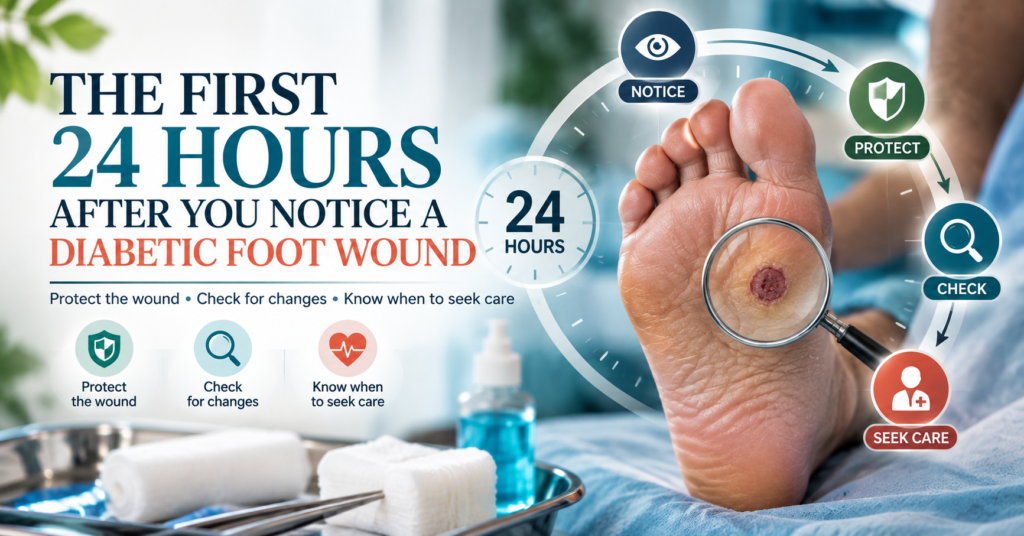
If you are wondering what to do when you find a diabetic foot wound, the first 24 hours are important. Stop unnecessary walking on the affected foot, gently rinse the wound with clean water, cover it with a plain sterile dressing, and arrange medical assessment within 24 hours.
Do not apply antiseptic, turmeric, oil or other home remedies unless specifically advised by your treating clinician. Do not cut, squeeze, burst or remove tissue from the wound yourself.
A diabetic foot wound may be more serious than it appears because neuropathy can reduce pain sensation. Even a small wound that does not hurt needs proper assessment.
At Elegance Diabetic Foot And Ulcers Clinic, Dr. Ashutosh Shah assesses diabetic foot wounds for depth, infection, pressure, circulation and other factors that may affect healing.
What are the first four things to do straight away?
First, stop unnecessary walking on the affected foot. Continued pressure can make a wound worse, particularly when reduced sensation means you cannot accurately feel the damage.
Second, gently rinse the wound with clean water. Avoid aggressive scrubbing or trying to clean deep inside the wound yourself.
Third, cover it with a plain sterile dressing to protect the area from dirt, friction and further contamination.
Fourth, arrange for the wound to be medically assessed within 24 hours. Do not wait several days simply because the wound looks small or does not hurt.
More information is available about a non-healing foot ulcer.
What must never be applied to a diabetic foot wound?
Do not put turmeric, oil, powders or other home remedies directly into a diabetic foot wound.
Antiseptic products should also not automatically be poured into the wound at home. Some products can irritate healing tissue, and the correct wound-cleaning method depends on the wound itself.
Do not use blades, scissors, needles or other objects to cut dead-looking skin, burst a blister or explore the wound.
Proper wound care should be based on medical assessment rather than experimenting with products at home.
Read more about diabetic foot home care.
How should the foot be kept until you are seen?
Keep the wound clean, covered and protected from unnecessary pressure.
Avoid walking on the affected area as much as reasonably possible until the wound has been assessed. Do not walk barefoot, even inside the home.
Keep the dressing clean and dry. If it becomes wet, dirty, loose or soaked, replace it with a clean sterile dressing if you have been shown how to do so.
Do not wear footwear that rubs or presses directly against the wound. Appropriate pressure relief or offloading may be recommended after assessment.
For routine prevention advice, see daily care of the foot.
How do you photograph and measure the wound for the doctor?
A photograph can help document how the wound looked when it was first noticed.
Take the picture in good natural or bright indoor light. Photograph the whole foot first so the wound location is clear, followed by a closer image of the wound.
Place a clean ruler beside the wound without touching the open area and record the approximate length and width. Note the date and time the photograph was taken.
Do not push anything into the wound to measure its depth. Wound depth and deeper tissue involvement should be assessed by a trained healthcare professional.
Taking another photograph later can help the treating team understand whether redness, swelling or wound size is changing.
Which findings mean go to hospital now rather than tomorrow?
Some diabetic foot changes should not wait until the next day.
Fever, spreading redness, black or rapidly darkening skin, foul smell, pus, or sudden swelling involving much of the foot require urgent same-day medical assessment.
A rapidly worsening wound, severe new pain, significant colour change or a foot that suddenly becomes unusually cold should also be treated seriously.
Remember that absence of pain does not prove that a wound is safe. Diabetic neuropathy can reduce the ability to feel an infection or injury.
First 24 Hours Action Checklist
| Area | Do | Never Do |
|---|---|---|
| Washing | Gently rinse with clean water | Do not aggressively scrub or explore the wound |
| Dressing | Cover with a plain sterile dressing | Do not leave an open wound exposed unnecessarily |
| Walking | Reduce pressure and unnecessary walking | Do not continue normal walking simply because there is no pain |
| Footwear | Keep pressure and rubbing away from the wound | Do not wear footwear that presses directly on the affected area |
| Home remedies | Use only wound-care products specifically advised | Do not apply turmeric, oil or unprescribed remedies |
Go to hospital today: Fever, spreading redness, black skin, foul smell, pus or sudden swelling of the whole foot should not wait for a routine appointment.
What should you carry to the first appointment?
Bring your recent wound photographs and note when the wound was first discovered. If possible, record whether its size, drainage, smell, colour or surrounding redness has changed.
Bring a current medication list and relevant diabetes information, including recent glucose records if available.
Also bring the footwear you commonly use. Examining the shoe can sometimes help identify pressure or rubbing that contributed to the wound.
If you need to arrange an assessment, use the clinic address and contact information.
Conclusion
Knowing what to do when you find a diabetic foot wound can help prevent further damage during the first 24 hours. Reduce pressure, rinse gently with clean water, use a plain sterile dressing and arrange prompt medical assessment.
Dr. Ashutosh Shah at Elegance Diabetic Foot And Ulcers Clinic can assess the wound for infection, depth, pressure and circulation problems and determine the appropriate treatment. Fever, spreading redness, black skin, foul smell, pus or sudden major swelling should be treated as same-day warning signs.
Frequently Asked Questions
Do not automatically pour antiseptic into the wound. Gently rinse it with clean water and follow the wound-care instructions provided by your treating clinician.
No. A new diabetic foot wound should be medically assessed promptly, ideally within 24 hours, even when it appears small.
No. Avoid turmeric, oil and other home remedies because they can contaminate the wound or interfere with proper assessment and wound care.
Avoid unnecessary pressure and walking on the affected area. Continued pressure can worsen tissue damage, particularly when sensation is reduced.
A newly discovered diabetic foot wound should generally be assessed within 24 hours. Red-flag symptoms require same-day urgent assessment.
A painless wound can still be serious. Diabetic neuropathy may reduce sensation, so infection or tissue damage can develop without significant pain.