
Shoes and Walking During Wound Debridement: What Helps and What Harms
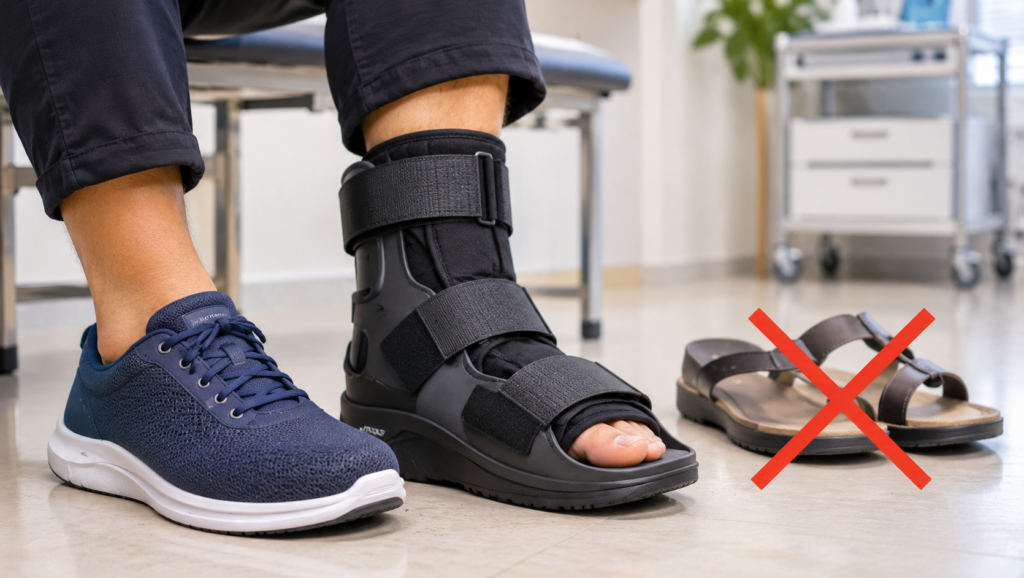
During wound debridement, the right footwear takes pressure off the wound and protects the rest of the foot. Soft, wide, closed footwear with cushioned soles may be safer than tight shoes or open slippers for some patients. However, an active foot ulcer may need a special offloading device rather than ordinary shoes.
Choosing suitable footwear helps protect sensitive skin. It also reduces rubbing and repeated pressure. Therefore, patients should follow the wound specialist’s advice before returning to regular walking.
This guide provides practical footwear advice with wound debridement, including shoe selection, walking precautions and warning signs.
Why Does Pressure Slow Healing?
Wound debridement removes dead or unhealthy tissue when medically necessary. However, the wound still needs protection afterward.
Walking places pressure on the feet. In a healthy foot, the skin usually tolerates normal pressure. Yet people with diabetes may have nerve damage, reduced sensation or changes in foot shape.
As a result, they may continue walking on an injured area without feeling pain.
Repeated pressure can damage healing tissue. It may also prevent the wound from closing.
How Does Pressure Affect a Foot Wound?
Pressure can cause several problems:
- Repeated injury to the wound surface
- Increased friction around the affected area
- Skin breakdown
- Callus formation
- Delayed wound closure
- Recurrence after healing
Therefore, reducing pressure is an important part of diabetic foot care.
Can You Walk After Debridement?
Some patients can walk with a suitable offloading device. Others need temporary limits on weight-bearing.
The answer depends on wound location, depth, circulation and infection.
For example, a wound under the forefoot may require more pressure relief than a wound in another location.
Walking restrictions: [Dr. Ashutosh Shah to confirm according to the wound and procedure.]
For more information about recovery, read our wound debridement healing guide.
Which Footwear Features Matter Most?
Good footwear should protect the foot without causing new pressure points.
However, ordinary comfortable shoes do not replace medical offloading for an active ulcer.
The following footwear advice with wound debridement can help patients understand what to discuss with their specialist.
1. Adequate Toe Space
Shoes should provide enough room for the toes.
A narrow toe box may squeeze the skin and increase rubbing.
Therefore, choose footwear that does not press against the toes.
2. Proper Fit
Shoes should fit securely without feeling tight.
Loose footwear may allow the foot to slide, causing friction.
Likewise, tight footwear can increase pressure.
3. Smooth Inner Material
Check the inside of the shoe for rough seams, hard edges or damaged lining.
These features may irritate sensitive skin.
Patients with reduced foot sensation should inspect their shoes before wearing them.
4. Suitable Sole and Support
The sole should provide stability and protection.
However, the ideal sole depends on the patient’s foot condition.
A specialist may recommend a particular design to reduce pressure.
5. Easy Adjustment
Adjustable fastenings can help accommodate changes in foot size or swelling.
Nevertheless, patients should not force a swollen foot into a tight shoe.
Footwear Safety Checklist
| Feature | Safer Choice | Avoid |
|---|---|---|
| Shoe fit | Secure, comfortable fit | Tight or loose shoes |
| Toe area | Roomy toe box | Narrow toe space |
| Inner lining | Smooth and soft | Rough seams |
| Sole | Stable, suitable support | Worn or damaged soles |
| Pressure relief | Prescribed offloading | Walking directly on the wound |
| Socks | Clean, well-fitting socks | Tight or folded socks |
| Daily checks | Inspect shoes and feet | Ignoring pressure marks |
| Indoor walking | Approved protective footwear | Walking barefoot |
Important: For an active diabetic foot ulcer, the prescribed offloading device takes priority over general shoe advice.
What Is an Offloading Device?
An offloading device reduces pressure on a specific part of the foot.
Doctors often recommend offloading for diabetic foot ulcers because repeated pressure can delay healing.
The correct device depends on wound location, circulation, infection and walking ability.
Common Offloading Options
1. Knee-high offloading devices
Certain non-removable knee-high devices are recommended as first-choice treatment for suitable neuropathic ulcers on the bottom of the forefoot or midfoot.
However, they are not appropriate for every patient.
2. Removable walking devices
A removable device may help reduce pressure when a non-removable option is unsuitable.
Patients must follow instructions about when to wear it.
3. Special therapeutic footwear
Medical footwear may help protect selected feet or serve as an alternative when recommended offloading devices cannot be used.
4. Custom insoles
Custom insoles may redistribute pressure. However, they should not automatically replace an effective offloading device for an active ulcer.
Why Does Device Selection Matter?
The wrong device may cause rubbing, instability or new skin damage.
Therefore, a specialist should assess the foot before prescribing offloading.
Patients should also report discomfort, falls or new pressure marks.
For more information about complex wounds, see our chronic wound care surat article.
Should You Walk Barefoot at Home?
No. People with diabetes who have reduced foot sensation should avoid walking barefoot, even indoors.
Small objects, hot floors or rough surfaces can injure the skin.
Because nerve damage reduces sensation, patients may not notice the injury immediately.
What Should You Wear Indoors?
Use the protective footwear or offloading device recommended by your specialist.
Do not switch to ordinary slippers simply because they feel comfortable.
Open slippers may expose the toes and provide limited protection.
In addition, loose slippers can slip or cause friction.
How Can You Protect Your Feet Daily?
Follow these simple steps:
- Check both feet every day.
- Inspect the inside of footwear before use.
- Wear clean, properly fitting socks when appropriate.
- Keep dressings clean and protected.
- Avoid direct pressure on the wound.
- Report new redness, swelling or skin damage.
- Attend scheduled wound care appointments.
Patients should not remove a prescribed non-removable offloading device themselves.
When Do You Need Custom Insoles?
Custom insoles help distribute pressure across the foot.
They may be useful for people with unusual foot shapes, previous ulcers or areas of high pressure.
However, an insole is not suitable for every wound.
Who May Benefit From Custom Insoles?
A specialist may consider them for patients with:
- Previous diabetic foot ulcers
- Changes in foot shape
- Repeated callus formation
- High-pressure areas
- Reduced protective sensation
- A need for long-term foot protection
Can Insoles Prevent Future Ulcers?
Properly designed therapeutic footwear and pressure-relieving insoles may help reduce ulcer recurrence in selected high-risk patients.
However, patients still need daily foot checks and regular medical reviews.
The specialist should also check whether the footwear continues to fit correctly.
For more guidance on wound treatment, read wound care treatment surat.
Wound Debridement in Navsari: Planning Safe Footwear and Walking
Patients seeking wound debridement in navsari should discuss walking and footwear before leaving their appointment.
The specialist should assess the wound, explain any weight-bearing restrictions and recommend suitable protection.
Ask whether you need an offloading device, custom footwear or assistance while walking.
Also, confirm when the doctor will review your progress.
Recommended footwear: [Dr. Ashutosh Shah to confirm.]
Walking restrictions: [Specialist to confirm.]
Follow-up schedule: [Clinic to confirm.]
Do not wait for the next routine appointment if you notice rapidly increasing redness, swelling, fever, new black tissue or worsening discharge.
Frequently Asked Questions
Ordinary slippers may not protect a healing diabetic foot wound. Open or loose slippers can increase rubbing and leave the foot exposed to injury. Therefore, use the footwear or offloading device your specialist recommends. Patients receiving wound debridement in navsari should confirm indoor walking instructions before returning home.
Some sports shoes offer good support and a roomy toe box. However, not every sports shoe suits a patient with an active ulcer. The shoe may still place pressure on the wound. Therefore, ask your specialist whether therapeutic footwear or a prescribed offloading device is necessary.
Inspect the inside of each shoe for rough seams, hard edges and small objects. Next, check that your toes have enough room and the shoe does not rub. If your specialist allows regular footwear, inspect your feet after wearing it. Stop using shoes that cause redness or skin damage.
Some patients benefit from socks that fit smoothly and do not create tight pressure around the foot. Avoid folded fabric, rough seams and socks that leave deep marks. However, socks cannot replace protective footwear or medical offloading. Ask your specialist which materials and fit suit your condition.
Return to normal shoes only after your specialist confirms that the wound and foot can tolerate them. Healing time varies with wound depth, circulation, infection and pressure relief. Some patients need therapeutic footwear even after wound closure. Therefore, follow the recommended transition plan instead of changing shoes independently.
Consultation With Dr. Ashutosh Shah
Appropriate footwear advice with wound debridement should reflect the patient’s wound location, foot shape and medical condition.
Dr. Ashutosh Shah can assess diabetic foot wounds and discuss suitable pressure-relief measures, dressings and follow-up care.
Patients should ask about walking limits, footwear selection and warning signs before leaving the clinic.
For appointments, visit the contact us page.
Conclusion
The right footwear can help protect a healing diabetic foot wound. However, shoes alone may not provide enough pressure relief for an active ulcer.
Therefore, follow the prescribed offloading plan, avoid walking barefoot and inspect your feet daily.
Most importantly, seek medical advice if the wound worsens or new skin damage appears.