
Diabetic Foot Ulcer Care in Athwa, Surat: Procedure, Recovery and Cost Factors
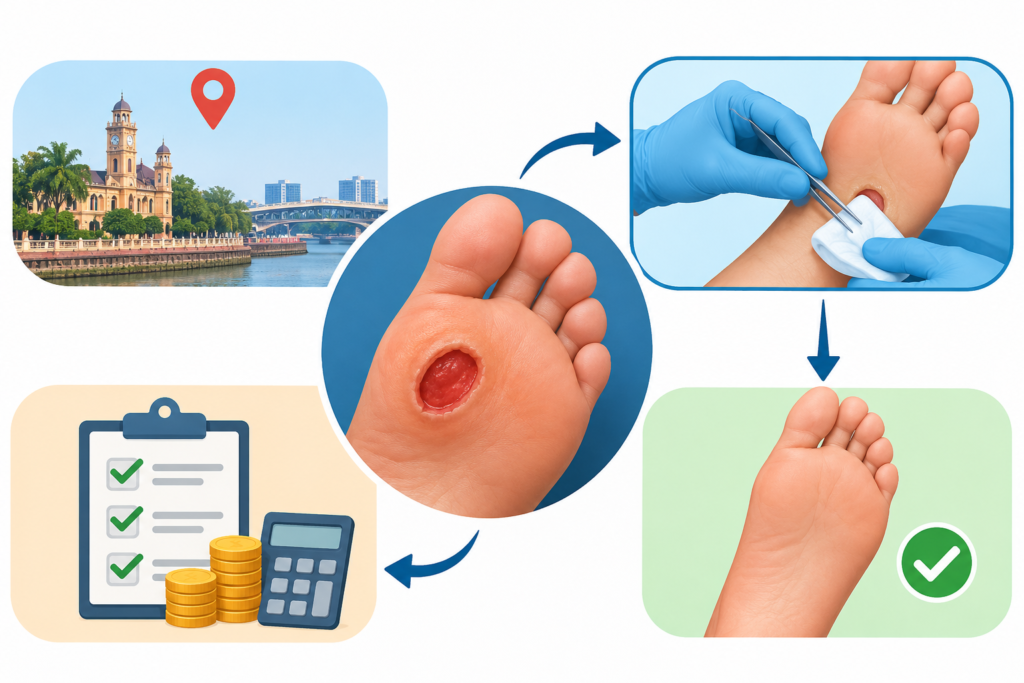
Diabetic foot ulcer care in athwa surat involves assessing the wound, identifying infection or circulation problems, protecting the foot from pressure, and planning suitable treatment with regular follow-ups. Patients from Athwa usually begin with a consultation and necessary tests before treatment is planned.
A diabetic foot ulcer is an open wound that can develop because of nerve damage, repeated pressure, poor circulation or injury. Even a painless ulcer may become serious if treatment is delayed. Therefore, early specialist assessment is important.
What Is Diabetic Foot Ulcer Care and Who Is It For?
Diabetic foot ulcer care is a structured approach to examining, treating and monitoring wounds in people with diabetes.
Unlike a single fixed surgical procedure, treatment may involve several steps depending on the condition of the foot.
The primary goal is to promote healing, manage complications and reduce the risk of further tissue damage.
Who needs diabetic foot ulcer care?
Specialist evaluation is particularly important for people experiencing:
- An open wound on the sole, heel or toes.
- A blister that has broken and is not healing.
- Persistent discharge or swelling around a wound.
- Thick callused skin with an underlying ulcer.
- Loss of sensation in the feet.
- Recurrent wounds in the same location.
- Redness, warmth or other signs of infection.
Some patients do not experience significant pain because diabetes can damage the nerves responsible for protective sensation.
Consequently, a wound may become deeper without causing obvious discomfort.
Learn why a painless diabetic foot ulcer should never be ignored.
Why is early treatment important?
An untreated ulcer can develop complications, including infection and damage to deeper tissues.
In severe cases, infection may involve bone or spread beyond the original wound.
However, early diagnosis, appropriate wound care and pressure reduction can improve the chances of healing.
The treatment plan should also address factors that caused the ulcer, helping reduce the likelihood of recurrence.
How the Procedure Is Done, Step by Step
Diabetic foot ulcer care in athwa surat begins with a clinical assessment rather than an automatic recommendation for surgery.
Dr. Ashutosh Shah evaluates the wound and considers suitable treatment options according to its severity.
Step 1: Initial consultation
The specialist reviews the patient’s medical history, diabetes management, previous ulcers and current symptoms.
The examination may include:
- Wound size and depth.
- Surrounding skin condition.
- Signs of infection.
- Protective sensation.
- Foot deformities and pressure points.
- Blood circulation.
The doctor may also review previous prescriptions, blood test results and wound photographs.
Step 2: Diagnostic investigations
Depending on the findings, investigations may include blood glucose testing, HbA1c, imaging or circulation assessment.
If infection is suspected, further tests may be needed to identify its extent.
Not every patient requires every investigation. Therefore, testing should be based on clinical findings.
Step 3: Wound cleaning and debridement
Appropriate wound cleaning helps remove contamination and allows the clinician to assess the affected tissue.
Some ulcers require debridement, which involves removing dead or unhealthy tissue.
However, the need for debridement depends on the wound, circulation and other medical factors.
Patients should never attempt to cut away dead skin or calluses at home.
Step 4: Dressing and infection management
The specialist selects a dressing according to wound condition, drainage and surrounding skin.
If clinical infection is present, antibiotics or other treatment may be necessary.
Importantly, antibiotics are not routinely required for an ulcer that has no clinical evidence of infection.
Step 5: Offloading and pressure relief
Repeated pressure can prevent a diabetic foot ulcer from healing.
Therefore, appropriate offloading is a central part of treatment, especially for ulcers on the sole.
Depending on the patient, a specialist may recommend a suitable cast, removable device or other pressure-relieving approach.
For further information, read about total contact cast diabetic foot ulcer.
Step 6: Follow-up and treatment review
During follow-up visits, the doctor checks wound progress, infection, pressure control and the effectiveness of dressings.
If healing is slower than expected, the treatment plan may need adjustment.
Additional procedures are considered only when clinically indicated.
Quick Facts: Diabetic Foot Ulcer Care
| Treatment detail | What patients should know |
|---|---|
| Consultation duration | [Specialist to confirm] |
| Treatment duration | Depends on wound severity and procedures required |
| Anaesthesia | May not be needed for routine assessment; procedure-dependent |
| Hospital stay | OPD or admission, depending on clinical condition |
| Back to work | Depends on wound location, pressure restrictions and job demands |
| Follow-up visits | Individualised according to wound progress |
| Recovery period | [Specialist to confirm typical ranges] |
These details are planning estimates, not guaranteed treatment timelines.
Recovery: What the First Weeks Look Like
Recovery from a diabetic foot ulcer varies considerably.
A small, superficial wound with adequate circulation may improve faster than a deep ulcer complicated by infection or repeated pressure.
Therefore, recovery should be monitored through clinical examination rather than a fixed number of days.
Early treatment phase
During the initial phase, the priority is controlling infection when present, protecting the wound and reducing pressure.
Patients should follow dressing instructions carefully and avoid walking directly on an affected area when advised.
Blood glucose management also remains important.
Following weeks
As treatment continues, the specialist monitors changes in wound size, drainage and tissue condition.
Healthy healing tissue may gradually develop, although progress differs between patients.
Dressings and offloading devices may need adjustment during this period.
Patients should not stop using prescribed pressure-relieving devices simply because the wound looks better.
Preventing another ulcer
Even after a wound closes, the affected foot may remain vulnerable.
Consequently, appropriate footwear, daily inspection and follow-up care are essential.
Read more about blogs diabetic foot ulcer recurrence to understand why wounds may return.
Recovery warning signs
Contact a medical professional promptly if you notice:
- Increasing redness or swelling.
- New or worsening discharge.
- Unpleasant wound odour.
- Fever or chills.
- New black or discoloured tissue.
- Rapid wound enlargement.
- Increasing pain or sudden changes in sensation.
Rapidly spreading infection, blackening tissue or severe systemic symptoms require emergency medical assessment.
Which Factors Change the Cost?
The total cost of diabetic foot ulcer treatment depends on the severity of the wound and the medical care required.
There is no single price suitable for every patient.
1. Initial assessment and tests
Consultation charges and investigations can affect the starting cost.
For example, some patients require additional circulation assessment or imaging.
2. Dressing requirements
Different ulcers require different dressing materials and change schedules.
A wound with heavy drainage may need a different management approach from a relatively dry wound.
3. Infection treatment
If an infection is present, medication, investigations or hospital treatment may increase costs.
More serious infections sometimes require surgical intervention.
4. Debridement and other procedures
Some patients require professional debridement or another wound-management procedure.
The need for these interventions is determined after clinical assessment.
5. Offloading devices
Specialised casts, footwear or removable offloading devices may be recommended.
Their costs vary according to the selected treatment.
6. Follow-up appointments
The number of visits depends on healing progress and wound complexity.
Therefore, patients should request an estimate that separates initial and recurring expenses.
Before proceeding, ask whether dressing materials, investigations, devices and follow-up appointments are included in the estimate.
Reaching the Clinic From Athwa: Diabetic Foot Ulcer Care in Athwa Surat
Patients from Athwa should arrange a consultation before planning treatment.
The first appointment allows the specialist to assess the wound and determine whether outpatient care or hospital treatment is necessary.
What should you bring?
Bring the following information whenever available:
- Recent blood glucose and HbA1c reports.
- Previous wound-treatment records.
- Current medication list.
- Previous imaging or circulation reports.
- Details of earlier foot infections.
- Information about allergies.
- Existing dressings or prescribed offloading devices.
These records may help the doctor understand previous treatment and avoid unnecessary repetition.
Can treatment be planned in advance?
An initial discussion may help patients understand which records to bring and whether an in-person assessment is required.
However, wound depth, circulation and infection cannot always be evaluated reliably through photographs or video.
Therefore, an online discussion should not delay urgent medical examination.
Planning follow-up appointments
Patients should ask how frequently dressings and wound reviews are likely to be required.
Additionally, travel arrangements should accommodate any restrictions on walking or weight-bearing.
Do not assume that routine travel or normal footwear is safe immediately after treatment.
Questions to Ask Before You Decide
Before starting diabetic foot ulcer care in athwa surat, patients should understand the diagnosis, treatment goals and expected follow-up requirements.
Useful questions include:
- How deep is the ulcer?
- Is there any sign of infection?
- Is blood circulation adequate?
- Do I need debridement?
- What type of dressing is appropriate?
- Which offloading device should I use?
- How will healing progress be measured?
- What warning signs require urgent care?
- What costs should I expect during follow-up?
Dr. Ashutosh Shah can discuss the available treatment options following a clinical evaluation.
Frequently Asked Questions
The time required depends on wound examination, investigations, dressing and whether debridement or another procedure is necessary. A routine assessment may take less time than treatment for a complicated ulcer.
Follow-up frequency depends on wound depth, infection, circulation and the selected dressing or offloading method. Some patients need frequent reviews, while others follow a different schedule. The specialist should explain the initial plan and adjust it according to healing progress. Missed appointments may delay identification of complications.
An initial online discussion may be possible if the clinic provides that service. However, photographs cannot reliably establish wound depth, circulation or the extent of infection. Patients seeking diabetic foot ulcer care in athwa surat should arrange an in-person examination when advised.
Travel depends on the wound condition, procedure performed and whether pressure on the affected foot must be restricted. Patients may require an offloading device or assistance with mobility. Before travelling, ask the specialist about sitting duration, walking limits, dressing protection and the timing of the next review.
Healing time varies with ulcer depth, circulation, infection, blood glucose management and pressure relief. Some wounds improve gradually, while complicated ulcers require prolonged care.
Conclusion
Diabetic foot ulcer care involves more than applying a dressing. Successful management requires identifying the cause of the wound, controlling infection when present, protecting the foot from pressure and monitoring healing.
For patients in Athwa, early assessment can help identify complications before they become more serious.
Dr. Ashutosh Shah can evaluate the wound and discuss an individualised treatment plan, including appropriate follow-ups and possible costs.
To request appointment information, visit the contact us page.