
Flexor Tenotomy in Bardoli: Treatment for Toe-Tip Ulcers and Claw Toes
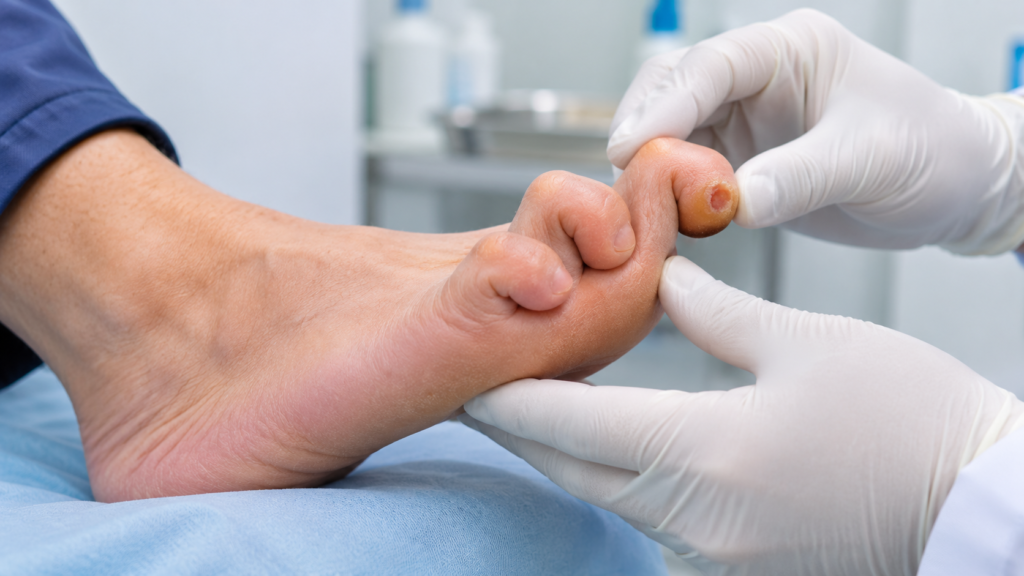
Flexor tenotomy in Bardoli is a minimally invasive procedure that may help selected patients with diabetes who have flexible claw or hammer toes and recurring ulcers at the tips of their toes. The procedure releases a tight flexor tendon to reduce pressure on the toe tip. A diabetic foot specialist must assess circulation, infection and toe flexibility before recommending treatment.
Toe-tip ulcers can develop when diabetes-related nerve damage changes the shape of the toes and increases pressure during walking. Even a small wound may become serious if it remains untreated.
Dr. Ashutosh Shah at Elegance Diabetic Foot & Ulcer Clinic evaluates diabetic foot problems and discusses suitable wound-care and surgical options according to individual clinical findings.
What Is Flexor Tenotomy?
Flexor tenotomy is a small surgical procedure that involves releasing a tendon responsible for bending a toe.
The flexor tendons help the toes curl downward. When these tendons become tight, the toe may develop a clawed or hammered position.
This deformity can increase pressure on the tip of the toe, particularly when walking or wearing shoes.
In people with diabetes and peripheral neuropathy, repeated pressure may cause calluses, skin breakdown and ulcers.
Flexor tenotomy aims to reduce this pressure by allowing the affected toe to adopt a less curled position.
Is flexor tenotomy a major operation?
Flexor tenotomy is generally considered a minimally invasive procedure.
It may be performed through a small incision using local anaesthesia in suitable patients.
However, the exact technique, setting and postoperative care depend on the patient’s medical condition and the surgeon’s assessment.
Not every claw toe requires surgery, and not every diabetic toe ulcer is suitable for tenotomy.
How Does Flexor Tenotomy Help Toe-Tip Ulcers?
Toe-tip ulcers frequently develop because of repeated pressure concentrated on a small area.
When a toe remains curled, its tip may press against the ground or footwear during walking.
If the patient also has reduced protective sensation, this pressure may continue without causing noticeable pain.
Reducing pressure on the toe tip
The main purpose of flexor tenotomy is to reduce the mechanical force acting on the affected toe.
Releasing the tight tendon can help decrease pressure at the ulcer site.
This may support healing when the ulcer is caused primarily by a flexible toe deformity.
However, the procedure does not replace appropriate wound care, infection management or diabetes treatment.
Can flexor tenotomy prevent future ulcers?
In carefully selected patients, flexor tenotomy may reduce the risk of recurrent toe-tip ulceration.
The International Working Group on the Diabetic Foot (IWGDF) includes digital flexor tenotomy among surgical offloading options for selected people with diabetes and flexible toe deformities.
Nevertheless, recurrence prevention also requires suitable footwear, regular foot examination and management of other pressure points.
Why is pressure relief important?
A wound may fail to heal if repeated pressure continues to damage the surrounding tissue.
Dressings protect the wound, but they do not necessarily eliminate the pressure responsible for its development.
For this reason, a specialist may consider surgical offloading when appropriate.
Who May Need Flexor Tenotomy for Claw Toes?
Patients considering flexor tenotomy in Bardoli should undergo a detailed diabetic foot assessment.
The procedure is generally considered for selected individuals with flexible toe deformities that contribute to ulceration or high pressure.
Possible candidates
A specialist may consider the procedure when a patient has:
- A flexible claw or hammer toe.
- A toe-tip ulcer associated with pressure.
- Recurrent callus formation at the toe tip.
- A history of repeated ulcers at the same location.
- Persistent pressure despite appropriate conservative management.
The doctor must determine whether tendon release is likely to address the main cause of the wound.
Who may not be suitable?
Flexor tenotomy may not be appropriate for patients with rigid deformities, significant untreated circulation problems or other conditions that require a different approach.
An infected ulcer may need urgent infection management before elective pressure-relieving treatment is considered.
Severe tissue damage, suspected bone infection or poor circulation requires additional investigation and an individualised plan.
What tests may be needed?
The assessment may include:
- Examination of toe flexibility.
- Evaluation of the ulcer and surrounding skin.
- Testing for peripheral neuropathy.
- Assessment of foot circulation.
- Blood glucose and HbA1c review.
- Imaging when deeper infection or bone involvement is suspected.
Not every patient requires every test.
How Is the Flexor Tenotomy Procedure Performed?
The exact steps vary according to the technique and number of toes requiring treatment.
A typical treatment pathway includes the following stages.
Step 1: Clinical examination
The specialist confirms whether the deformity is flexible and whether pressure from the toe position is contributing to ulceration.
The patient’s circulation, wound condition and medical history are reviewed.
Step 2: Anaesthesia
Local anaesthesia is commonly used for suitable procedures.
The doctor explains the anaesthesia plan and any additional precautions before treatment.
Step 3: Tendon release
Through a small incision, the surgeon releases the selected flexor tendon.
This reduces the downward pulling force on the affected toe.
The technique must be performed carefully to avoid unnecessary damage to nearby structures.
Step 4: Dressing and protection
After the procedure, the area is covered with an appropriate dressing.
The doctor may recommend protective footwear, pressure reduction or temporary activity restrictions.
Step 5: Follow-up
Follow-up visits allow the specialist to assess the incision, toe position and any existing ulcer.
Further wound treatment may still be required.
Patients should not assume that the ulcer will heal immediately after tendon release.
Procedure Overview
| Treatment detail | Information |
|---|---|
| Procedure | Flexor tendon release |
| Main purpose | Reduce toe-tip pressure |
| Anaesthesia | Usually local in suitable patients |
| Procedure duration | [Surgeon to confirm] |
| Hospital stay | [Clinic to confirm] |
| Walking after treatment | Depends on wound condition and postoperative instructions |
| Follow-up visits | [Surgeon to confirm] |
| Estimated cost | [Clinic to confirm] |
What Is the Recovery Time After Flexor Tenotomy?
Recovery depends on the patient’s circulation, diabetes management, existing wound and whether additional procedures are needed.
A small incision may recover sooner than an established diabetic toe ulcer.
Therefore, incision healing and ulcer healing should be considered separately.
Immediately after treatment
The patient receives instructions about dressing care, pressure protection and activity.
Some patients may be allowed to walk in prescribed protective footwear, while others require stricter pressure restrictions.
Follow the surgeon’s individual recommendations.
During the first few weeks
The specialist checks the incision and monitors the affected toe.
If an ulcer was present before surgery, it may require continued dressings and pressure relief.
The patient should report new redness, discharge, swelling, fever or unexpected wound deterioration.
Returning to normal activities
Return to work and daily walking depends on the type of work, ulcer severity and prescribed offloading.
Patients with physically demanding jobs may need different restrictions from those with desk-based work.
Can complications occur?
Although flexor tenotomy is a relatively small procedure, potential complications include infection, bleeding, delayed wound healing, persistent deformity and pressure transfer to another part of the foot.
A new pressure point can occasionally develop on a neighbouring toe.
Regular follow-up helps identify these problems.
What Are the Benefits and Possible Risks?
The main potential benefit is reduced pressure at the affected toe tip.
For an appropriately selected patient, this may support ulcer healing and help prevent repeated tissue damage.
Potential benefits
- Reduced pressure at the toe tip.
- Improved positioning of a flexible toe.
- Support for healing pressure-related ulcers.
- Reduced recurrence risk in selected cases.
- A relatively limited surgical approach.
However, results depend on patient selection and appropriate postoperative care.
Possible limitations
Flexor tenotomy does not correct every type of toe deformity.
It also does not directly treat poor circulation, uncontrolled infection or other causes of delayed healing.
Patients may still require ongoing wound dressings, footwear modification and regular diabetic foot assessments.
The doctor should explain realistic treatment goals rather than promise permanent ulcer prevention.
When Should Patients From Bardoli Consult a Specialist?
Patients experiencing recurrent toe-tip ulcers, flexible claw toes or persistent calluses should seek a diabetic foot assessment.
Early examination can help determine whether pressure reduction, wound treatment or another intervention is necessary.
When is urgent care needed?
Seek prompt medical attention for:
- A new open wound.
- Increasing redness or swelling.
- Pus or unpleasant wound odour.
- Black or discoloured tissue.
- Rapidly worsening ulceration.
- Fever or other signs of serious infection.
Rapidly spreading infection or signs of severe tissue damage require emergency assessment.
Planning your consultation
Patients seeking flexor tenotomy in Bardoli should bring previous wound-treatment records, diabetes reports and current medication details.
Dr. Ashutosh Shah can assess whether flexor tenotomy is suitable or whether another treatment approach is preferable.
For information about related procedures, see the clinic’s Diabetic Foot Surgery service page.
Frequently Asked Questions
Flexor tenotomy is commonly performed under local anaesthesia in suitable patients, helping reduce discomfort during the procedure. Some postoperative soreness may occur. People with diabetic neuropathy may experience reduced sensation, but this does not eliminate surgical risks. The specialist should explain anaesthesia and pain management before treatment.
Flexor tenotomy may support healing when a toe-tip ulcer is caused by pressure from a flexible toe deformity. By releasing the tight tendon, the procedure reduces pressure on the affected area. However, continued wound care, infection management and appropriate footwear remain important for successful treatment.
No. Flexor tenotomy is generally considered for selected flexible toe deformities. Rigid deformities, poor circulation or other foot problems may require a different approach. A specialist must examine the toe, assess wound condition and review the patient’s overall health before recommending the procedure.
The cost depends on the number of toes treated, surgical setting, anaesthesia, investigations and follow-up requirements. Additional wound treatment may also affect the total expense. Patients considering flexor tenotomy in Bardoli should request an individualised estimate after consultation.
Yes. Although flexor tenotomy can reduce pressure at the treated toe tip, future ulcers remain possible. New pressure points, unsuitable footwear, neuropathy and other foot deformities can contribute to recurrence. Regular foot checks, appropriate footwear and follow-up appointments remain important after treatment.
Conclusion
Flexor tenotomy is a minimally invasive surgical offloading option for selected people with diabetes who have flexible claw or hammer toes and pressure-related toe-tip ulcers.
By releasing a tight tendon, the procedure may reduce pressure and support ulcer healing. However, it is not suitable for every patient, and careful assessment remains essential.
Dr. Ashutosh Shah at Elegance Diabetic Foot & Ulcer Clinic can evaluate toe deformities, existing ulcers and suitable treatment options.
Patients should seek timely assessment rather than waiting for a wound to become painful or infected.