Total Contact Cast for Diabetic Foot Ulcers: How It Works and Why Weekly Changes Matter
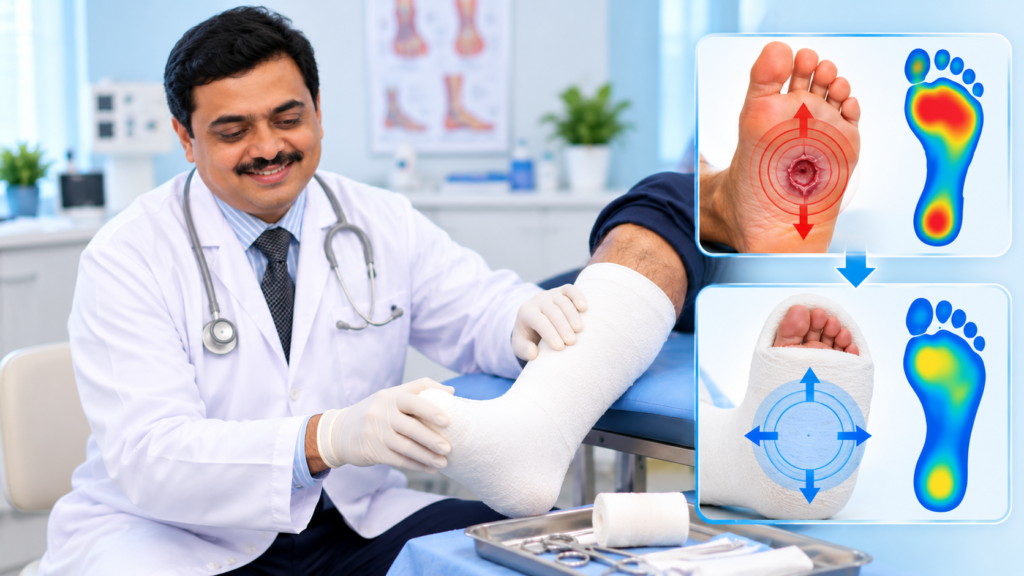
A diabetic foot ulcer may struggle to heal even when the wound receives regular dressings. One important reason is repeated pressure on the injured area during walking.
A total contact cast (TCC) is a specialised offloading treatment designed to reduce pressure on selected diabetic foot ulcers.
Unlike an ordinary cast, it is carefully shaped around the foot and lower leg. This helps redistribute pressure and protect the wound while healing takes place.
However, a total contact cast is not suitable for every patient. Proper assessment, careful application and regular follow-up are essential.
This guide explains how total contact casting works, who may benefit, what happens during treatment and why weekly cast reviews are important.
What Is a Total Contact Cast?
A total contact cast is a specially fitted, usually non-removable cast that surrounds the foot and lower leg.
Its main purpose is to reduce harmful pressure on a diabetic foot ulcer.
It is most commonly considered for selected neuropathic ulcers on the sole of the foot.
Diabetic neuropathy can reduce the ability to feel pain or pressure. As a result, a patient may continue walking on an ulcer without realising that the wound is being repeatedly injured.
A total contact cast helps address this problem by redistributing weight and limiting movement that creates damaging pressure.
The clinic also describes total contact casting as an offloading option within its Nonsurgical Management services.
How Does a Total Contact Cast Offload a Diabetic Foot Ulcer?
Offloading means reducing pressure on an injured part of the foot.
This is especially important for ulcers beneath the forefoot, midfoot or other weight-bearing areas.
1. Redistributes Pressure
A total contact cast fits closely around the foot and lower leg.
This allows forces to be distributed across a larger surface instead of concentrating entirely beneath the ulcer.
As a result, repeated stress on the wound may decrease.
2. Limits Harmful Foot Movement
Walking creates both vertical pressure and sideways friction.
These forces can disturb healing tissue.
The cast helps control movement and reduces some of the mechanical stress affecting the ulcer.
3. Encourages Consistent Offloading
Removable footwear and walking boots only help when patients use them as instructed.
However, patients may remove these devices while walking short distances at home.
A non-removable total contact cast provides more consistent offloading because it cannot be taken off independently.
4. Protects the Healing Area
The cast also provides a protective structure around the foot.
However, it does not replace wound care, infection assessment or diabetes management.
Successful treatment depends on addressing all factors affecting healing.
Who May Benefit From Total Contact Casting?
A total contact cast may be appropriate for patients with selected plantar diabetic foot ulcers.
Suitable patients often have:
- A neuropathic ulcer on the sole.
- Adequate circulation for healing.
- No moderate or severe active foot infection.
- A wound that requires consistent pressure relief.
- The ability to attend regular follow-up visits.
- A treatment plan that accounts for balance and mobility.
However, suitability must be confirmed by a diabetic foot specialist.
When Might a Total Contact Cast Be Unsafe?
Casting may be inappropriate or require modification when a patient has:
- Severe infection.
- Severely reduced blood circulation.
- Significant swelling that is changing rapidly.
- A wound requiring frequent inspection or drainage.
- A high risk of falling.
- Other conditions that make safe casting difficult.
The clinician must assess circulation, infection, wound depth and walking ability before choosing an offloading device.
Total Contact Cast in Bharuch: What Happens During Treatment?
Patients considering total contact cast in bharuch should begin with a specialist diabetic foot assessment.
The clinician examines the ulcer and checks whether casting is appropriate.
The treatment process usually involves several steps.
Step 1: Foot and Wound Examination
The specialist checks the ulcer’s location, size, depth and surrounding skin.
They also assess sensation, blood circulation and possible infection.
Additional investigations may be recommended when needed.
Step 2: Wound Preparation
The ulcer is cleaned and dressed according to the wound-care plan.
If unhealthy tissue needs removal, the clinician determines whether debridement is appropriate.
The wound should be properly assessed before the cast is applied.
Step 3: Protective Padding
Suitable padding is placed over vulnerable areas.
The goal is to protect bony prominences and reduce the risk of new pressure injuries.
Padding must be carefully selected because excessive bulk can create pressure points.
Step 4: Cast Application
The clinician applies the casting material around the foot and lower leg.
The cast is shaped to distribute pressure appropriately.
A suitable walking interface or cast shoe may be provided when clinically indicated.
Patients should follow specific instructions about weight-bearing and walking aids.
Step 5: Safety and Walking Instructions
Before leaving, patients should understand:
- How much walking is permitted.
- Whether crutches or another walking aid are needed.
- How to keep the cast dry.
- Which warning signs require urgent review.
- When to return for the next cast change.
A total contact cast should only be applied and removed by appropriately trained healthcare professionals.
Why Are Weekly Total Contact Cast Changes Important?
A total contact cast is not intended to remain unchanged throughout the entire healing period.
The foot may change shape as swelling decreases. Meanwhile, the wound may become smaller or require a different dressing.
Therefore, regular reviews are essential.
Monitoring Wound Healing
At a cast-change appointment, the clinician removes the cast and examines the ulcer.
They may assess:
- Wound size and depth.
- Healthy tissue development.
- Surrounding skin condition.
- Signs of infection.
- New areas of rubbing or pressure.
- Whether the current offloading plan remains appropriate.
Adjusting the Cast Fit
As swelling changes, a cast can become loose.
A loose cast may increase friction and create new pressure points.
Therefore, replacing or adjusting the cast helps maintain appropriate offloading.
When Are Casts Changed?
Many treatment plans involve cast review and replacement approximately every week.
However, an initial review may be needed sooner, and the schedule can vary according to the wound and clinical findings.
Patients should never wait for a scheduled weekly visit if they notice warning signs.
Weekly Cast Changes at the Bharuch OPD
Patients can contact the Bharuch diabetic foot ulcer treatment OPD for local assessment and follow-up information.
When total contact casting is clinically appropriate, the treating team can explain the proposed treatment location, cast-change schedule and monitoring arrangements.
Weekly reviews may be planned as part of the care pathway. However, patients should confirm whether cast application and replacement are currently available at the Bharuch OPD before attending.
What to Expect at a Follow-Up Appointment
A typical review may involve:
- Checking symptoms and walking difficulties.
- Removing the existing cast.
- Examining the ulcer and surrounding skin.
- Providing wound care as required.
- Reassessing circulation or infection concerns.
- Applying a new cast if continued casting is appropriate.
- Confirming the next review date.
Some patients may need a different offloading device if their condition changes.
Total Contact Cast vs Removable Walking Boot
Both devices may reduce pressure, but they work differently.
| Feature | Total contact cast | Removable walking boot |
|---|---|---|
| Removable by patient | Usually no | Yes |
| Offloading consistency | More consistent when properly applied | Depends on patient adherence |
| Wound inspection | Requires professional removal | Easier access for inspection |
| Regular refitting | Commonly needed | Adjustments may be needed |
| Bathing convenience | Must be kept dry | May be removable when instructed |
| Best suited for | Selected ulcers needing consistent offloading | Patients needing removable access or an alternative device |
Neither option is suitable for every patient.
The clinician chooses the device according to ulcer location, infection, circulation, mobility and treatment needs.
How Long Does a Diabetic Foot Ulcer Take to Heal in a Cast?
There is no fixed healing time.
Some ulcers improve over several weeks. Others take longer or require additional treatment.
Healing depends on:
- Ulcer size and depth.
- Blood circulation.
- Infection status.
- Blood glucose management.
- Pressure relief.
- Nutrition and overall health.
- Consistent follow-up.
The clinician should monitor progress and reconsider the treatment plan if the wound is not improving as expected.
A total contact cast can support healing, but it does not guarantee that an ulcer will close.
How Should You Care for a Total Contact Cast at Home?
Proper cast care helps reduce complications.
Keep the Cast Dry
Moisture can damage casting material and irritate the skin.
Use the protection recommended by your healthcare team.
Do not immerse the cast in water.
Follow Walking Instructions
Avoid unnecessary walking or standing.
Use prescribed walking aids and footwear.
Do not assume that the cast makes unlimited walking safe.
Do Not Put Objects Inside the Cast
Never insert sticks, pens or other objects to scratch an itch.
This can injure the skin without you noticing, especially when sensation is reduced.
Check Exposed Toes
Look for unusual swelling, discolouration or changes in temperature.
Ask a family member for help if needed.
Attend Every Follow-Up
Do not miss scheduled cast reviews.
The wound and surrounding skin need regular professional assessment.
Warning Signs That Need Immediate Medical Review
Contact your treating team urgently if you notice:
- Increasing pain or pressure inside the cast.
- A cast that becomes wet, broken or unusually loose.
- New swelling or discolouration of the toes.
- A foul smell or discharge.
- Fever or feeling unwell.
- New rubbing, sores or bleeding near the cast edges.
A suddenly cold, pale or blue foot, severe swelling, rapidly spreading infection or serious illness requires emergency assessment.
Do not attempt to cut or remove the cast yourself.
What Happens After the Ulcer Heals?
Healing the wound is only one stage of diabetic foot care.
The underlying pressure problem may remain.
Therefore, patients may need:
- Protective diabetic footwear.
- Custom insoles or orthotics.
- Regular foot examinations.
- Daily skin inspection.
- Continued diabetes management.
- Monitoring for recurrent ulcers.
The clinician may recommend a gradual transition from the cast to suitable footwear.
Learn more about Nonsurgical Management and the importance of pressure relief in diabetic foot treatment.
Frequently Asked Questions
A total contact cast is a specialised cast fitted around the foot and lower leg. It redistributes pressure away from selected diabetic foot ulcers and helps create conditions that support healing.
Application should not cause significant pain. However, patients with diabetic neuropathy may not feel excessive pressure. Therefore, careful fitting and regular reviews are essential.
Many patients require cast reviews and changes approximately weekly. However, the first review may be earlier, and the schedule depends on wound condition, swelling and clinical judgement.
Some casts are designed to permit protected walking. However, walking must follow the clinician’s instructions. Excessive activity may still interfere with healing.
No. It is mainly used for selected ulcers where pressure reduction is important. Infection, poor circulation or other complications may require different treatment.
No. A non-removable total contact cast should be removed by a trained healthcare professional. Attempting removal at home can injure the skin.
Contact your treating clinic for advice. A wet cast may damage the material and irritate the skin. Do not attempt to dry the inside with a heating device.
For suitable neuropathic plantar ulcers, a non-removable knee-high offloading device is often preferred because it provides more consistent pressure relief. However, the best option depends on the patient’s condition.
Patients can contact the Bharuch diabetic foot OPD for assessment and information about available offloading treatments. Confirm whether cast application and weekly replacement are provided locally before booking.
The patient usually transitions to appropriate protective footwear and ongoing foot care. Daily inspections, diabetes management and follow-up help reduce the risk of another ulcer.
Conclusion
A total contact cast can be an effective offloading treatment for selected diabetic foot ulcers.
By redistributing pressure and limiting repeated stress, it helps create a better environment for wound healing.
However, safe treatment requires proper patient selection, careful application and regular monitoring.
Weekly cast changes allow clinicians to inspect the ulcer, assess the skin and maintain an appropriate fit.
Patients seeking assessment can contact the Bharuch diabetic foot OPD to discuss the available treatment and follow-up arrangements.