
Total Contact Cast in Ankleshwar: How It Helps Heal Diabetic Foot Ulcers
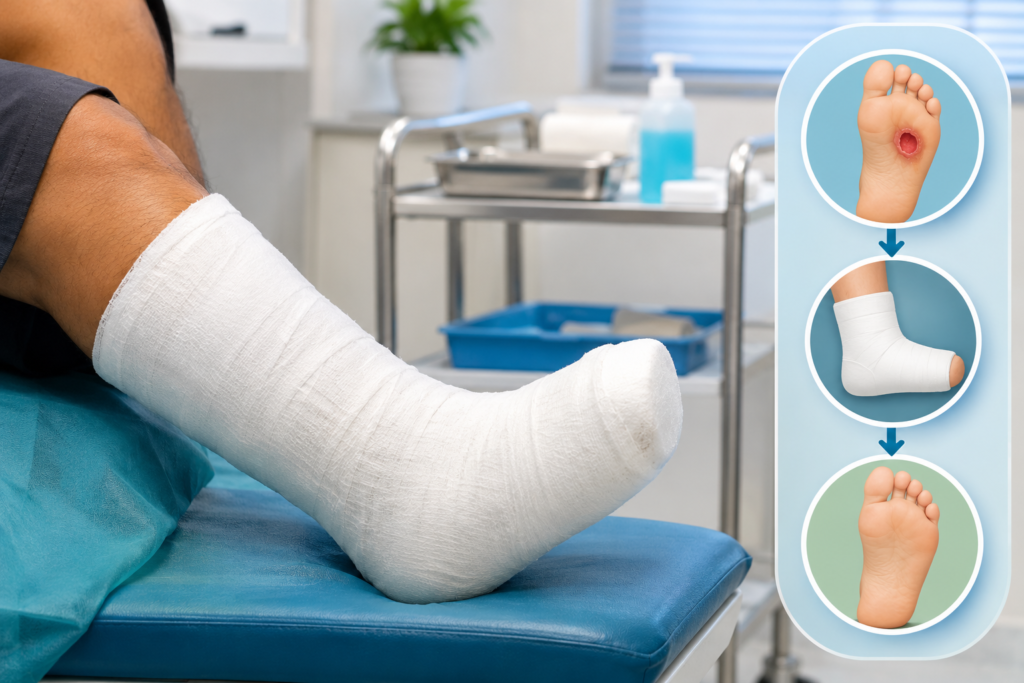
A total contact cast in Ankleshwar helps reduce pressure on certain diabetic foot ulcers. It protects the wound during walking and supports healing by spreading body weight across the foot and lower leg.
People with diabetes may develop foot wounds that heal slowly because of repeated pressure, poor blood flow or reduced feeling in their feet. Therefore, doctors often recommend pressure relief along with wound dressings and diabetes care.
What Is a Total Contact Cast?
A total contact cast (TCC) is a special cast that covers the foot and lower leg. Its close fit helps spread body weight and reduces pressure on the wound.
Doctors often use this treatment for certain ulcers on the sole of the foot.
A total contact cast can:
- Reduce pressure on the ulcer.
- Protect the foot during walking.
- Limit rubbing around the wound.
- Support healthy tissue growth.
- Help prevent repeated damage.
However, this treatment does not suit every patient. The doctor must first check the wound, blood flow and signs of infection.
How Does a Total Contact Cast Help a Diabetic Foot Ulcer Heal?
People with diabetic nerve damage may lose feeling in their feet. As a result, they may continue walking on an injured area without noticing the problem.
A total contact cast helps in three ways.
1. Reduces Pressure on the Wound
First, the cast spreads body weight across a larger area. Therefore, the ulcer receives less direct pressure during walking.
2. Limits Rubbing and Foot Movement
Next, the cast helps control movement inside the foot. This reduces rubbing that may damage healing skin.
3. Supports Regular Pressure Relief
Also, patients cannot easily remove a standard total contact cast. As a result, the foot receives more consistent pressure relief.
However, patients still need wound care, blood sugar control and regular medical reviews.
Who May Need a Total Contact Cast in Ankleshwar?
A total contact cast in Ankleshwar may help patients who have diabetic foot ulcers caused by repeated pressure.
Doctors may recommend this treatment when a patient has:
- An ulcer on the sole of the foot.
- Reduced feeling due to diabetes.
- A wound that heals slowly.
- Repeated pressure around the same area.
- Enough blood flow to support healing.
- No serious active foot infection.
However, patients with severe infection, poor blood flow or major swelling may need another treatment.
Therefore, a diabetic foot specialist must examine the foot before choosing a cast.
How Do Doctors Apply a Total Contact Cast?
Doctors follow several steps to apply a total contact cast safely.
Step 1: Examine the Foot
First, the doctor checks the wound’s size, depth and location. The doctor also checks blood flow, skin condition and signs of infection.
Step 2: Clean the Wound
Next, the care team cleans the ulcer and applies a suitable dressing. The doctor may also remove dead tissue when necessary.
Step 3: Add Protective Padding
Then, the team adds padding to protect sensitive areas and bones.
Step 4: Apply the Cast
After that, a trained clinician shapes the cast around the foot and lower leg. The cast helps spread pressure away from the ulcer.
Step 5: Explain Cast Care
Finally, the team explains how to walk safely, keep the cast dry and recognise warning signs.
Patients should never apply or remove a total contact cast themselves.
Why Are Weekly Cast Changes Important?
A total contact cast needs regular checks because the wound and foot may change during healing.
For example, swelling may decrease, and the cast may become loose. As a result, the cast may rub against the skin.
Therefore, doctors often review and change the cast about once a week. Some patients need an earlier check.
During each visit, the care team may:
- Remove the old cast.
- Check the ulcer’s size and depth.
- Look for infection.
- Clean the wound.
- Change the dressing.
- Check the skin for rubbing.
- Apply a new cast when appropriate.
Regular reviews help the doctor check healing progress and prevent new skin problems.
Weekly Total Contact Cast Follow-Up at the Ankleshwar OPD
Patients seeking a total contact cast in Ankleshwar should ask the clinic about local wound checks and cast-change services.
A specialist may plan weekly visits based on the wound’s condition. However, patients should confirm whether the Ankleshwar OPD currently provides cast application and replacement.
The following checklist explains what a regular review may include.
| Follow-up check | Purpose |
|---|---|
| Wound examination | Check healing progress |
| Infection check | Find early warning signs |
| Dressing change | Keep the wound clean |
| Cast fit check | Prevent rubbing and pressure |
| New cast application | Maintain pressure relief |
| Next appointment | Plan continued care |
Moreover, patients should contact their doctor before the next visit if the cast becomes wet, loose or damaged.
How Long Does a Diabetic Foot Ulcer Take to Heal?
Healing time varies from patient to patient. Some ulcers improve within several weeks, while others need more time.
Several factors affect healing.
Wound size: Small, shallow ulcers may heal faster than deep wounds.
Blood flow: Good circulation helps deliver oxygen and nutrients to the wound.
Blood sugar: Better diabetes control supports healing.
Infection: An infected wound may need extra treatment.
Pressure relief: Reducing repeated pressure gives the wound a better chance to heal.
Therefore, doctors monitor the wound regularly instead of promising a fixed healing time.
Total Contact Cast vs Regular Wound Dressing
Both treatments support diabetic foot care. However, they serve different purposes.
| Total contact cast | Regular wound dressing |
|---|---|
| Reduces pressure on the ulcer | Covers and protects the wound |
| Helps limit rubbing | Helps manage wound moisture |
| Supports regular pressure relief | Does not remove walking pressure |
| Needs specialist application | Needs suitable wound-care technique |
| Requires regular cast checks | Requires dressing changes as advised |
Doctors may combine both methods to support healing.
For more details, read about Nonsurgical Management for diabetic foot problems.
How Should You Care for a Total Contact Cast at Home?
Proper care helps protect the foot and reduces the risk of complications.
Keep the Cast Dry
First, protect the cast from water. A wet cast may irritate the skin and damage the material.
Avoid Unnecessary Walking
Next, follow the doctor’s walking instructions. Use walking aids if the doctor recommends them.
Never Put Objects Inside the Cast
Also, avoid using pens, sticks or other objects to scratch the skin. These items may cause injuries.
Check Your Toes Every Day
Look for swelling, colour changes or unusual coldness.
Attend Follow-Up Visits
Finally, attend every cast review. Regular checks help the doctor identify problems early.
When Should You Contact a Doctor Immediately?
Contact your treating team urgently if you notice:
- New pain or pressure inside the cast.
- Fever or unusual weakness.
- Bad smell or discharge.
- A broken, wet or loose cast.
- Swelling or colour changes in the toes.
- New skin damage near the cast.
In addition, seek emergency care if your toes become suddenly cold, pale or blue, or if you develop signs of a serious infection.
People with diabetic nerve damage may not feel pain even when the skin suffers injury. Therefore, never ignore visible changes.
Why Is Specialist Diabetic Foot Care Important?
Diabetic foot ulcers need more than routine dressing changes. Doctors must also check pressure, blood flow, infection and blood sugar control.
At Elegance Diabetic Foot & Ulcer Clinic, Dr. Ashutosh Shah provides specialist care for diabetic foot problems.
The care plan may include:
- Foot and wound examination.
- Pressure relief treatment.
- Wound cleaning and dressing.
- Infection management.
- Blood flow assessment.
- Advice on protective footwear.
- Regular follow-up.
Patients from Ankleshwar can contact the clinic to discuss suitable treatment and available OPD services.
Also, patients with deep wounds, severe infections or poor blood flow may need further care in Surat.
Frequently Asked Questions
The cast should not create painful pressure points. However, people with diabetic neuropathy may have reduced sensation and may not notice developing skin injuries. Any discomfort, rubbing or unusual symptoms require medical review.
A total contact cast is commonly reviewed and changed approximately every week, although the first review may be sooner. The specialist determines the appropriate schedule according to the wound and cast condition.
Some total contact casts are designed to permit protected walking. However, walking should follow the specialist’s instructions, and unnecessary weight-bearing should be avoided.
No. A total contact cast in Ankleshwar is generally considered for selected neuropathic plantar ulcers. Significant infection, severe circulation problems and other complications may make alternative offloading methods more appropriate.
Yes. Many diabetic foot ulcers can heal through appropriate wound care, pressure offloading, infection management and diabetes control. Some complicated ulcers still require surgical treatment.
Conclusion
A total contact cast in Ankleshwar may be an effective offloading option for selected diabetic foot ulcers, particularly those caused by repeated pressure on the sole.
Successful treatment requires proper cast application, wound monitoring, regular cast changes and careful attention to warning signs.
Patients with slow-healing diabetic foot wounds should obtain a specialist assessment to determine whether total contact casting or another offloading method is appropriate.
For more information, visit EDFC