VAC Therapy for Wounds in Bharuch: How It Works and Who Needs It
A wound that does not heal can become a serious concern, especially for people with diabetes. Some wounds need more than regular dressings to support healing.
VAC therapy for wound in Bharuch is one treatment option that doctors may recommend for selected difficult-to-heal wounds.
VAC stands for Vacuum-Assisted Closure. Doctors also call it Negative Pressure Wound Therapy (NPWT).
This treatment uses a special dressing and a suction device to remove excess wound fluid. In addition, it helps create a controlled environment that may support wound healing.
However, VAC therapy does not suit every wound. A wound care specialist must first assess the infection, blood supply and overall condition of the wound.
What Is VAC Therapy for Wounds?
VAC therapy is an advanced wound management technique.
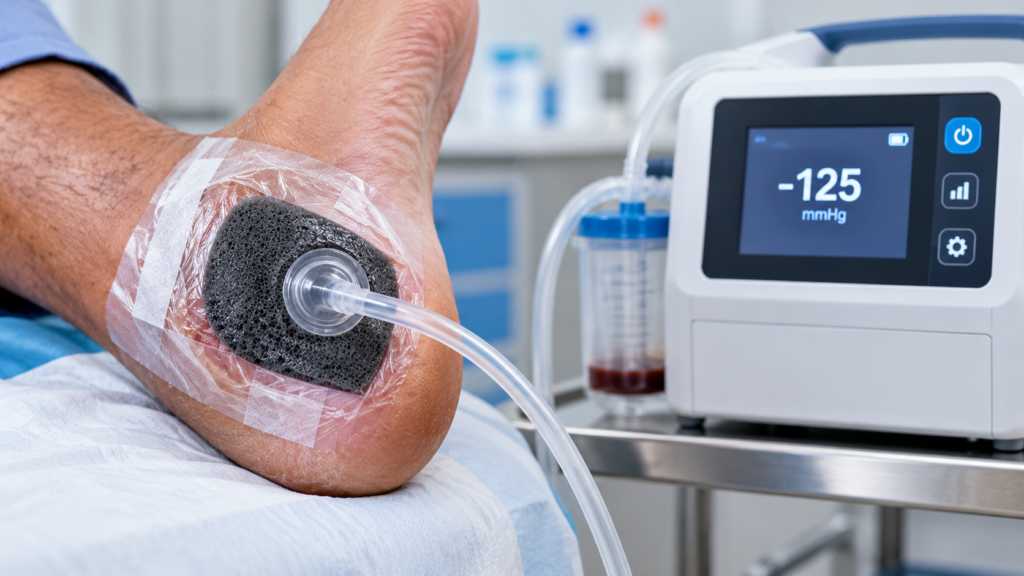
Instead of using only a conventional dressing, the clinician places a special foam or gauze dressing over the wound. Then, the clinician seals it with an adhesive film and connects it to a suction device.
The device applies controlled negative pressure to the wound.
As a result, it removes excess fluid and helps manage the wound environment.
How Does Negative Pressure Wound Therapy Work?
VAC therapy works through a few important steps.
First, the dressing covers the wound and creates a seal.
Next, a tube connects the dressing to the suction machine.
The device then applies the prescribed negative pressure.
Meanwhile, the collection system removes wound fluid.
This process can help manage drainage and support the formation of healthy granulation tissue in suitable wounds.
Does VAC Therapy Close a Wound Immediately?
No. VAC therapy does not instantly close an open wound.
Instead, it supports wound management over time.
Some patients may later need skin grafting, wound closure or other procedures.
Therefore, the doctor should explain the full treatment plan before starting VAC therapy.
Which Wounds May Benefit From VAC Therapy?
Doctors may consider negative pressure wound therapy for several wound types.
However, suitability depends on the wound’s condition.
1. Diabetic Foot Ulcers
Diabetic foot ulcers can become difficult to heal because of neuropathy, pressure, infection or poor blood circulation.
In selected cases, VAC therapy may help manage wound fluid and support healing after appropriate wound preparation.
However, the patient must also receive diabetes management, pressure relief and infection care.
2. Post-Surgical Wounds
Some surgical wounds remain open or develop complications.
For example, a wound may produce excess fluid or require delayed closure.
In suitable cases, doctors may use VAC therapy as part of the recovery plan.
3. Traumatic Wounds
Accidents and injuries can cause tissue loss or deep wounds.
After proper cleaning and assessment, VAC therapy may help manage selected wounds.
However, doctors must first address significant bleeding, damaged tissue and other urgent problems.
4. Chronic Non-Healing Wounds
Some wounds heal slowly despite routine dressing care.
In these cases, a specialist may investigate blood circulation, infection, pressure and underlying medical conditions.
VAC therapy may become one part of the treatment plan.
Who Is a Suitable Candidate for VAC Therapy?
Not everyone with an open wound needs VAC therapy.
The doctor considers several factors before recommending treatment.
Wound Size and Depth
VAC therapy may help manage selected deep or complex wounds.
However, wound size alone does not determine suitability.
The clinician must also assess the wound bed and surrounding skin.
Blood Circulation
Adequate blood supply is important for wound healing.
Therefore, doctors may assess circulation before starting treatment.
If severe circulation problems exist, the patient may need vascular evaluation or treatment first.
Infection Status
A wound with infection needs appropriate medical management.
For example, the doctor may recommend cleaning, removal of dead tissue or antibiotics when indicated.
VAC therapy does not replace these measures.
Overall Health
Diabetes control, nutrition, mobility and other health conditions can affect recovery.
As a result, wound care often requires more than one treatment.
When Should VAC Therapy Be Avoided?
VAC therapy has important limitations.
Therefore, a trained clinician must evaluate the wound before applying the dressing.
Untreated Dead Tissue
A wound containing significant dead tissue may need debridement first.
Otherwise, the dressing may not support appropriate wound management.
Untreated Bone Infection
Untreated osteomyelitis requires medical assessment and treatment.
VAC therapy should not replace infection management.
Exposed Blood Vessels or Organs
Direct application over exposed blood vessels, organs or other vulnerable structures can create serious risks.
Therefore, clinicians must follow device-specific safety guidance and use appropriate protection when indicated.
Uncontrolled Bleeding
Active bleeding or a high bleeding risk requires special attention.
Negative pressure may worsen bleeding in certain situations.
Suspected Cancer in the Wound
A wound with suspected malignancy needs diagnostic assessment.
Clinicians should not routinely apply VAC therapy over malignant tissue without specialist evaluation.
Step-by-Step VAC Therapy Procedure
Understanding the procedure can help patients feel more prepared.
Step 1: Wound Examination
First, the doctor checks wound size, depth and surrounding skin.
The clinician also looks for infection, dead tissue and circulation problems.
Step 2: Wound Cleaning
Next, the wound care team cleans the area.
If necessary, the doctor removes dead or unhealthy tissue.
However, the exact preparation depends on the wound.
Step 3: Dressing Placement
The clinician places a suitable foam or gauze dressing inside or over the wound.
Then, a transparent adhesive film seals the dressing.
Step 4: Connecting the VAC Device
A tube connects the dressing to the negative-pressure device.
The clinician selects the pressure setting according to the wound and prescribed treatment plan.
Step 5: Monitoring and Dressing Changes
The team checks the seal, drainage and wound response.
Dressing changes usually occur according to the wound condition, device instructions and clinician’s plan.
Some wounds need more frequent review, especially when infection is present.
VAC Therapy vs Regular Wound Dressing
Both treatments have important roles in wound care.
| Feature | Regular dressing | VAC therapy |
|---|---|---|
| Main purpose | Protect and manage the wound | Apply controlled negative pressure |
| Wound fluid | Absorbed by dressing material | Removed through a suction system |
| Equipment | Usually simple dressing supplies | Special dressing, tubing and device |
| Suitable wounds | Many uncomplicated wounds | Selected complex or difficult-to-heal wounds |
| Dressing changes | Based on wound and dressing type | Based on wound, device and treatment plan |
| Cost | Often lower | Usually higher because of equipment and supplies |
| Medical supervision | Depends on wound severity | Requires trained clinical oversight |
Is VAC Therapy Better Than Normal Dressing?
Not always.
For example, a small, uncomplicated wound may heal well with standard care.
However, a deep wound with significant drainage may benefit from negative pressure therapy.
Therefore, the doctor should choose treatment based on clinical needs rather than equipment alone.
Benefits of Negative Pressure Wound Therapy
VAC therapy may offer several benefits in properly selected wounds.
Helps Manage Excess Fluid
The suction system removes wound drainage.
As a result, it can help prevent fluid from collecting under the dressing.
Supports Granulation Tissue Formation
Granulation tissue helps fill a wound during healing.
Negative pressure may support this process in suitable cases.
However, results vary according to blood supply, infection and other factors.
Helps Manage Complex Wounds
Some patients need ongoing wound preparation before closure or grafting.
VAC therapy may help as part of that staged plan.
May Reduce Dressing-Related Disruption
The dressing can remain in place between scheduled changes when the device works properly.
However, dressing frequency depends on the wound and the clinician’s instructions.
What Are the Risks and Side Effects of VAC Therapy?
VAC therapy is a medical procedure, so complications can occur.
Pain During Dressing Changes
Some patients feel discomfort when the clinician removes or replaces the dressing.
Therefore, the team may recommend appropriate pain management.
Skin Irritation
Adhesive film may irritate fragile surrounding skin.
In addition, an unsuitable seal can affect treatment performance.
Bleeding
Bleeding is an important potential complication.
If significant bleeding occurs, seek urgent medical attention and follow the device’s emergency instructions.
Infection or Worsening Wound Condition
VAC therapy does not eliminate infection risk.
Therefore, increasing redness, fever, foul-smelling drainage or worsening pain needs prompt review.
Device or Seal Problems
A leak, blocked tube or disconnected device may interrupt therapy.
Contact the wound care team if the machine alarms or stops working.
How Long Does VAC Therapy Take?
Treatment duration varies.
Some wounds need a relatively short course. Others require several weeks or a longer treatment plan.
What Affects the Duration?
Wound size, depth and tissue condition all matter.
Also, diabetes control, blood circulation and infection can influence healing.
Therefore, no clinician can promise the same timeline for every patient.
How Do Doctors Check Progress?
The wound care team measures the wound and examines its tissue.
Next, they assess drainage and healing progress.
If the wound does not improve as expected, the doctor may reconsider the treatment plan.
VAC Therapy for Diabetic Foot Wounds
Diabetic foot wounds need comprehensive care.
VAC therapy alone cannot address every cause of delayed healing.
Blood Sugar Management
Poorly controlled diabetes can interfere with wound healing.
Therefore, patients should follow their diabetes care plan.
Pressure Relief
Walking pressure can repeatedly damage a foot ulcer.
As a result, the doctor may recommend suitable offloading footwear, a cast or another pressure-relief method.
Infection and Circulation Assessment
A wound specialist may need to assess infection and blood flow.
If circulation is inadequate, vascular treatment may become necessary.
Therefore, wound healing requires a coordinated approach.
VAC Therapy for Wound in Bharuch: When to Consult a Specialist
If you have a diabetic foot ulcer, a surgical wound or a wound that is not healing, seek professional assessment.
Early evaluation can help identify infection, poor circulation and other barriers to healing.
Signs You Should Not Ignore
Contact a healthcare professional if the wound becomes larger, deeper or increasingly painful.
Also, seek prompt care if you notice spreading redness, swelling, fever or unusual drainage.
A blackened foot, rapidly spreading infection or severe systemic illness requires emergency medical assessment.
Where Can You Seek Wound Care Advice?
For information about local diabetic foot assessment, visit Diabetic Foot Ulcer Treatment in Bharuch.
A qualified wound care clinician can determine whether VAC therapy, standard dressings, debridement or another treatment is appropriate.
Frequently Asked Questions
VAC therapy is a form of negative pressure wound therapy. It uses a sealed dressing and controlled suction to remove wound fluid and support healing in selected wounds.
It may help selected diabetic foot ulcers, especially after appropriate wound preparation. However, infection control, blood circulation, diabetes management and pressure relief remain essential.
Some patients feel discomfort during treatment or dressing changes. However, pain varies. The clinician can discuss suitable ways to manage it.
The duration depends on wound size, depth, circulation, infection and healing progress. Some wounds need a short course, while others require several weeks.
VAC therapy may support healing, but it cannot guarantee complete closure. Some wounds still require grafting, surgery or other treatment.
The schedule depends on the wound, device instructions and clinical condition. The treating team determines how frequently the dressing needs replacement.
Some patients can use suitable portable devices at home under a clinician’s supervision. However, trained staff must manage dressing changes and monitor complications.
Contact the wound care team promptly and follow the device-specific instructions. A prolonged interruption may require a dressing change or another clinical action.
Not for every wound. VAC therapy may help selected complex wounds, while many simpler wounds respond well to regular dressings. A clinician should choose the method.
Patients seeking vac therapy for wound in bharuch can arrange a wound care assessment through an appropriate diabetic foot or wound care service. The clinician can check whether negative pressure therapy suits the wound.
Conclusion
VAC therapy for wound in Bharuch is a specialised treatment option for selected complex or difficult-to-heal wounds.
It uses controlled suction to remove excess fluid and support wound management.
However, VAC therapy is not suitable for every patient. Proper wound cleaning, infection control, blood circulation and diabetes management remain essential.
Therefore, consult a qualified wound care specialist before starting treatment.