
Diabetic Foot Doctor in Bharuch: Diabetic Wound Dressing and When to Visit
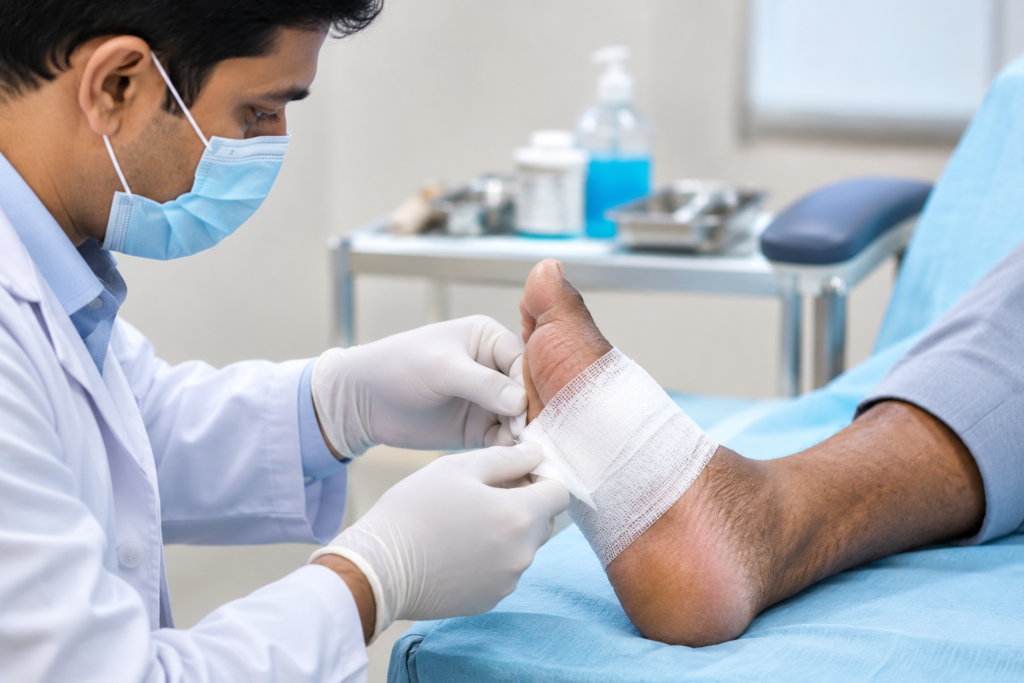
Diabetic wound dressing in bharuch involves professional wound assessment, cleaning, selecting suitable dressings and monitoring healing through follow-up visits. Patients from Bharuch generally begin with a consultation, followed by investigations when necessary and an individualised treatment plan.
Diabetes can affect nerves, blood circulation and wound healing. A small injury may develop into a serious ulcer when pressure, infection or poor circulation is not addressed.
Dr. Ashutosh Shah provides diabetic foot assessment and treatment planning based on the patient’s clinical condition. Understanding the dressing process, recovery requirements and possible costs can help patients prepare for treatment.
What Is Diabetic Wound Dressing and Who Is It For?
Diabetic wound dressing is the process of cleaning, protecting and managing wounds in people with diabetes. It is an important part of diabetic foot ulcer treatment, but dressing alone does not address every cause of delayed healing.
The correct approach depends on the wound’s depth, location, drainage, infection status and blood supply.
Who may need professional wound dressing?
Patients should seek medical assessment for:
- Open wounds on the toes, sole or heel.
- Blisters that have broken or failed to heal.
- Cuts accompanied by redness or swelling.
- Wounds producing fluid or discharge.
- Recurrent ulcers at the same location.
- Skin breakdown beneath thick calluses.
- Injuries that remain painless despite visible damage.
Diabetic neuropathy can reduce protective sensation. Consequently, patients may continue walking on an injured foot without recognising the damage.
Why is specialist assessment important?
A wound may require more than a clean dressing. The specialist must determine whether infection, pressure or impaired circulation is delaying healing.
Some patients need debridement, pressure-relieving devices or additional investigations.
The doctor may also assess other diabetic foot conditions that increase the risk of repeated ulcers.
Early evaluation helps identify complications and establish an appropriate treatment plan.
How Is Diabetic Wound Dressing in Bharuch Done, Step by Step?
The process begins with a clinical examination. Not every patient needs the same dressing material, investigations or frequency of visits.
Step 1: Wound assessment
The specialist examines the wound’s size, depth, location and surrounding skin.
The assessment may include checking sensation, circulation, pressure points and signs of infection.
Previous wound treatments and diabetes reports are also reviewed.
Step 2: Cleaning the wound
The wound is cleaned using an appropriate method and solution selected by the treating clinician.
Cleaning helps remove debris and allows better examination of the affected tissue.
Patients should avoid applying unprescribed chemicals, powders or home remedies.
Step 3: Removing unhealthy tissue when needed
Some wounds contain dead tissue or thick calluses that interfere with assessment and healing.
Professional debridement may be recommended when clinically appropriate.
However, the decision depends on wound condition, blood circulation and other risks.
Patients should never attempt to cut away dead tissue themselves.
Step 4: Selecting the dressing
The clinician chooses a dressing according to wound moisture, drainage, tissue condition and surrounding skin.
Different dressings serve different purposes, and no single dressing is suitable for every diabetic foot wound.
The patient receives instructions about keeping the dressing protected and recognising problems.
Step 5: Managing infection and pressure
If clinical infection is present, the doctor determines whether antibiotics or further treatment are necessary.
Antibiotics are not routinely indicated for an uninfected diabetic foot ulcer.
Pressure relief is equally important, particularly for wounds on the sole.
The specialist may recommend suitable offloading footwear, a cast or another pressure-reducing device.
Step 6: Follow-up assessment
At subsequent appointments, the clinician reviews wound progress, dressing effectiveness and the need for further treatment.
If healing is slower than expected, circulation, infection, pressure and other contributing factors may require reassessment.
Some complicated wounds need additional diabetic foot surgery, but surgery is not required for every patient.
Quick Facts: Diabetic Wound Dressing
| Treatment detail | What to expect |
|---|---|
| Consultation duration | [Specialist to confirm] |
| Dressing duration | Depends on wound size and complexity |
| Anaesthesia | Usually unnecessary for routine dressing; procedure-dependent |
| Hospital stay | Often outpatient care; admission may be necessary for complications |
| Back to work | Depends on wound location, job demands and pressure restrictions |
| Follow-up visits | Based on wound condition and healing progress |
| Recovery time | [Specialist to confirm typical ranges] |
These details are general guidance. The treating specialist must confirm individual requirements.
Recovery: What Do the First Weeks Look Like?
Recovery after diabetic wound dressing varies considerably. A superficial wound with adequate circulation may improve sooner than a deep ulcer complicated by infection or repeated pressure.
There is no guaranteed healing timeline.
Initial treatment period
During the early phase, the priorities are wound protection, infection management when necessary and pressure reduction.
Patients should follow dressing instructions and avoid unnecessary weight-bearing on the affected area when advised.
The specialist may recommend changes to footwear or daily activities.
Following weeks
The wound is reassessed for changes in size, drainage, tissue condition and surrounding skin.
Healing may involve gradual development of healthy tissue and reduction in wound dimensions.
Dressing materials or offloading methods may be adjusted as the wound changes.
Patients should not stop prescribed treatment simply because the wound looks better.
What affects healing?
Important factors include:
- Wound depth and location.
- Adequacy of blood circulation.
- Presence of infection.
- Blood glucose management.
- Repeated pressure during walking.
- Nutrition and general health.
- Adherence to dressing and follow-up instructions.
For a detailed explanation, read how long does diabetic wound dressing take to heal in surat.
Warning signs during recovery
Seek prompt medical assessment for increasing redness, swelling, discharge, unpleasant odour or wound enlargement.
Blackening tissue, rapidly spreading infection or fever with severe illness requires urgent or emergency evaluation.
A painless wound can still be serious because neuropathy may reduce sensation.
Which Factors Change the Cost?
The total cost of diabetic wound dressing in bharuch depends on the wound’s severity, investigations, dressing requirements and number of follow-up visits.
A single fixed price cannot accurately represent every patient’s treatment.
Initial consultation and investigations
The doctor may recommend blood glucose tests, HbA1c, imaging or circulation assessment depending on clinical findings.
These investigations can affect the initial expense.
Dressing materials and frequency
Some wounds need more frequent dressing changes or specialised materials.
Costs may increase when treatment continues over several weeks.
Infection management
If an infection develops, additional investigations, medication or hospital treatment may be required.
Severe infection can increase the complexity and cost of care.
Additional procedures
Certain wounds require debridement, surgical treatment or advanced pressure-relieving devices.
These interventions should be recommended according to medical need rather than included automatically.
Follow-up appointments
Patients should ask whether dressing materials and review appointments are charged separately.
A written estimate can help families understand recurring expenses.
How Do Patients From Bharuch Plan the Visit?
Patients from Bharuch should arrange an appointment before planning non-emergency treatment.
The first consultation helps determine wound severity, necessary investigations and whether outpatient treatment is appropriate.
What should patients bring?
Bring available medical records, including:
- Recent blood glucose and HbA1c reports.
- Previous wound-treatment prescriptions.
- Current medication details.
- Previous imaging or circulation reports.
- Information about allergies.
- Existing dressings or offloading devices.
These records can help the specialist understand the patient’s treatment history.
Can the first discussion happen online?
An online discussion may help patients understand appointment arrangements if the clinic provides this service.
However, photographs cannot reliably establish wound depth, circulation or the extent of infection.
Therefore, online consultation should not delay urgent in-person assessment.
Online consultation availability: [Clinic to confirm.]
Planning travel and follow-ups
Patients should ask whether walking restrictions, protective footwear or assistance with mobility will be necessary.
Follow-up frequency depends on the wound and selected treatment.
Travel plans should allow sufficient time for examination and any recommended investigations.
Questions to Ask Before You Decide
Before beginning treatment, patients should understand the wound diagnosis, proposed dressing plan and expected follow-up requirements.
Useful questions include:
- How deep is the wound?
- Are there signs of infection?
- Is blood circulation adequate?
- Which dressing is suitable?
- How often should the dressing be changed?
- Is debridement necessary?
- Do I need pressure-relieving footwear?
- Which warning signs require urgent attention?
- What expenses should I expect?
- When should the wound be reassessed?
Dr. Ashutosh Shah can discuss these questions during clinical evaluation.
Frequently Asked Questions
Conclusion
Professional diabetic wound dressing involves more than covering an injury. Effective treatment requires careful wound assessment, appropriate cleaning, pressure relief and regular monitoring.
For patients in Bharuch, early consultation can help identify complications and establish a suitable treatment plan.
Dr. Ashutosh Shah can evaluate diabetic foot wounds and discuss appropriate care, follow-up requirements and potential costs.
To request appointment information, visit the contact us page.