
When Does a Painful Bunion Need Treatment?
About the Clinical Contributor
Dr. Ashutosh Shah is an M.Ch., DNB-qualified Plastic and Reconstructive Surgeon with more than 22 years of surgical experience. His diabetic foot work includes wounds, deformity correction, pressure-related problems and reconstructive procedures.
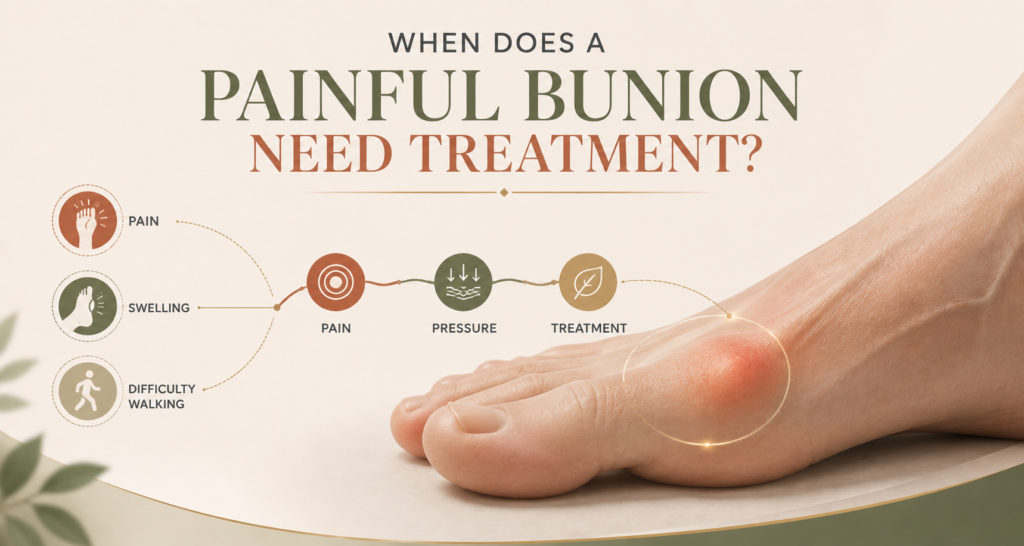
A bunion may begin as a small bump beside the big toe, but it can gradually cause pressure, difficulty wearing shoes and changes in walking.
For someone with diabetes, the skin over a prominent bunion deserves particular attention because neuropathy may reduce the warning pain caused by rubbing.
Bunion treatment can include footwear changes, pressure relief, orthotic support and surgery in selected cases. The appropriate treatment depends on pain, deformity, skin condition, walking difficulty and diabetic foot risk factors.
Patients in Surat can access assessment through Elegance Diabetic Foot Care (EDFC) when a bunion is associated with pressure, callus or other diabetic foot concerns.
Key Takeaways
- A bunion is also called hallux valgus.
- Not every bunion requires surgery.
- Footwear can reduce pressure but does not usually reverse the deformity.
- Neuropathy may hide harmful shoe pressure.
- Callus or ulceration requires assessment.
- Surgery may be considered for significant symptoms or deformity.
- Diabetes-related circulation and healing factors matter before surgery.
What Is a Bunion?
A bunion is a structural deformity involving the joint at the base of the big toe.
The big toe gradually shifts toward the smaller toes while the joint becomes more prominent.
| Finding | Possible Effect |
|---|---|
| Prominent bump | Shoe pressure and rubbing |
| Redness | Skin irritation |
| Callus | Repetitive pressure |
| Pain | Difficulty walking or wearing shoes |
| Toe crowding | Pressure between toes |
| Joint stiffness | Reduced movement |
| Skin breakdown | Greater concern in a diabetic foot |
EDFC provides bunion assessment and treatment according to the severity of the deformity and associated foot problems.
Why Does Diabetes Make a Bunion More Important?
Diabetes does not automatically cause bunions.
However, diabetic neuropathy can reduce protective sensation.
A patient may therefore continue wearing a shoe that repeatedly rubs against the prominent joint without feeling significant discomfort.
Poor circulation may also make wounds more difficult to heal.
Can a Bunion Cause a Diabetic Foot Ulcer?
Yes.
Repeated friction or pressure can produce redness and callus.
If the pressure continues, vulnerable skin may eventually break down.
An ulcer over a bunion needs assessment because an open diabetic foot wound can become infected.
Can Bunions Be Treated Without Surgery?
Yes.
Conservative treatment may include:
- properly fitted footwear,
- wider toe space,
- padding,
- orthotic support,
- pressure reduction,
- and activity modification.
These measures primarily aim to reduce symptoms and pressure.
They do not necessarily correct the underlying bone alignment.
Can Better Footwear Help?
Appropriate footwear can make a significant difference to pressure and rubbing.
EDFC’s footwear and prosthetics services include options for diabetic feet with deformity and abnormal pressure.
A shoe should have adequate space without being so loose that the foot slides excessively.
When Is Surgery Considered?
Surgical correction may be discussed when a bunion causes:
- persistent pain,
- significant deformity,
- walking difficulty,
- inability to wear appropriate footwear,
- recurrent pressure problems,
- or other complications.
For a diabetic patient, sensation, circulation, glucose control and wound risk should be assessed before elective surgery.
Is Bunion Surgery Just Removing the Bump?
No.
Depending on the deformity, surgery may involve correcting the alignment of the bone and joint rather than simply removing the visible prominence.
Different bunion deformities may require different surgical techniques.
Can a Bunion Return?
Recurrence is possible.
Long-term results can be influenced by the original deformity, surgical correction, foot mechanics and postoperative care.
Appropriate footwear remains important after treatment.
When Should You Get a Bunion Checked?
Seek assessment when you notice:
- persistent redness,
- callus,
- an open wound,
- increasing pain,
- swelling,
- discharge,
- worsening deformity,
- or difficulty finding safe footwear.
Do not cut a callus yourself when diabetes or reduced sensation is present.
Look Beyond the Visible Bump
The care philosophy explained about Elegance Diabetic Foot Care considers foot structure, pressure, wounds and prevention rather than treating the visible deformity in isolation.
The clinic’s surgical care includes expertise from Dr. Ashutosh Shah, whose background spans plastic, reconstructive and diabetic foot surgery.
For people in Surat, early assessment can be especially useful when a bunion starts producing repeated pressure or skin changes rather than waiting for an ulcer to develop.
If your bunion is painful, rubbing inside shoes or causing skin breakdown, arrange a diabetic foot consultation to understand the appropriate treatment options.
FAQs
No. Non-surgical treatment mainly manages symptoms and pressure.
No.
Repeated pressure can contribute to skin breakdown.
Yes, particularly by reducing rubbing and pressure.
No. Individual risks and deformity need assessment.