
How Does Neurolysis Surgery Help Relieve Nerve Pain?
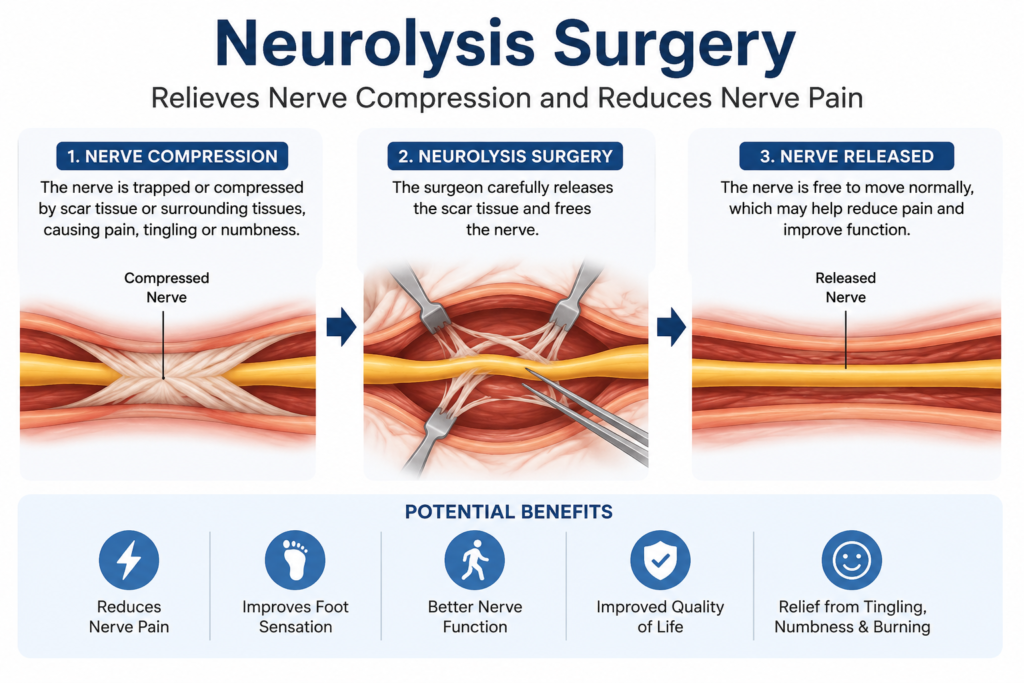
Neurolysis surgery is a procedure used to release a nerve that has become compressed, trapped, or restricted by scar tissue. Nerve compression can cause burning pain, tingling, numbness, sensitivity, or weakness. In selected patients, releasing the affected nerve may reduce pressure and improve nerve movement.
For people with diabetes, persistent nerve symptoms should be evaluated carefully because diabetic neuropathy and nerve compression can affect foot sensation and increase the risk of unnoticed injuries. Elegance Diabetic Foot And Ulcers Clinic in Surat provides evaluation and treatment planning for diabetic foot and nerve-related conditions.
What Is Neurolysis Surgery?
Neurolysis is a surgical technique used to free a nerve from scar tissue, adhesions, or surrounding structures that are restricting its normal movement.
Nerves normally glide through the surrounding tissues. However, previous injuries, surgery, trauma, inflammation, or prolonged compression can cause scar tissue to form around a nerve. This restriction may contribute to pain and abnormal sensations.
During neurolysis, the surgeon carefully identifies the affected nerve and releases the tissues causing compression or restriction.
How Does Neurolysis Help Relieve Nerve Pain?
A compressed or trapped nerve can become irritated and produce symptoms such as:
- Burning or shooting pain
- Tingling
- Numbness
- Electric-shock-like sensations
- Increased sensitivity
- Muscle weakness
- Reduced function
Neurolysis surgery aims to reduce the mechanical restriction around the nerve. Once the nerve is released, it may move more freely, which can help reduce pressure and nerve-related symptoms.
However, results vary. The outcome depends on the cause of nerve compression, duration of symptoms, severity of nerve damage, and the patient’s overall health.
When Is Neurolysis Surgery Recommended?
Neurolysis is not suitable for every type of nerve pain. A specialist may consider it when examination and investigations indicate that nerve compression, entrapment, or scar tissue is contributing to symptoms.
It may be considered for:
Nerve Entrapment
A nerve can become compressed within a restricted anatomical space. Releasing the surrounding tissue may help reduce pressure.
Scar Tissue Around a Nerve
In some patients, scar tissue following an injury or previous surgery can restrict nerve movement. Neurolysis can release these adhesions.
Diabetic Foot Nerve Problems
People with diabetes may develop nerve-related foot symptoms, including burning, tingling, numbness, or altered sensation. When specific nerve compression is identified, surgical nerve release may be considered in selected cases.
What Happens During Neurolysis Surgery?
Before surgery, the surgeon evaluates your symptoms, medical history, previous treatments, and physical findings. Additional investigations may be recommended to identify the affected nerve and determine the cause of the symptoms.
During the procedure, the surgeon:
- Identifies the affected nerve.
- Carefully exposes the nerve.
- Releases scar tissue or structures causing restriction.
- Protects the nerve and surrounding tissues.
- Completes the procedure after adequate nerve release.
The exact surgical approach depends on the location and condition of the affected nerve.
What Is Recovery Like?
Recovery depends on the nerve involved, extent of surgery, and severity of the original problem.
Your surgeon may recommend protecting the operated area initially, followed by gradual movement and rehabilitation. Physiotherapy or nerve-gliding exercises may be advised when appropriate.
Nerves can take time to recover. Therefore, improvement in pain, numbness, tingling, or weakness may occur gradually rather than immediately.
What Are the Benefits and Risks?
When appropriately indicated, neurolysis may help:
- Release nerve compression
- Reduce nerve-related pain
- Improve nerve mobility
- Reduce abnormal sensations
- Improve function in selected patients
Like other surgeries, neurolysis has potential risks, including infection, bleeding, scar formation, persistent pain, changes in sensation, nerve injury, or recurrence of compression.
A specialist assessment is important to understand whether the potential benefits outweigh the risks in your situation.
Neurolysis Surgery in Surat
If you are looking for neurolysis surgery in Surat, proper diagnosis is an important first step. Not all nerve pain requires surgery, so the underlying cause should be identified before choosing treatment.
At Elegance Diabetic Foot And Ulcers Clinic in Surat, patients with diabetic foot and nerve-related symptoms can receive clinical evaluation and individualized treatment planning. Neurolysis may be considered when nerve compression or entrapment is identified as a contributing factor.
Expert Guidance by Dr. Ashutosh Shah
Dr. Ashutosh Shah, M.B., M.S., M.Ch., D.N.B., is a plastic, reconstructive, and diabetic foot surgeon with 22+ years of surgical experience. He has been involved in diabetic foot care since the beginning of his surgical practice and has specialised experience in diabetic foot reconstruction, wound management, microvascular reconstruction, and advanced foot surgery.
Dr. Shah has received training in diabetic foot surgery at Ganga Hospital, Coimbatore. He is a lifetime member of the Indian Podiatry Association (IPA) and a member of the Diabetic Foot Society of India (DFSI).
At Elegance Diabetic Foot And Ulcers Clinic in Surat, Dr. Ashutosh Shah evaluates diabetic foot and nerve-related conditions and determines whether procedures such as neurolysis may be appropriate based on individual clinical findings.
Conclusion
Neurolysis surgery can help relieve nerve pain by releasing a compressed, trapped, or scar-bound nerve. It may be considered for selected patients with nerve entrapment, adhesions, or specific diabetic foot nerve problems.
If you have persistent burning, tingling, numbness, or nerve-related foot pain, a professional evaluation can help identify the cause and determine whether neurolysis or another treatment option is appropriate.
FAQs
Yes, neurolysis surgery may help relieve nerve pain when compression, entrapment, or scar tissue is contributing to the symptoms. Results vary depending on the condition of the nerve.
In selected cases, yes. Patients with diabetes who have specific nerve compression or entrapment may be evaluated for neurolysis. However, not all diabetic neuropathy requires surgery.
Recovery varies depending on the nerve involved and the extent of surgery. Nerve healing can take time, so improvements in pain, numbness, or tingling may occur gradually.
No. The cause of nerve pain must first be identified. Depending on the condition, medication, physiotherapy, injections, or other treatments may be considered instead.
Potential risks include infection, bleeding, scar formation, persistent pain, changes in sensation, nerve injury, and recurrence of nerve compression.